Stage 1Sheet 01
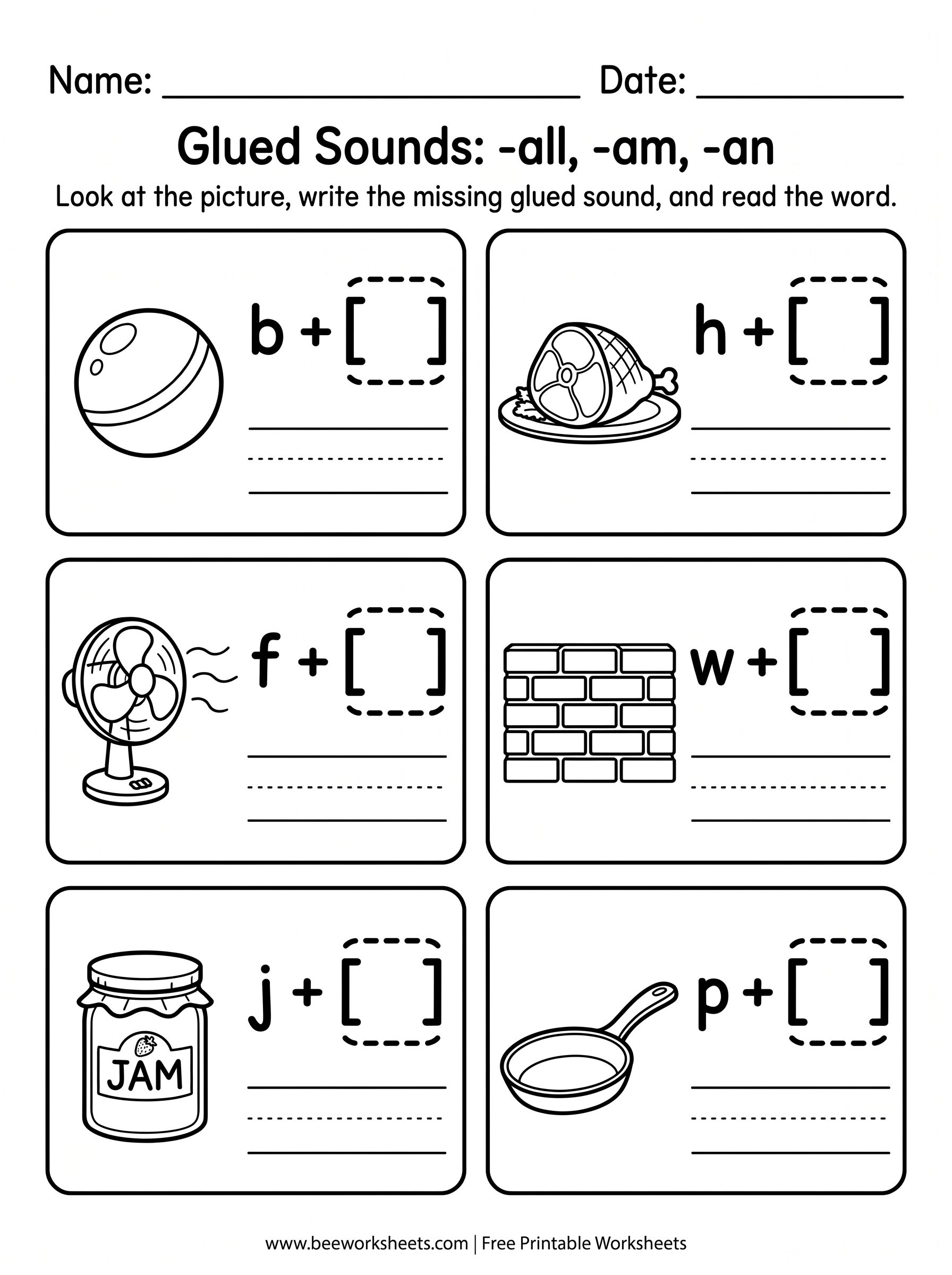
-all, -am, -anWord Building
Glued Sounds: -all, -am, -an Word Building
Look at the picture, write the missing glued sound, and read the word.

Opening your printable PDF file.
Master welded phonics sound families (-all, -am, -an, -ng, and -nk) with 10 engaging, print-ready worksheets. Includes word mapping, multisensory jar sorting, color by code, decodables, and interactive phonics games.
From basic welded vowel recognition to advanced sentence decoding and phonics maze games.
Foundational glued vowel sounds where 'a' takes on a nasalized tone before m, n, and ll. Practice word mapping and spelling with picture cues.
Mastering the velar nasal consonant welded units with all 4 short vowels. Includes multiple choice recognition and column word sorting.
Reinforcing the tricky /ŋk/ blend combination across all short vowels with line matching and missing letter fill-ins.
High-engagement interactive worksheets: Mason Jar word sorting, hidden word search grids with sentence clozes, and mystery color-by-code pictures.
Applying glued sounds in connected decodable reading sentences, gamified roll-and-write dice grids, and phonics path maze activities.
Select any worksheet below to view individual previews or download the instant vector PDF.
Look at the picture, write the missing glued sound, and read the word.
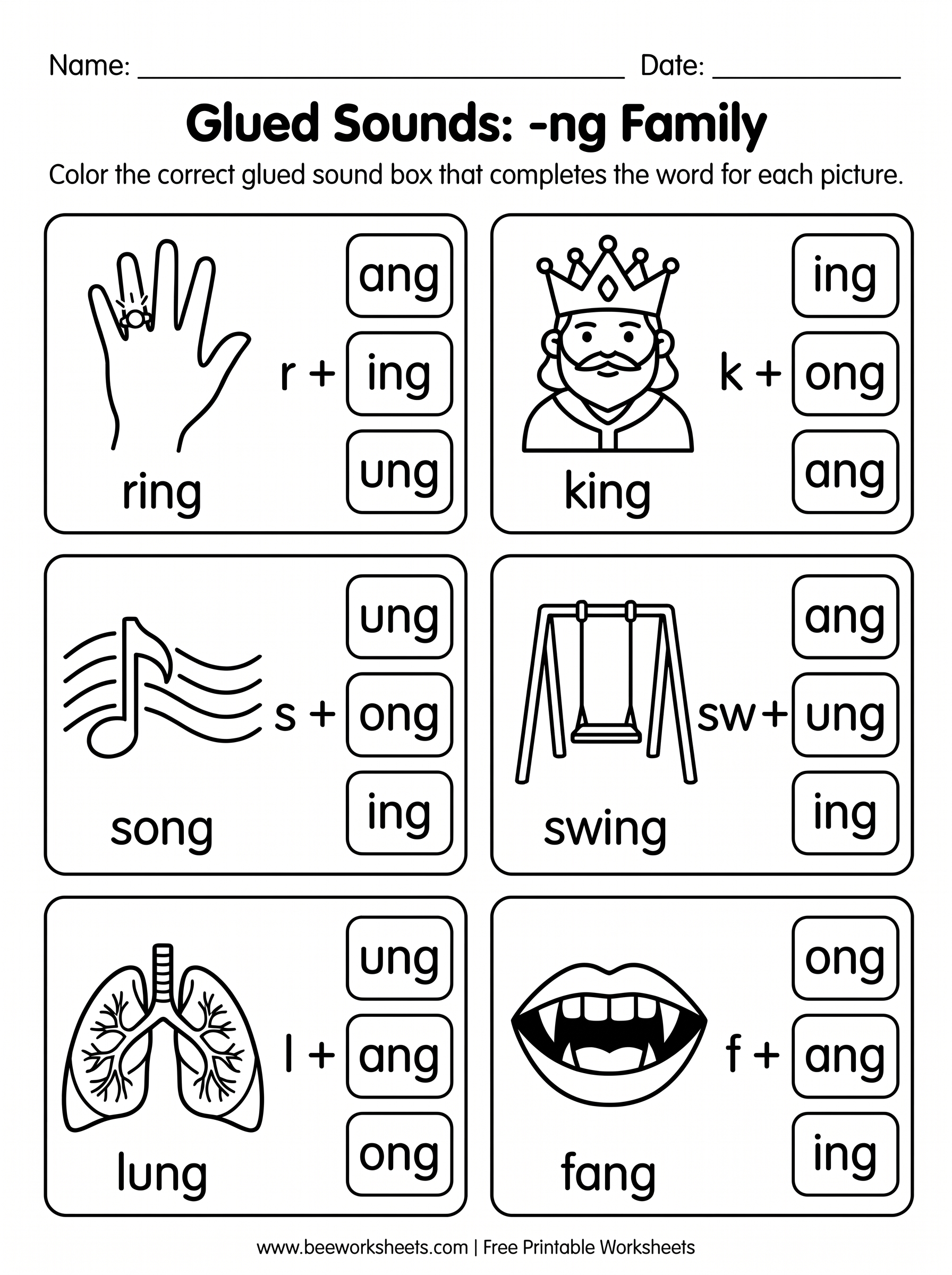
Color the correct glued sound box that completes the word for each picture.
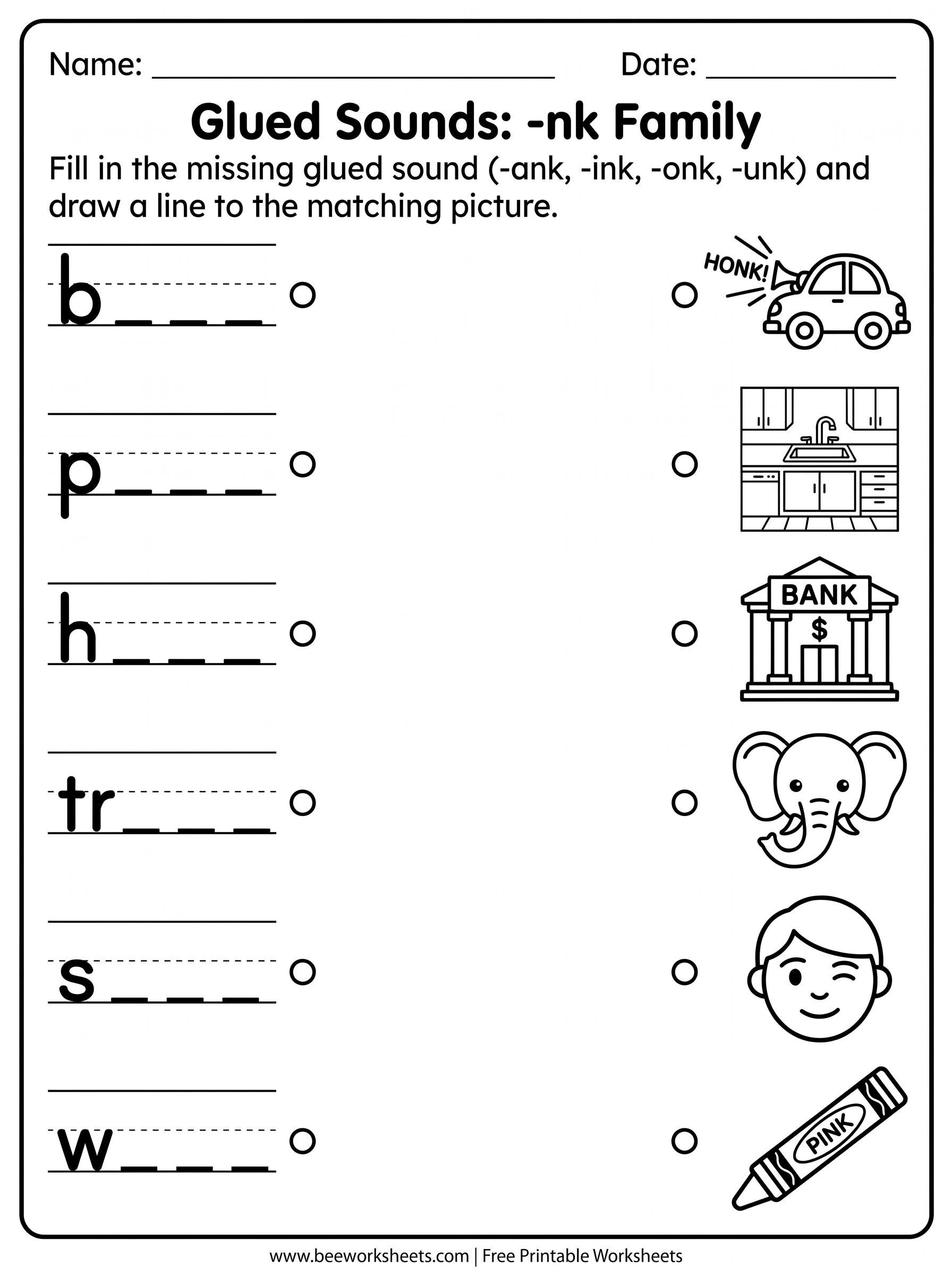
Fill in the missing glued sound (-ank, -ink, -onk, -unk) and draw a line to the matching picture.
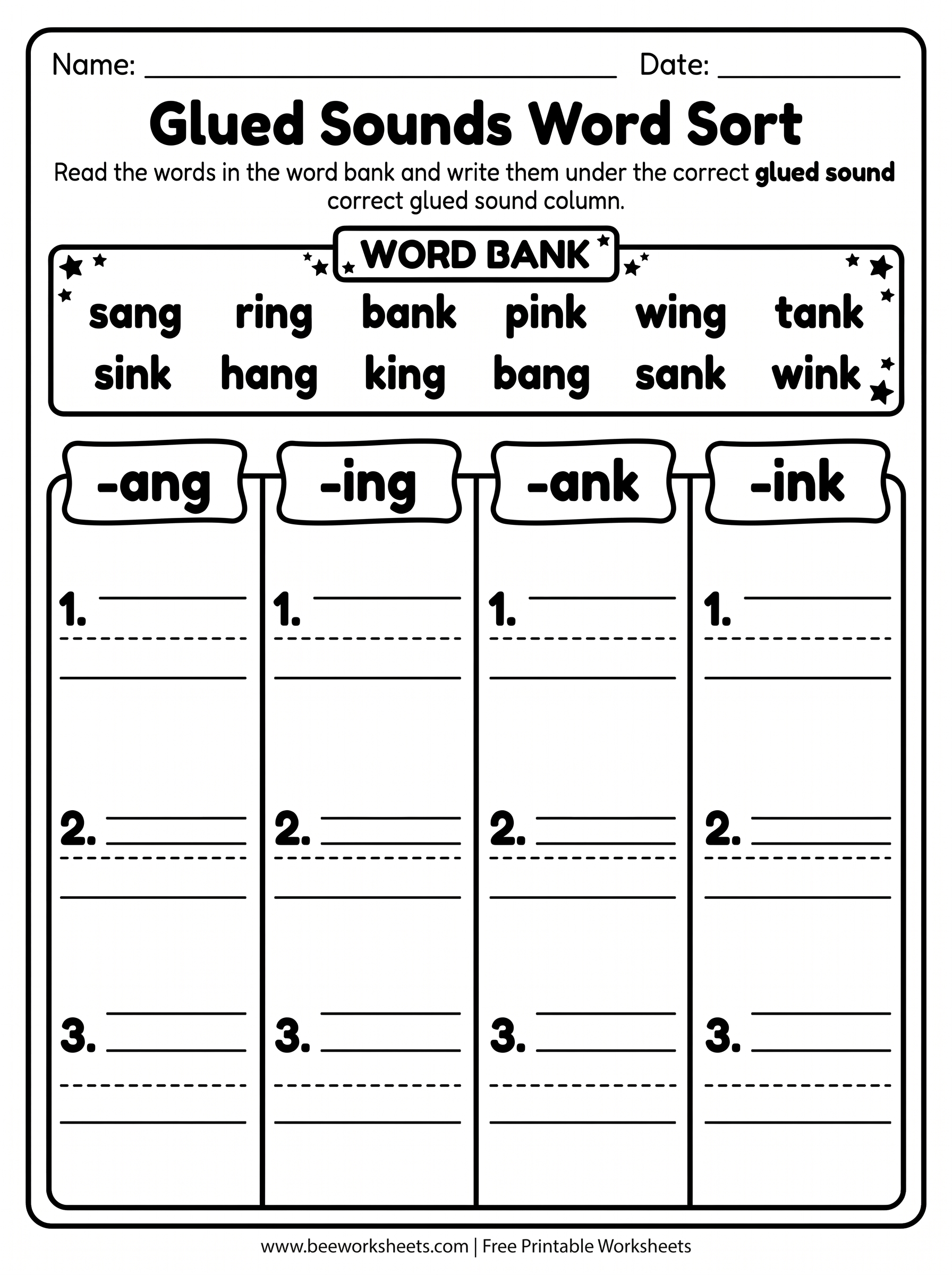
Read the words in the word bank and write them under the correct glued sound column.
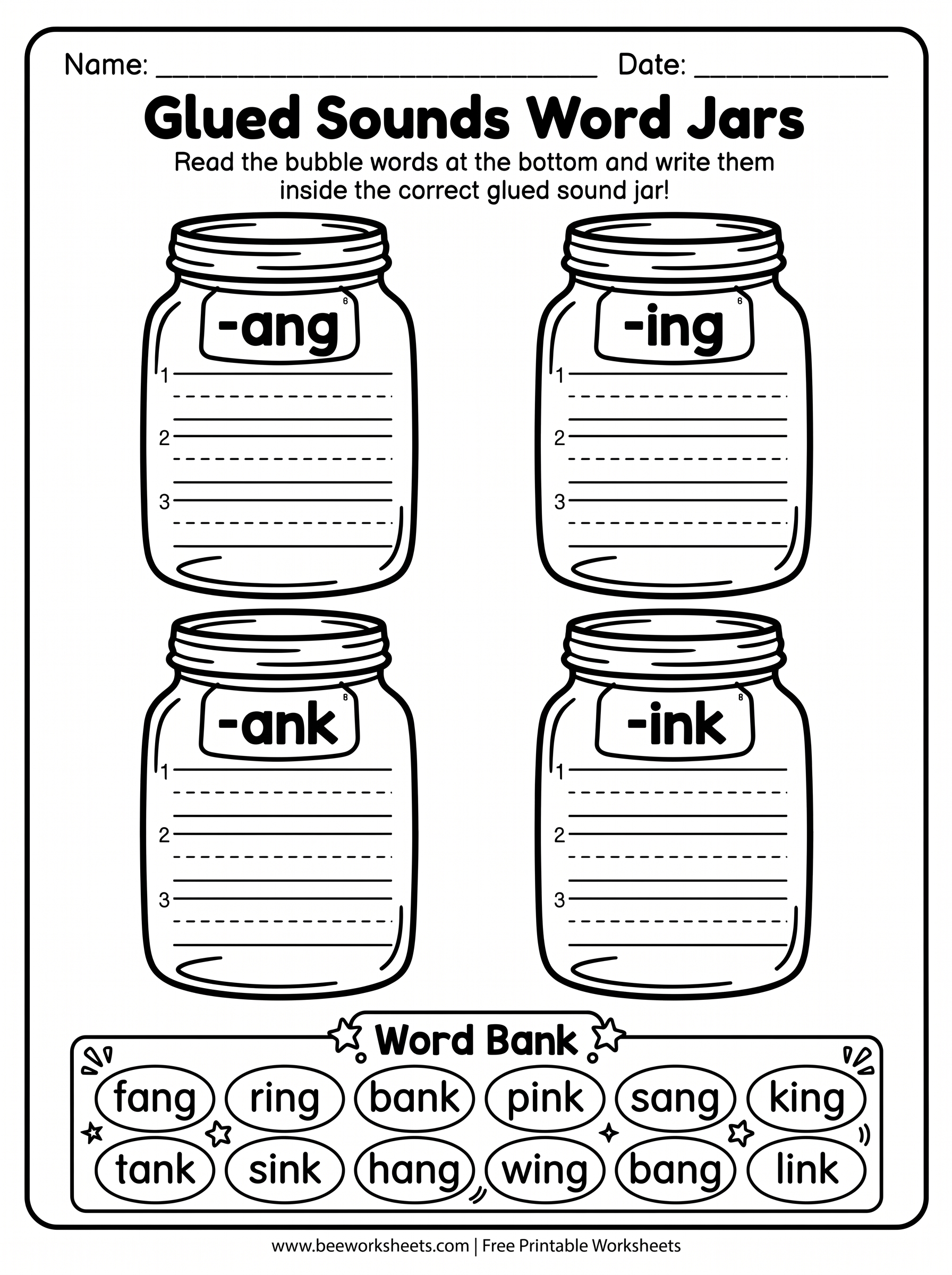
Read the bubble words at the bottom and write them inside the correct glued sound jar.
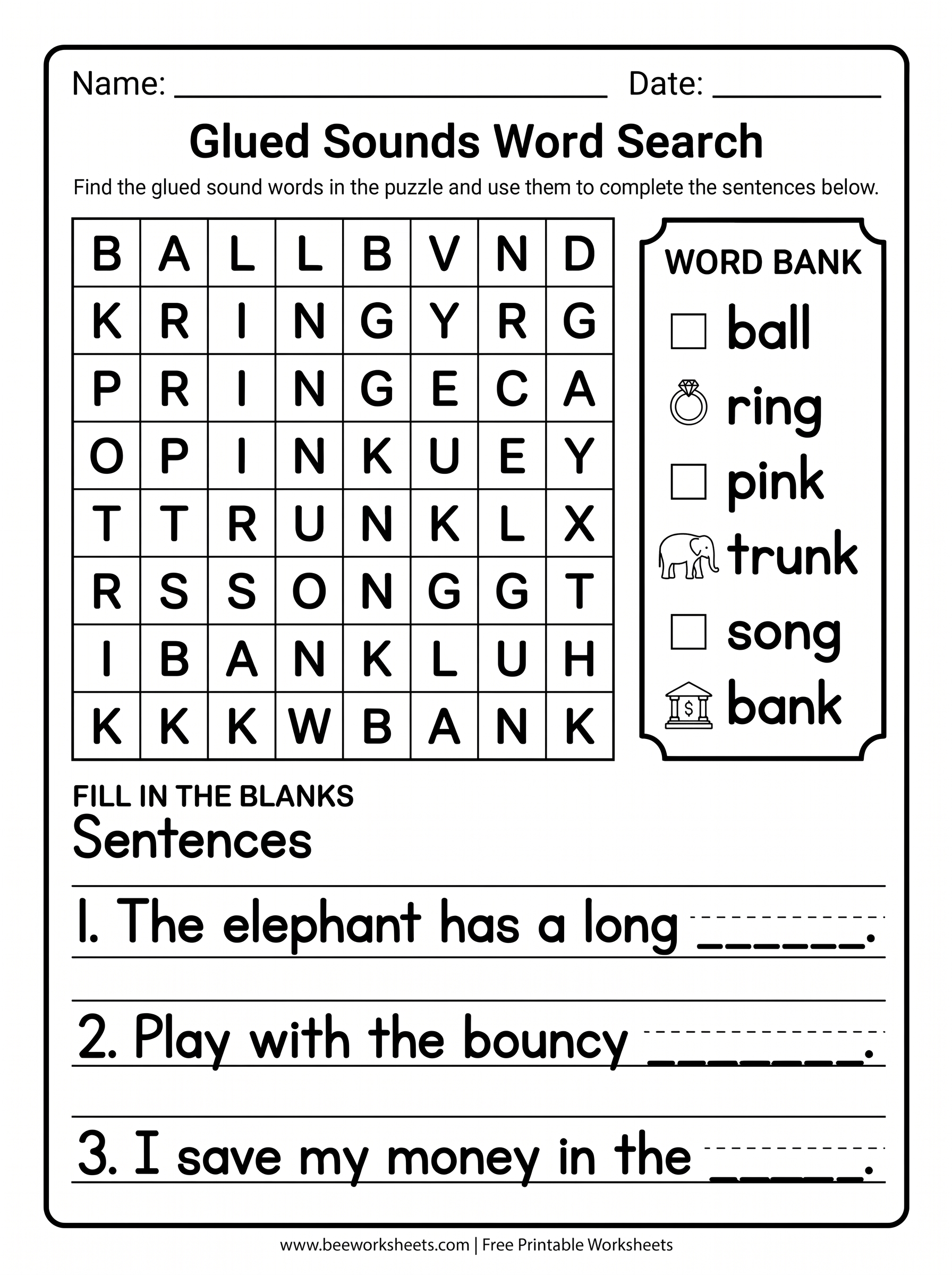
Find the glued sound words in the puzzle and use them to complete the sentences below.
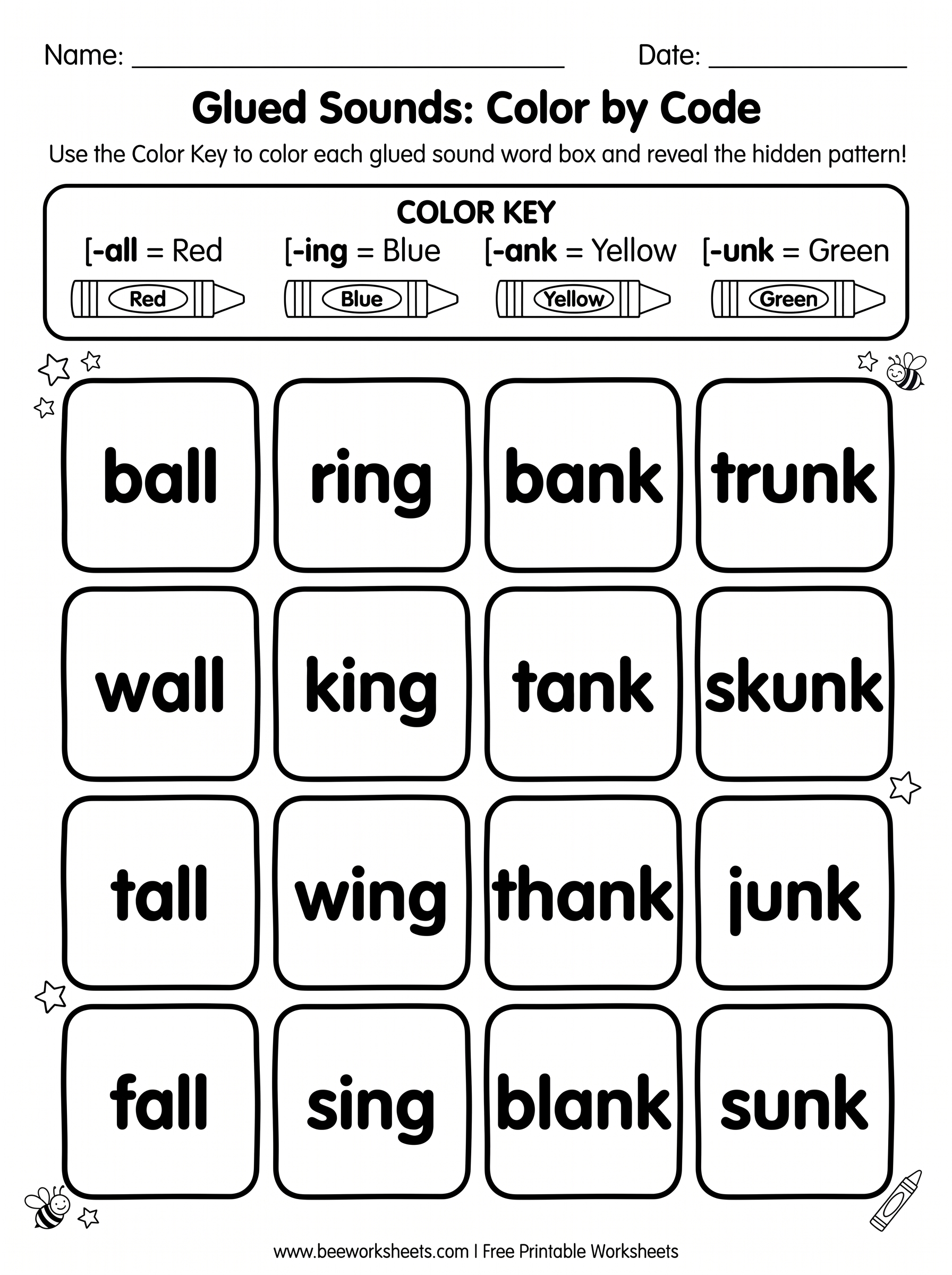
Use the Color Key to color each glued sound word box and reveal the hidden pattern.
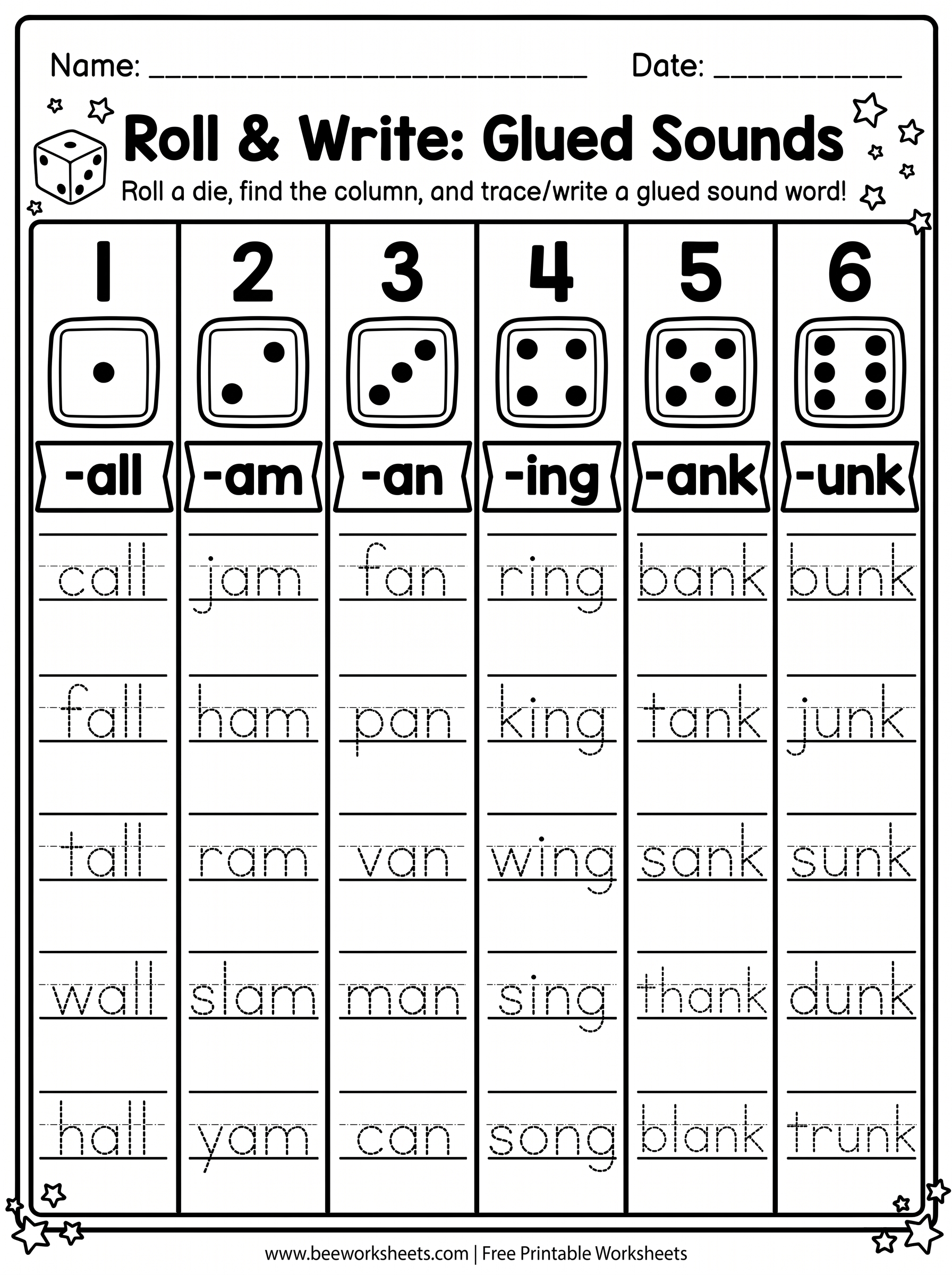
Roll a die, find the column, and trace or write a glued sound word.
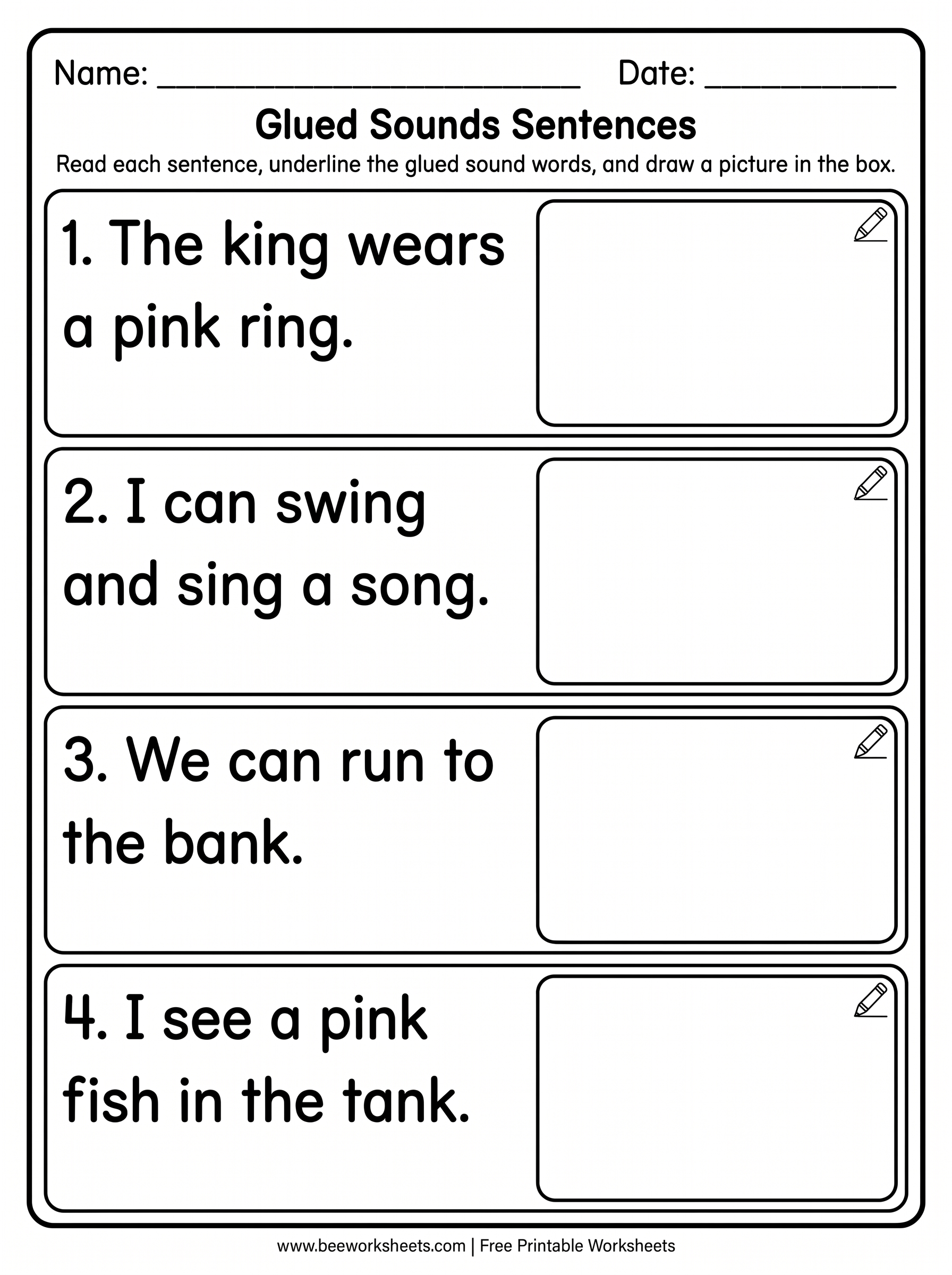
Read each sentence, underline the glued sound words, and draw a picture in the box.
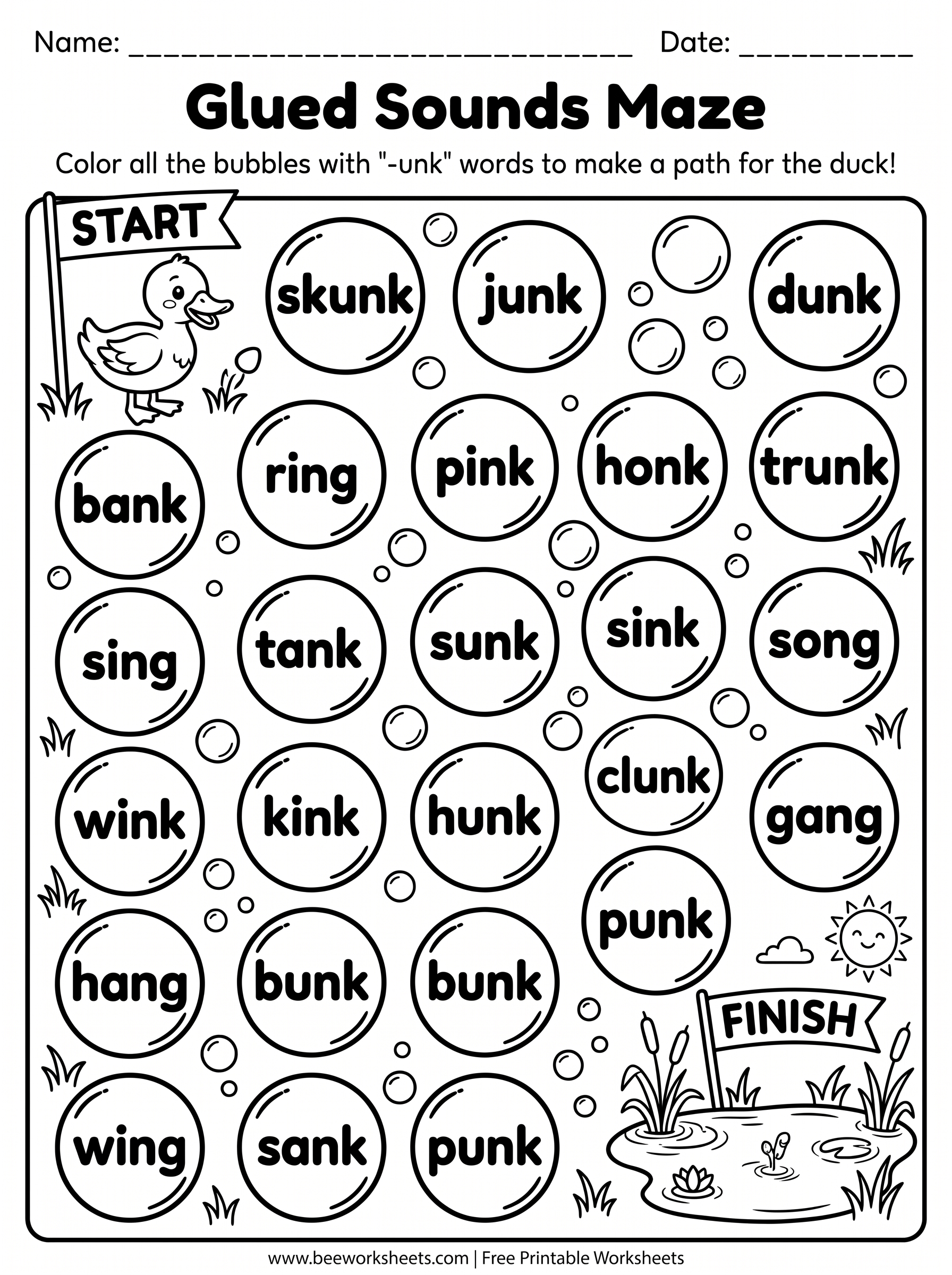
Color all the bubbles with -unk words to make a path for the duck.
In explicit, systematic phonics instruction aligned with the Science of Reading (SoR), students first master individual phonemes (such as short vowels and stop consonants in standard CVC words). However, as reading vocabulary expands, children encounter letter combinations where letters merge into a tight phonetic unit. These are known as glued sounds (or welded sounds in programs like Wilson Fundations).
When young learners attempt to sound out words like king letter-by-letter (/k/ /ɪ/ /n/ /ɡ/), they inevitably struggle because the /n/ and /g/ merge into the velar nasal sound /ŋ/. Teaching -ang, -ing, -ong, and -ung as single phonics units eliminates decoding confusion and drastically accelerates orthographic mapping into long-term memory.
In consonant blends (like bl, st, or dr), each consonant can still be distinctly segmented and tapped individually (/b/ /l/). In glued sounds (like -ing or -ank), the vowel and following consonants are tightly fused together and cannot be cleanly separated without distorting the natural pronunciation.
Yes, 100%. All BeeWorksheets printables are free to print and distribute for classroom instruction, homeschooling, tutoring sessions, and reading intervention centers.
The collection includes all major primary school welded sound families: -all, -am, -an (vowel glued sounds), -ang, -ing, -ong, -ung (the -ng family), and -ank, -ink, -onk, -unk (the -nk family).