1st to 2nd GradeBEE-01
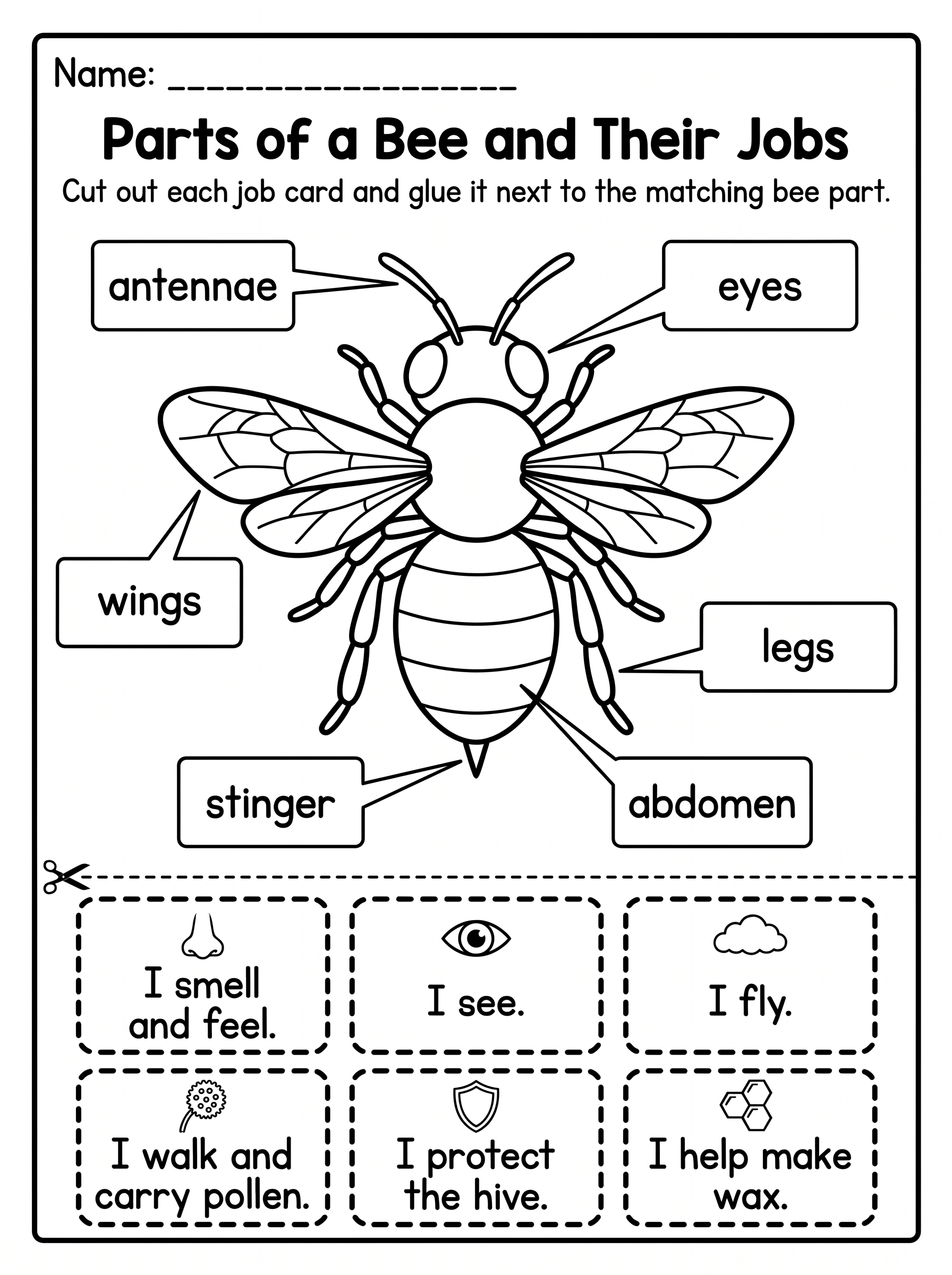
Parts of a Bee and Their Jobs
Cut out each job card and glue it next to the matching bee part.

Opening your printable PDF file.
Made by the BeeWorksheets Editorial Team · Editorial standards
Plan an entire spring honey bee unit with these free printable bee worksheets from BeeWorksheets (Bee Worksheets). Every black-and-white US Letter page uses true insect science and plain directions across parts of a bee, the four-stage life cycle, 1-inch honeycomb hexagons, counting, ee phonics, tracing, bee facts and kindness crafts.
Connect honey bee anatomy to real survival jobs (NGSS 1-LS1-1): cut-and-paste body part jobs, a preschool Build a Bee craft with two 3-leg strips, a six-step directed drawing guide and our classic write-in Label the Body Parts of a Bee sheet.
Cut out each job card and glue it next to the matching bee part.
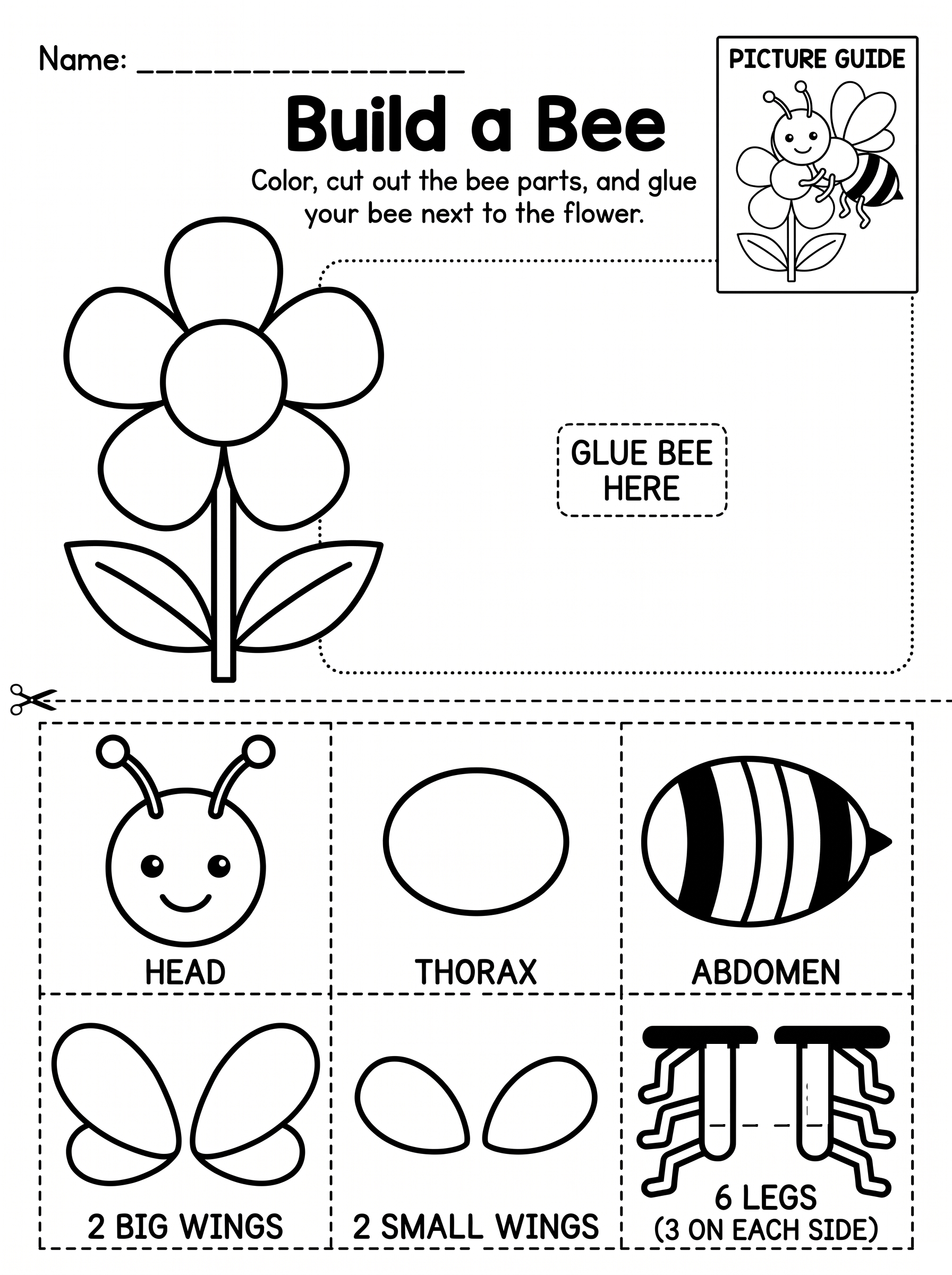
Color, cut out the bee parts, and glue your bee next to the flower.
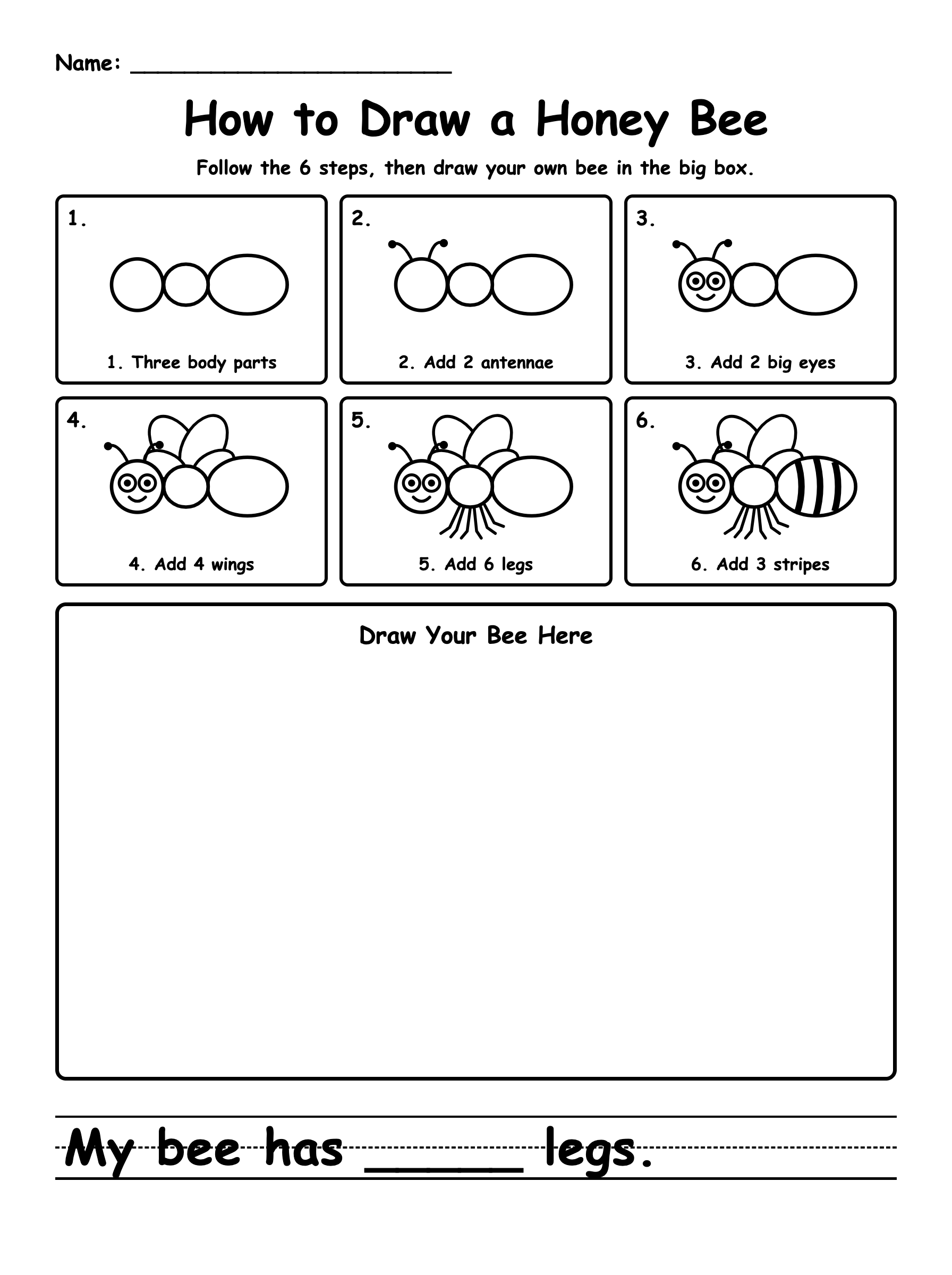
Follow the 6 steps, then draw your own bee in the big box.
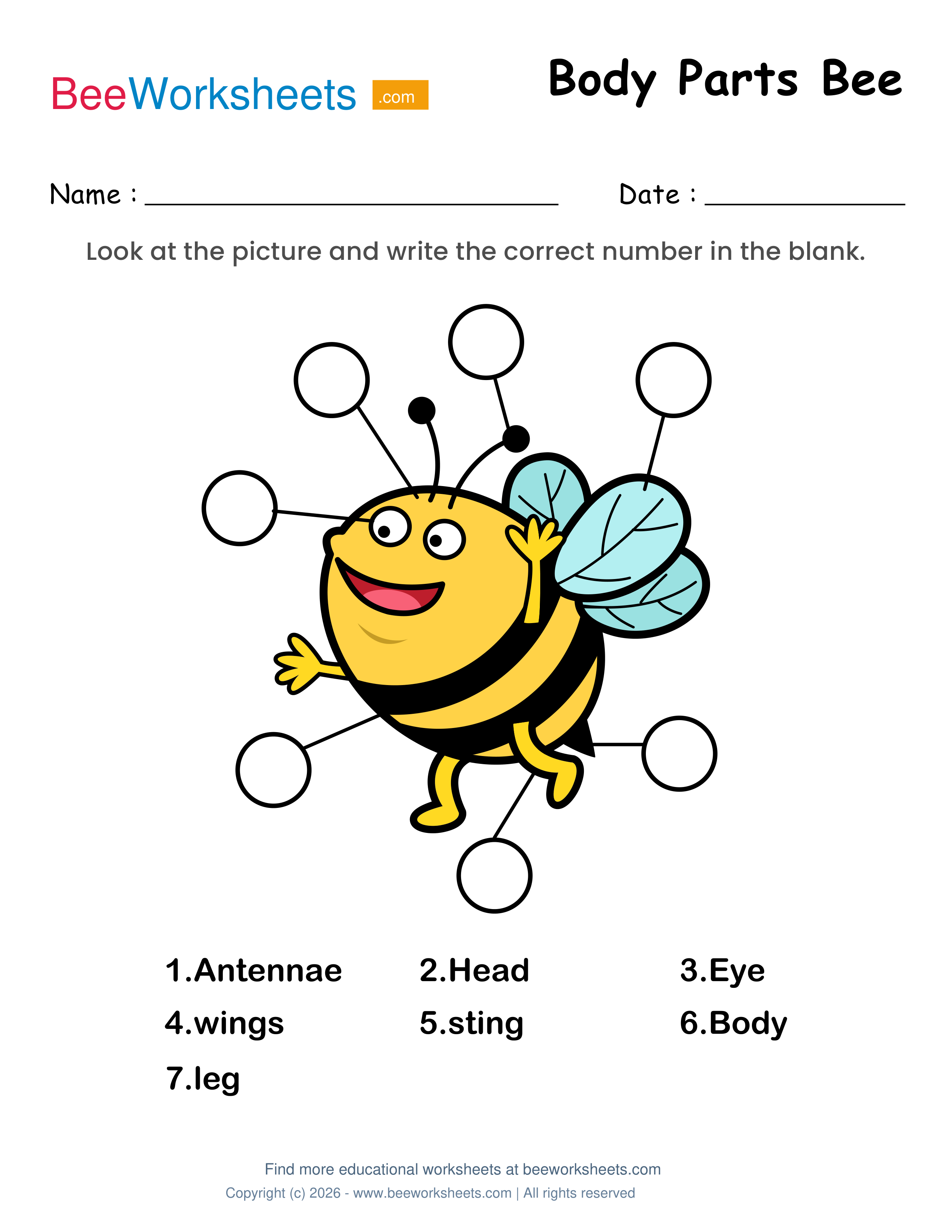
Free printable science worksheet: Label the Body Parts of Bee. Features engaging illustrations, anatomical pointer labels, word bank, and complete answer key for preschool, kindergarten, and Grade 1.
Sequence egg, larva, pupa and adult bee clockwise, build a brass-brad spinner wheel for partner retelling, and add 3 + 6 + 12 = 21 worker bee growth days on a grouped hexagon strip.
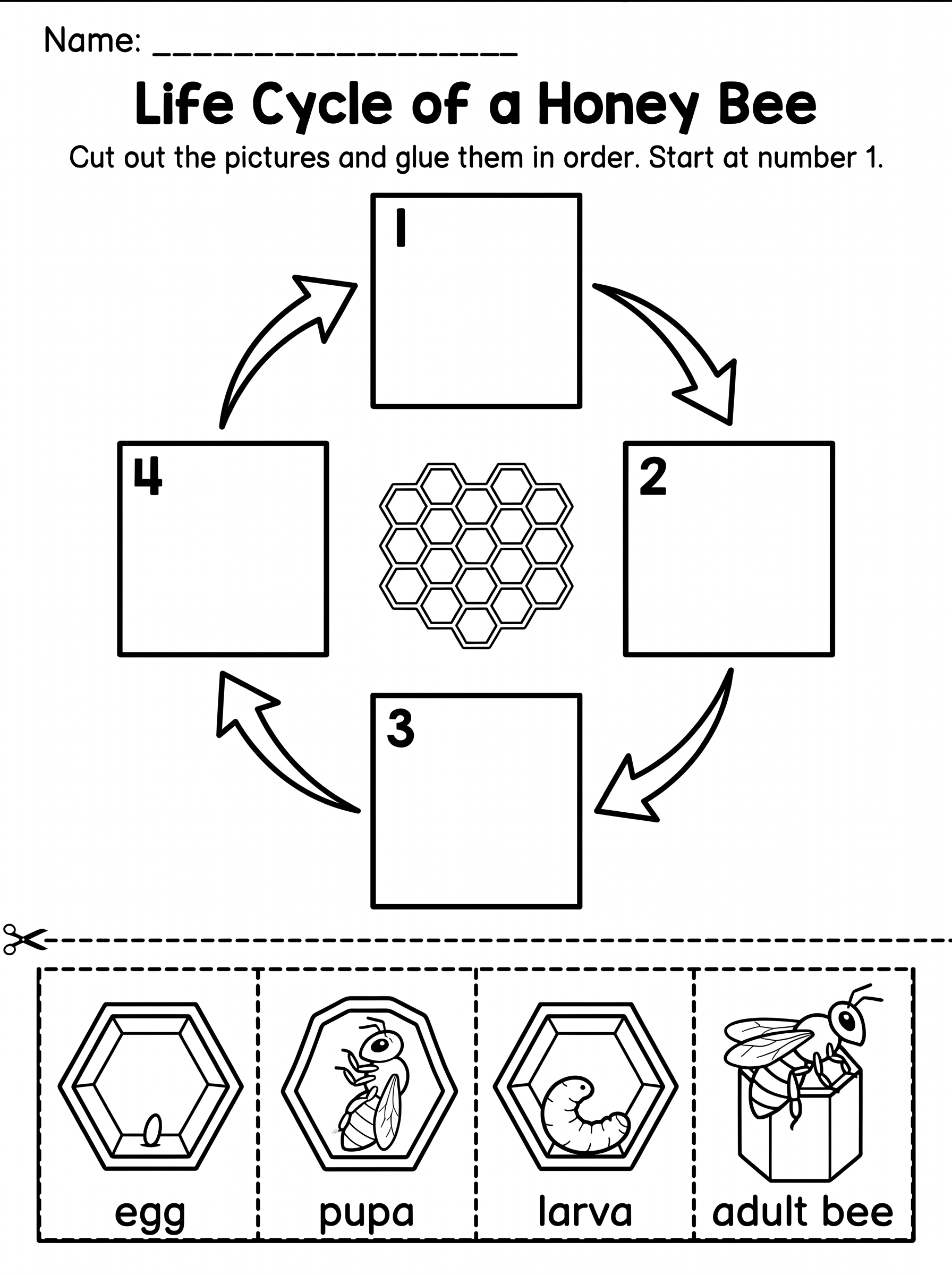
Cut out the pictures and glue them in order. Start at number 1.
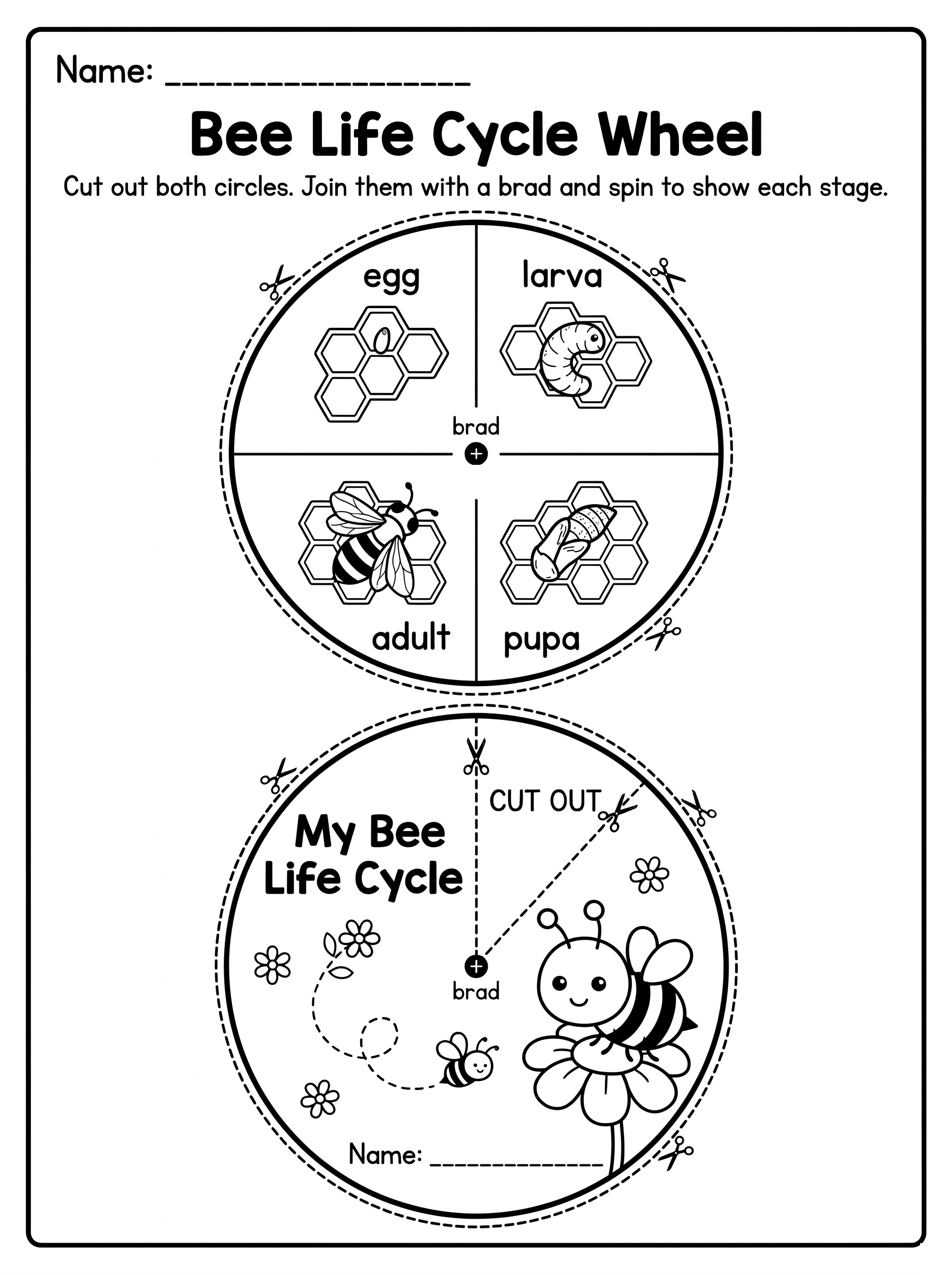
Cut out both circles. Join them with a brad and spin to show each stage.
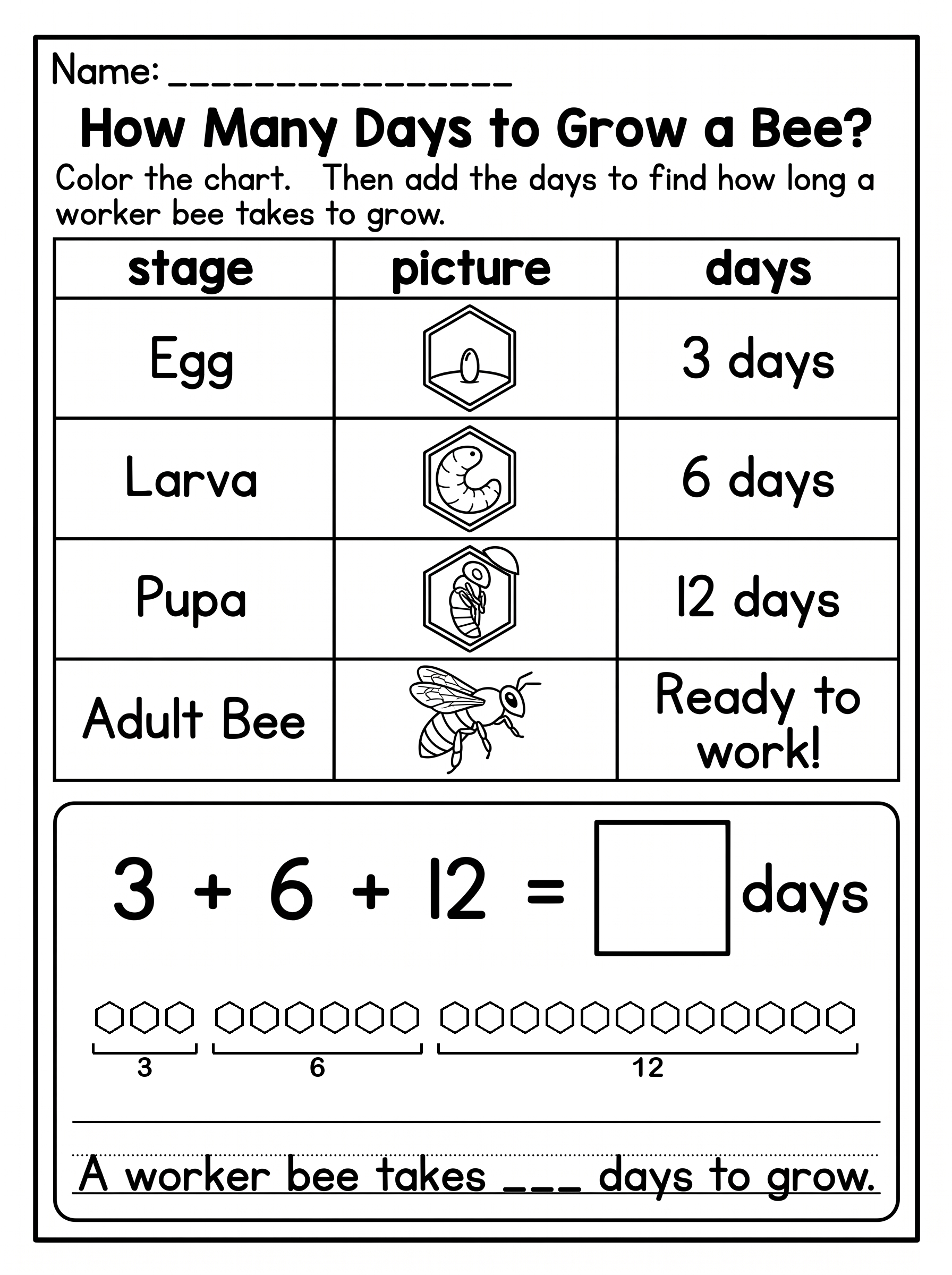
Color the chart. Then add the days to find how long a worker bee takes to grow.
Practice 2D geometry (K.G.A.2, K.G.B.6, 1.G.A.2): hunt rotated six-sided hexagons in a bee garden, cover an exact 1-inch honeycomb mat with real classroom pattern blocks, and fill missing numbers 1 to 20.
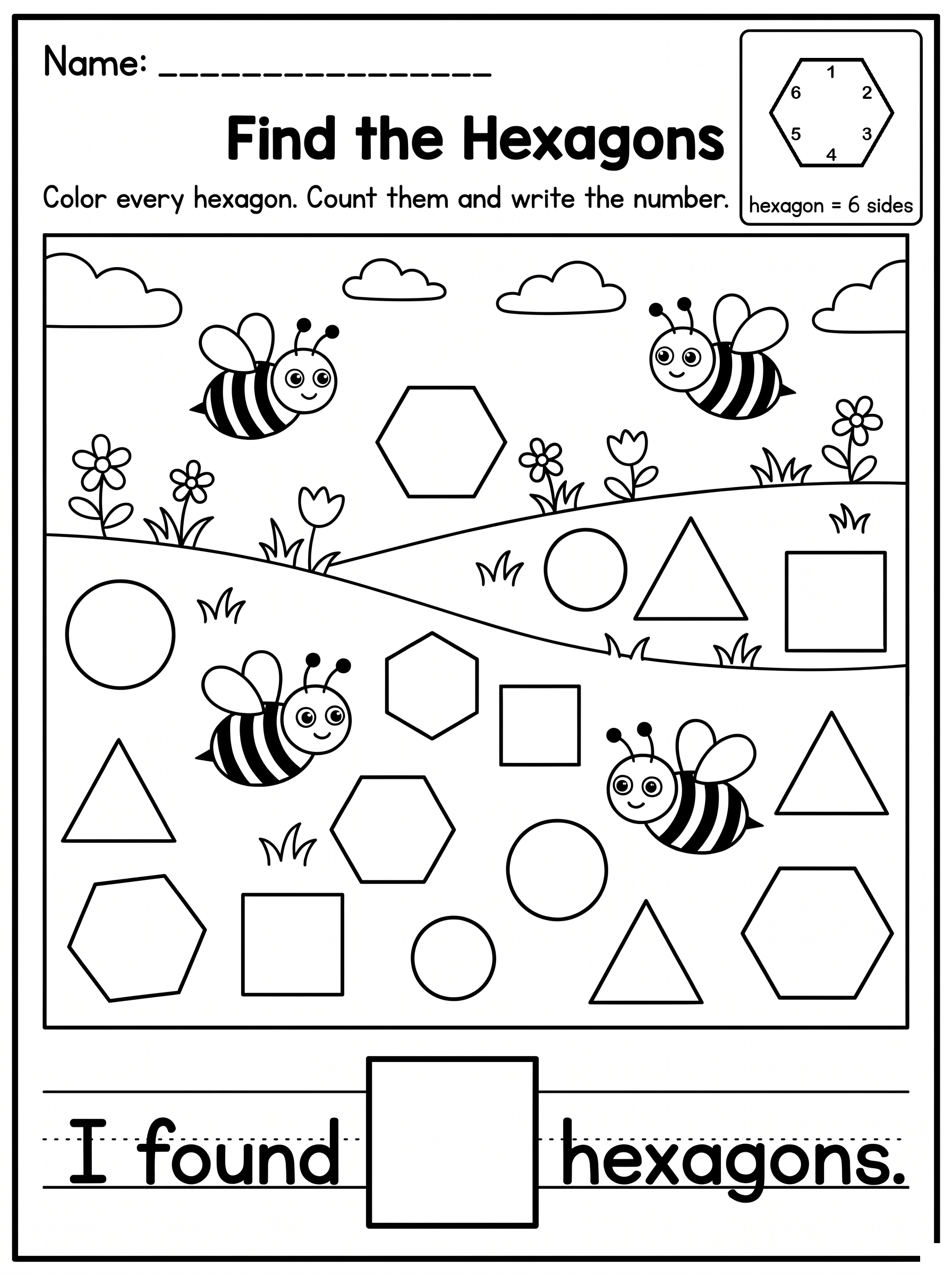
Color every hexagon. Count them and write the number.
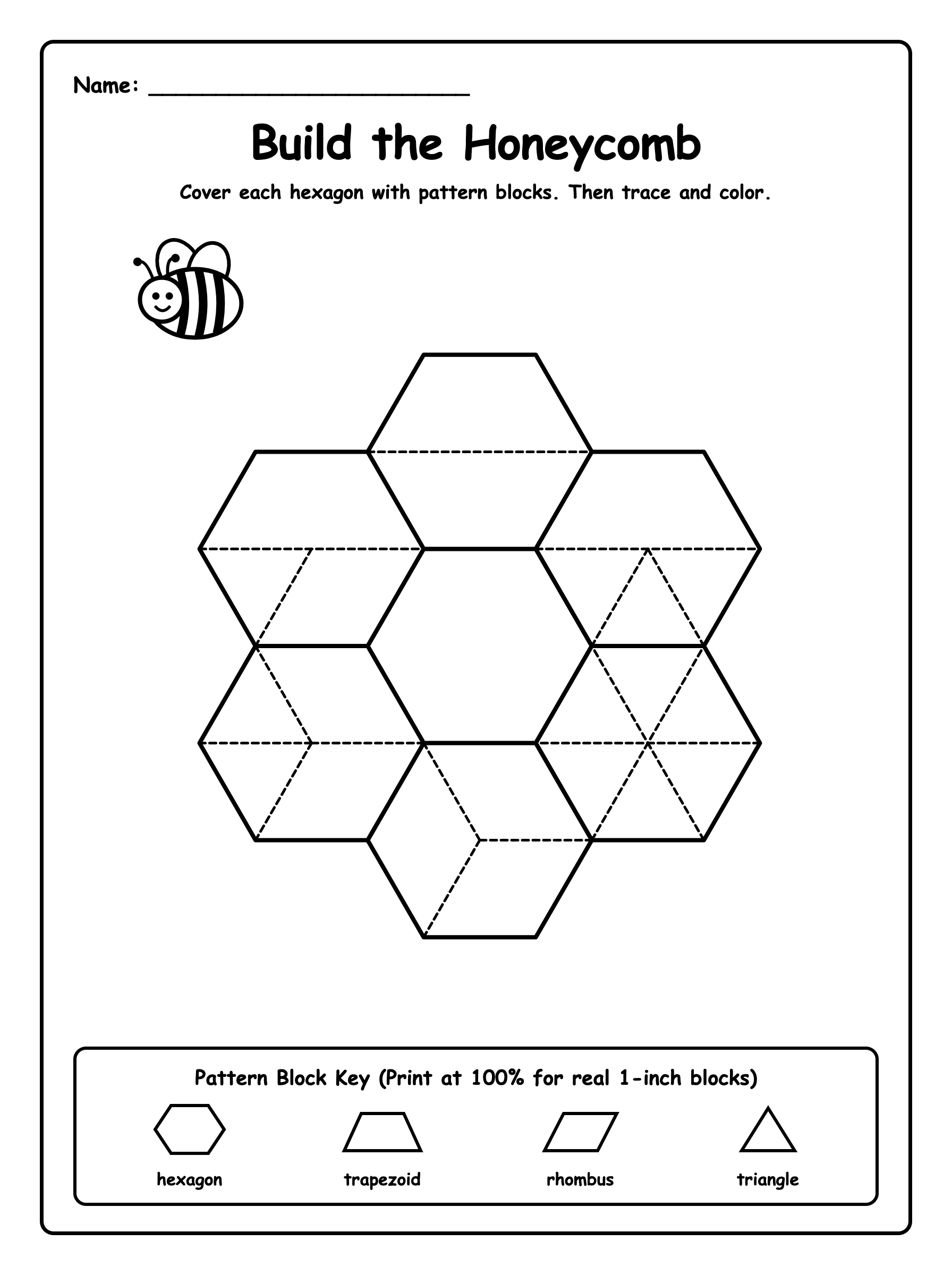
Cover each hexagon with pattern blocks. Then trace and color.
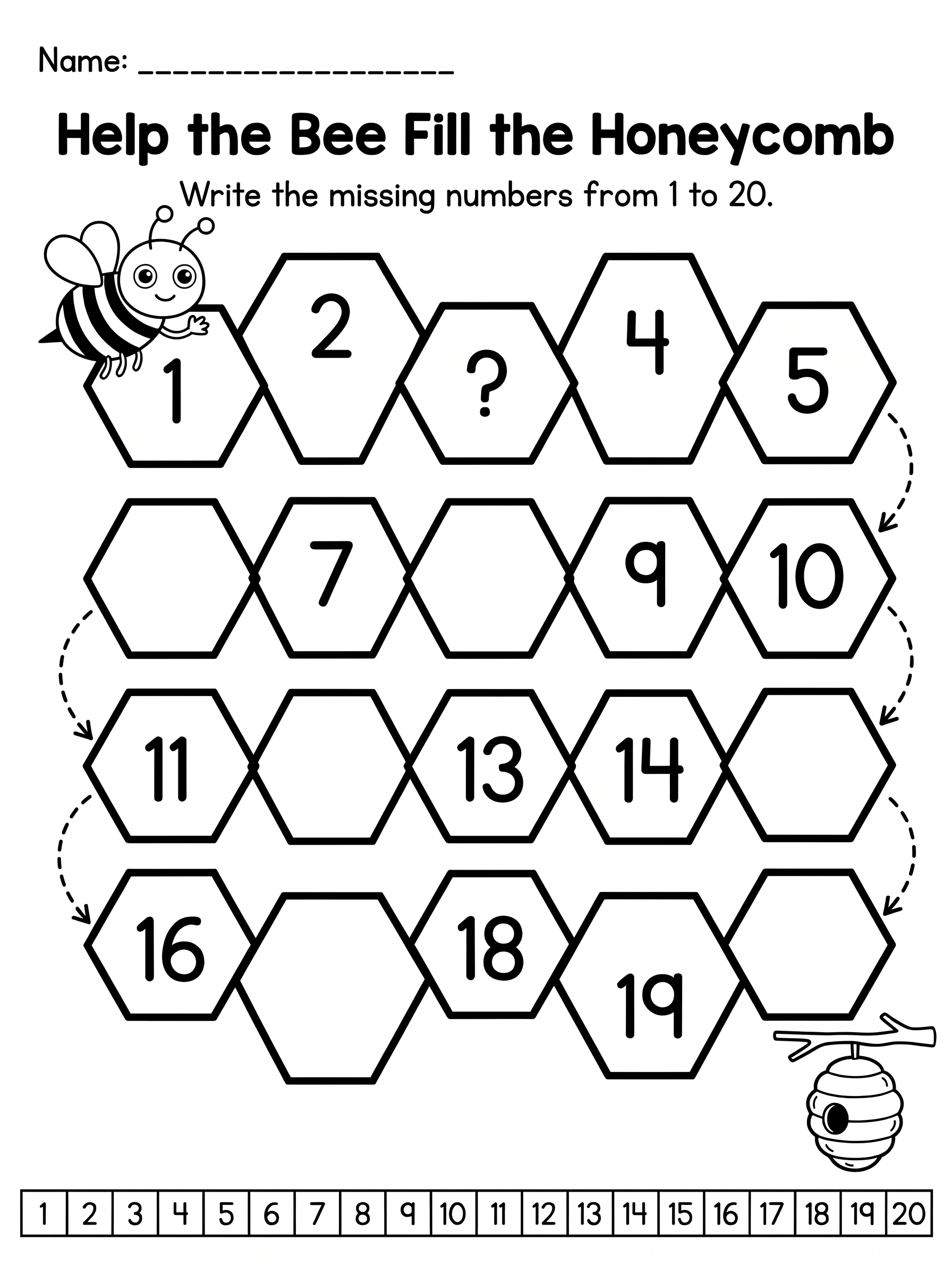
Write the missing numbers from 1 to 20.
Build number sense and add-to word problems (K.CC.B.4, K.OA.A.2): match mixed 1 to 10 bee groups to numbered hives, clip ten-frame cards with clothespins, and solve four illustrated bee addition stories.
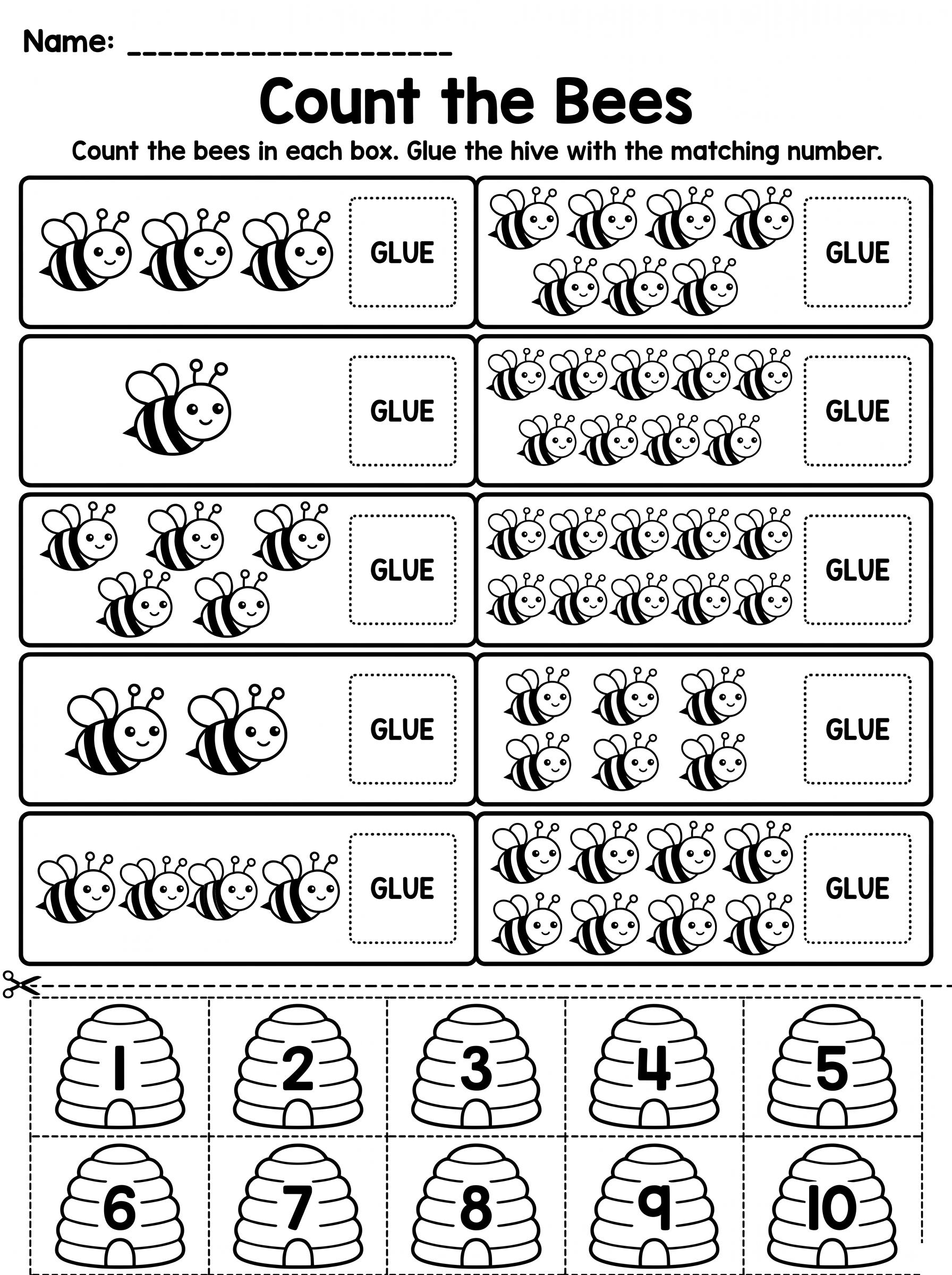
Count the bees in each box. Glue the hive with the matching number.
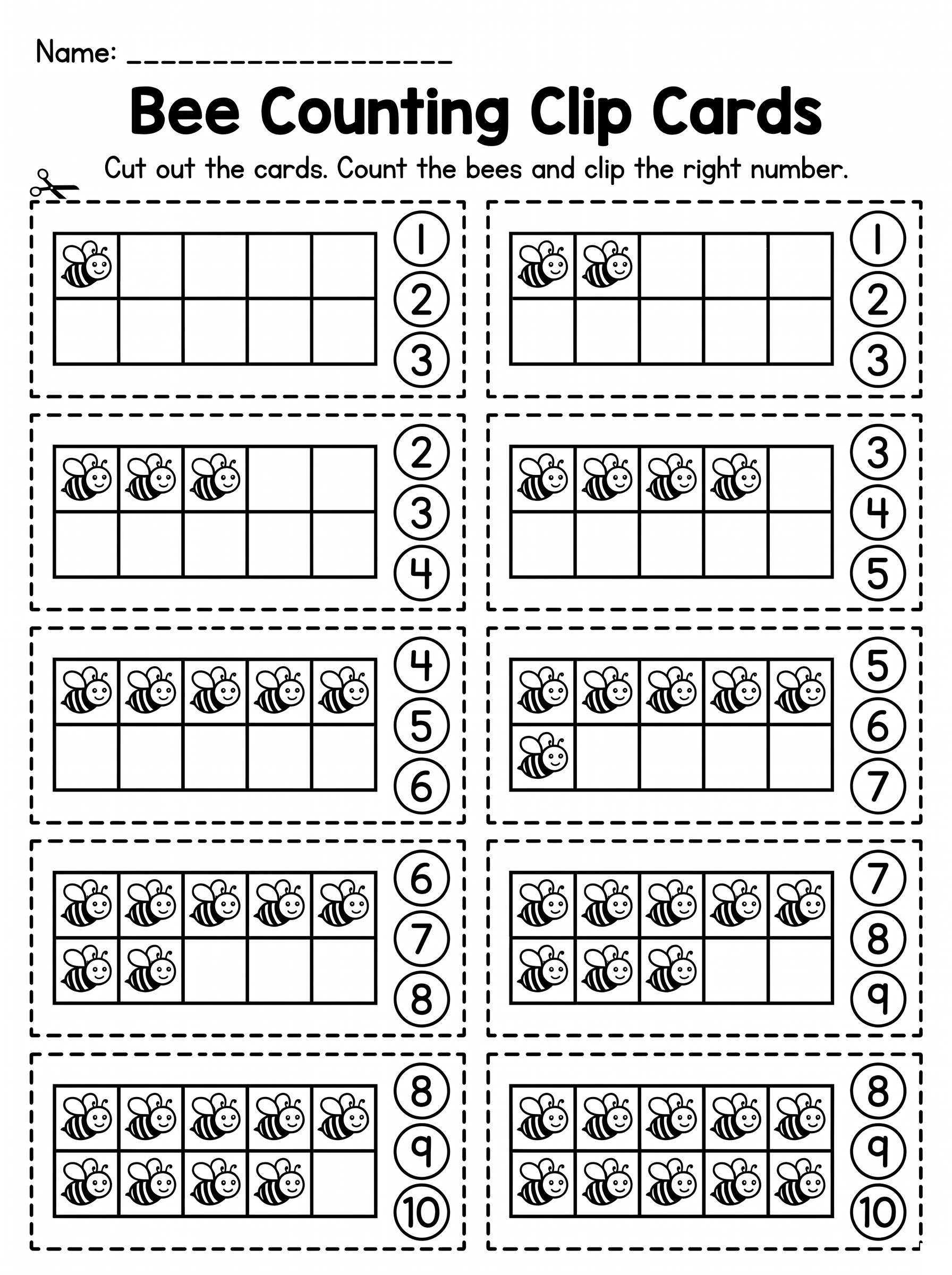
Cut out the cards. Count the bees and clip the right number.
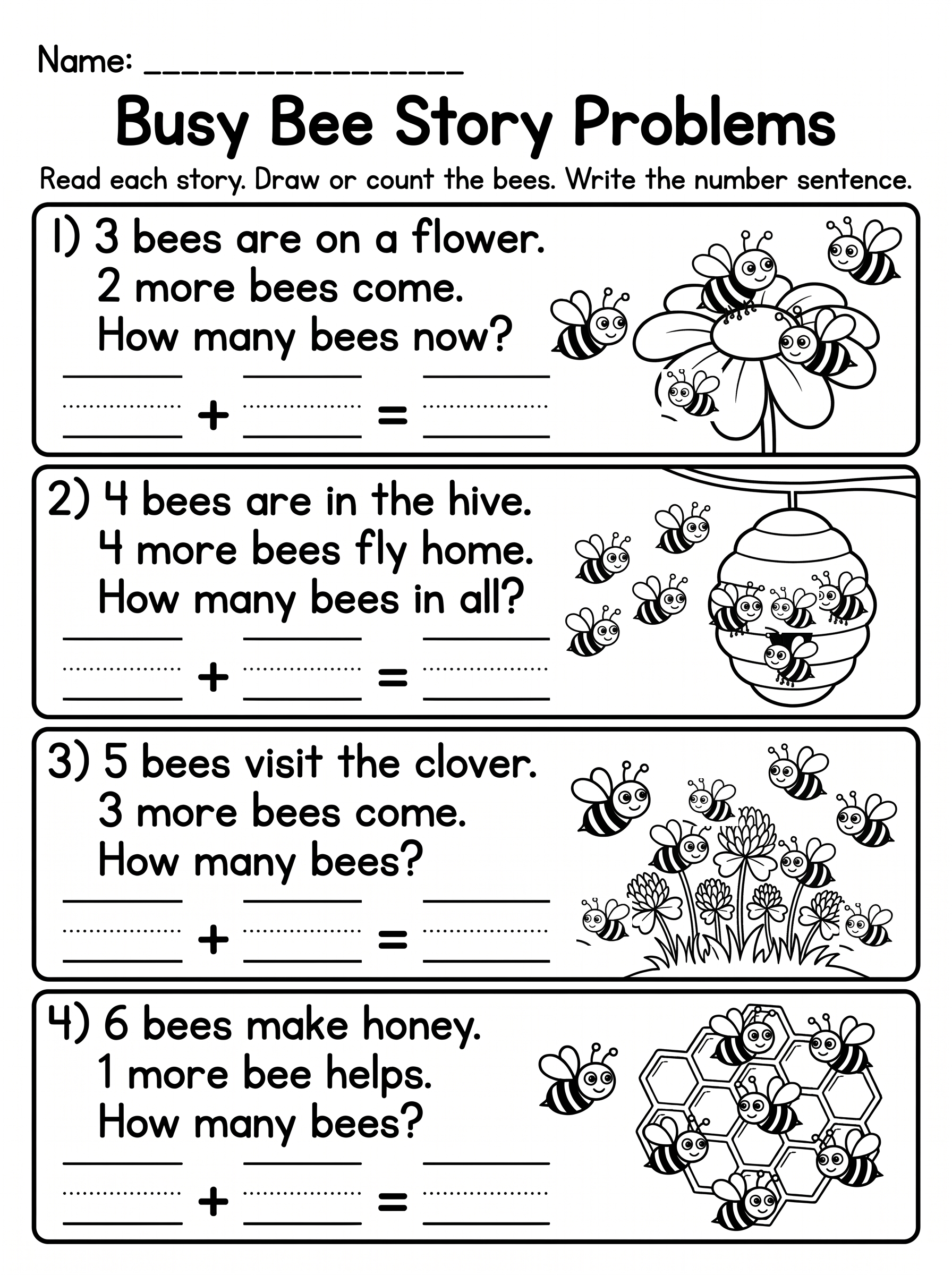
Read each story. Draw or count the bees. Write the number sentence.
Target long vowel team ee (RF.1.2a, RF.1.3c) with a short e versus ee picture sort, one-sound-per-box Elkonin word mapping, decodable read-and-draw sentences and a UFLI-aligned ee and ea passage.
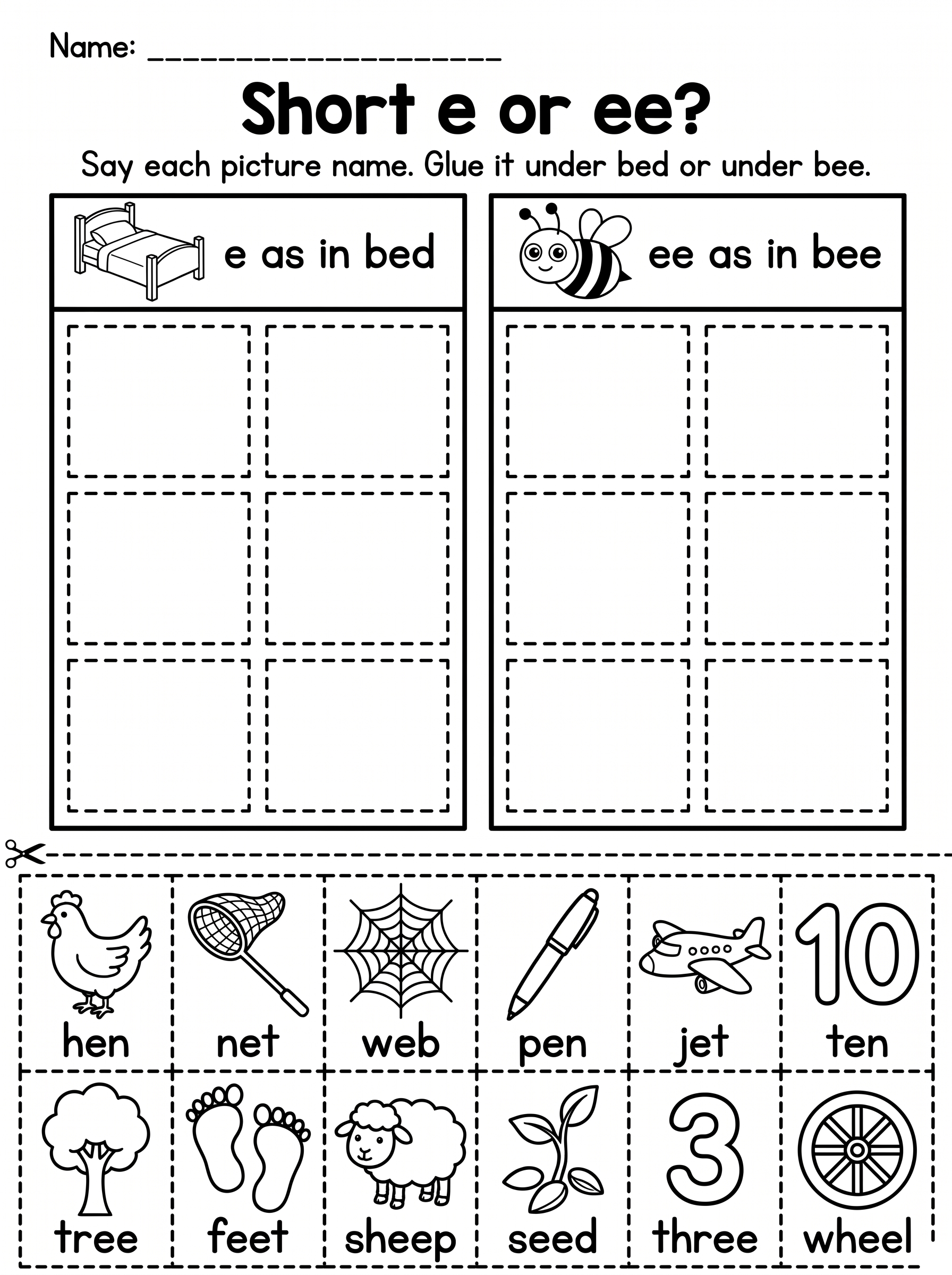
Say each picture name. Glue it under bed or under bee.
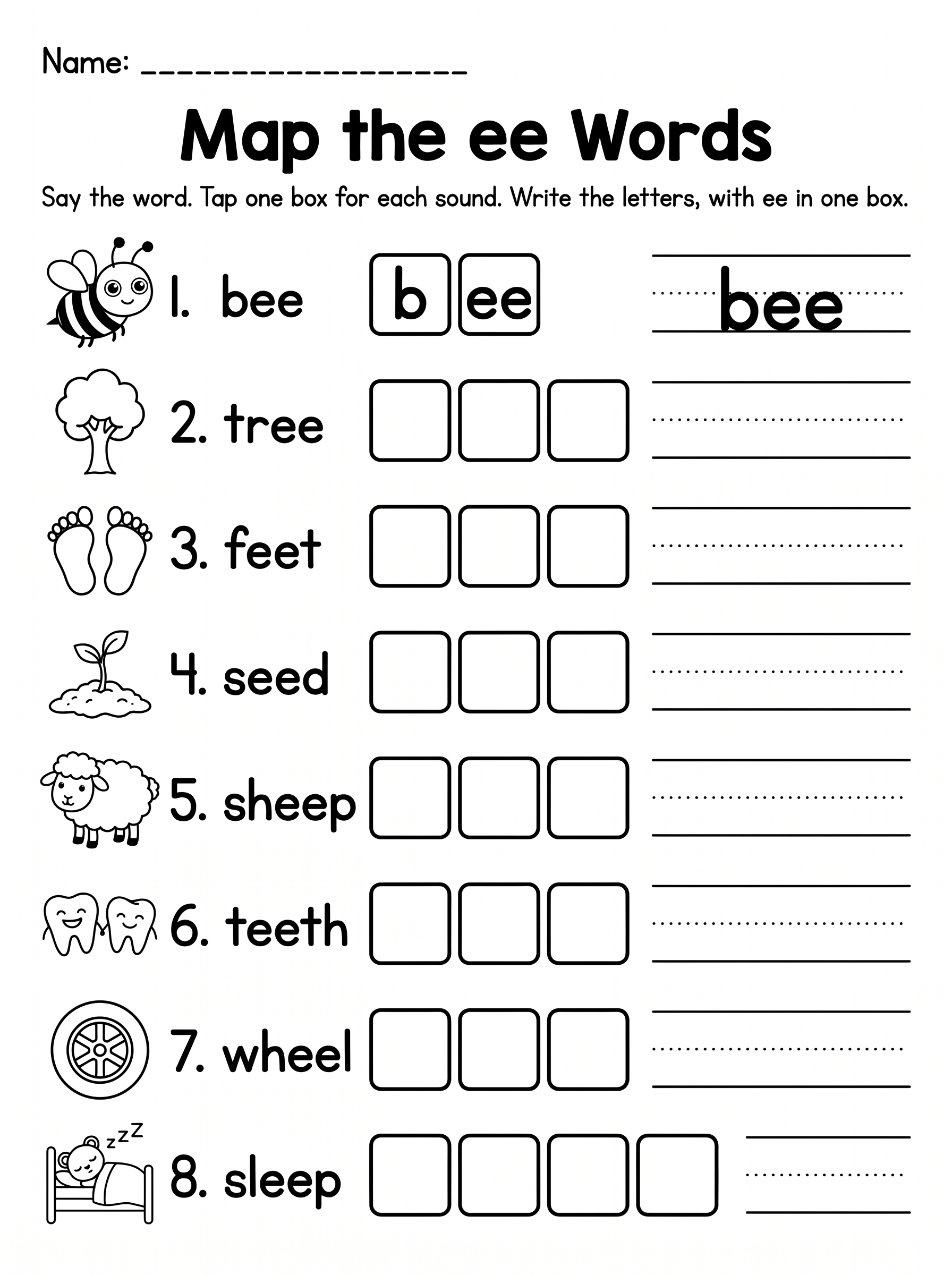
Say the word. Tap one box for each sound. Write the letters, with ee in one box.
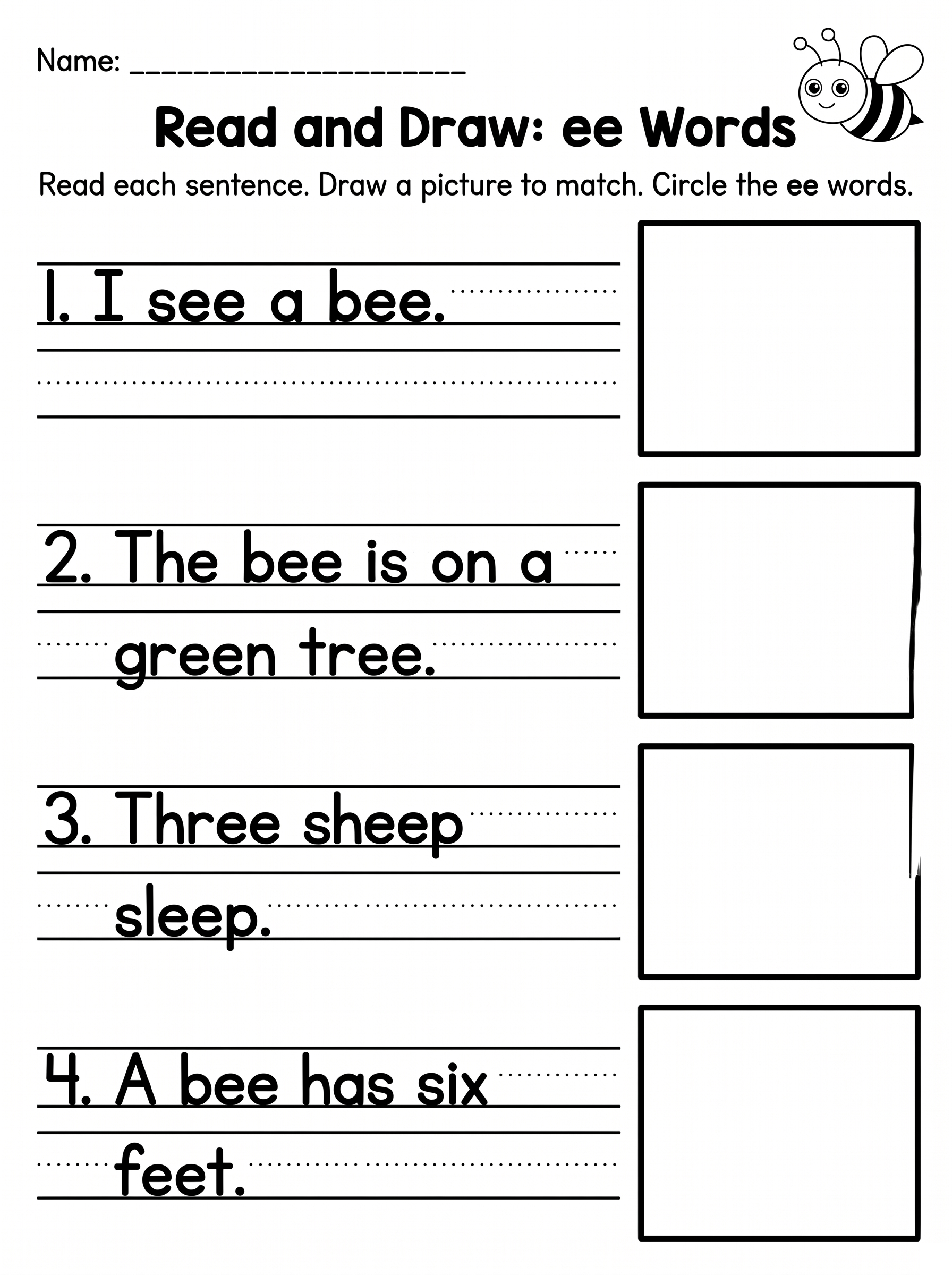
Read each sentence. Draw a picture to match. Circle the ee words.
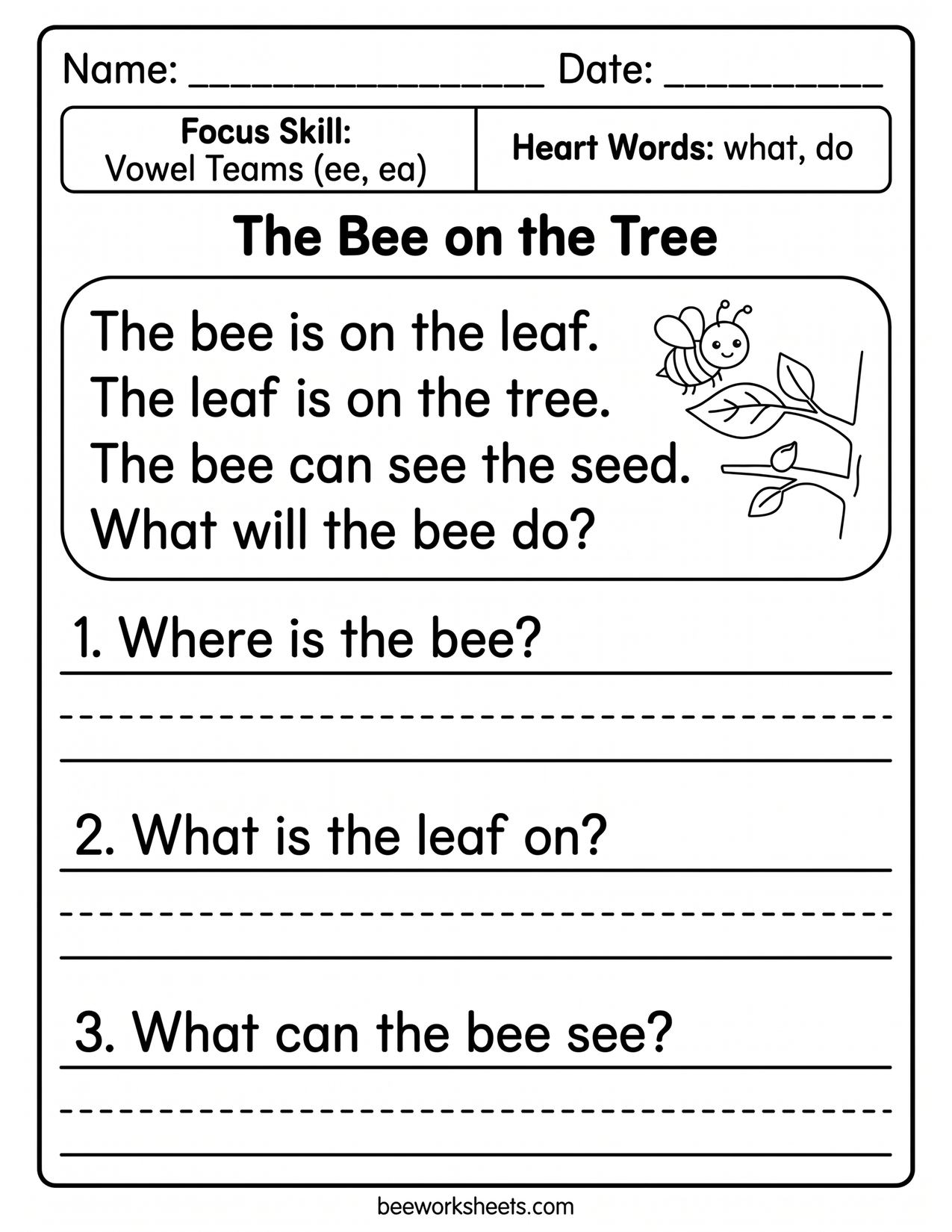
Review Focus Skill (Vowel Teams ee, ea) and Heart Words (what, do), read 'The Bee on the Tree' 3 times, and answer the 3 comprehension questions.
Want extra ee and long-vowel practice after these sheets? Build custom sound-box lists with our Word Mapping Generator or play interactive Long Vowel Games on your whiteboard.
BeeWorksheets is independent; "UFLI-aligned" describes general phonics scope compatibility and does not imply affiliation with or endorsement by the University of Florida Literacy Institute.
Warm up preschool hands with six progressive bee-to-flower tracing strokes, a wide hexagon hive maze, and guided uppercase B and lowercase b letter formation.
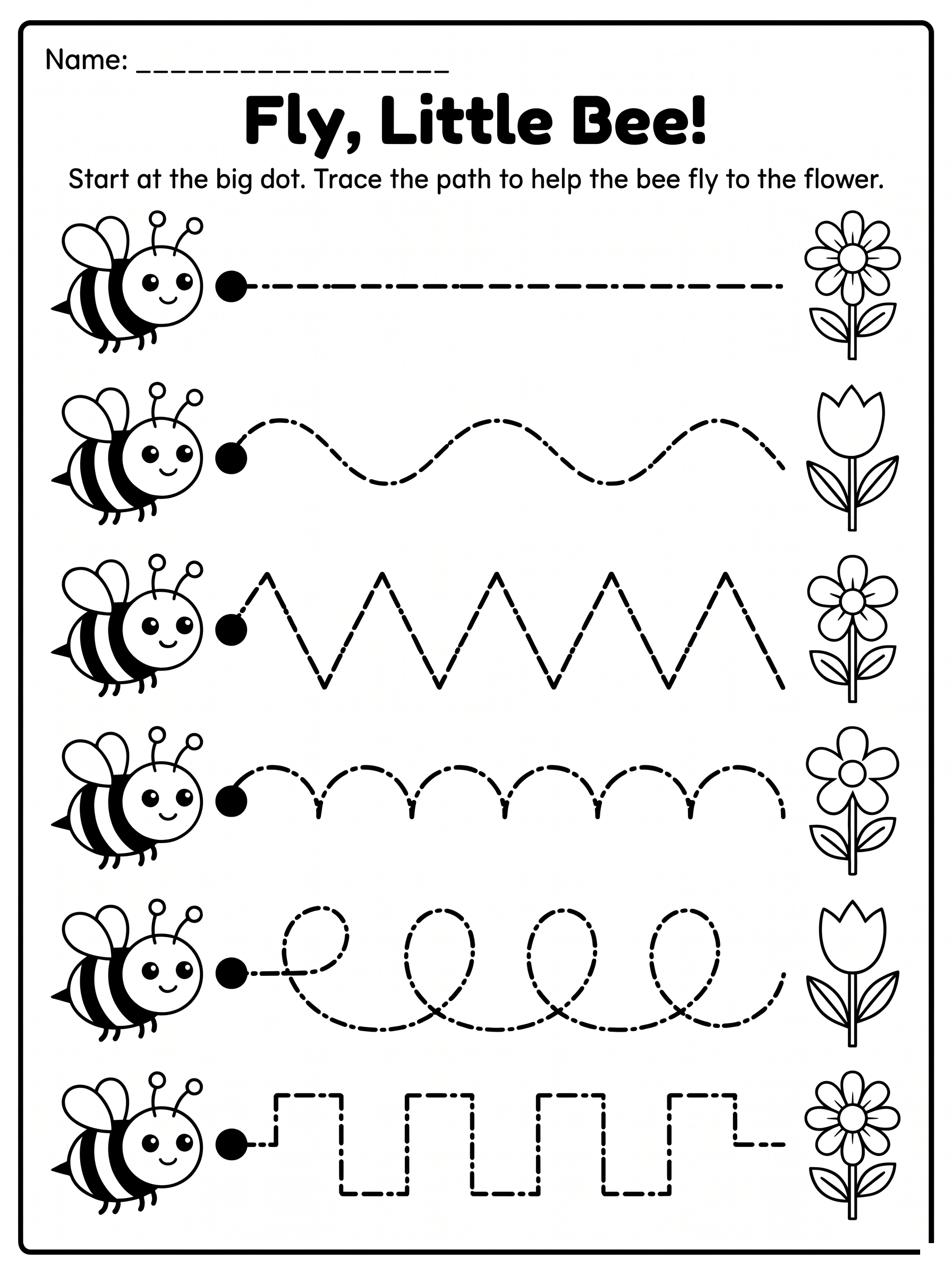
Start at the big dot. Trace the path to help the bee fly to the flower.
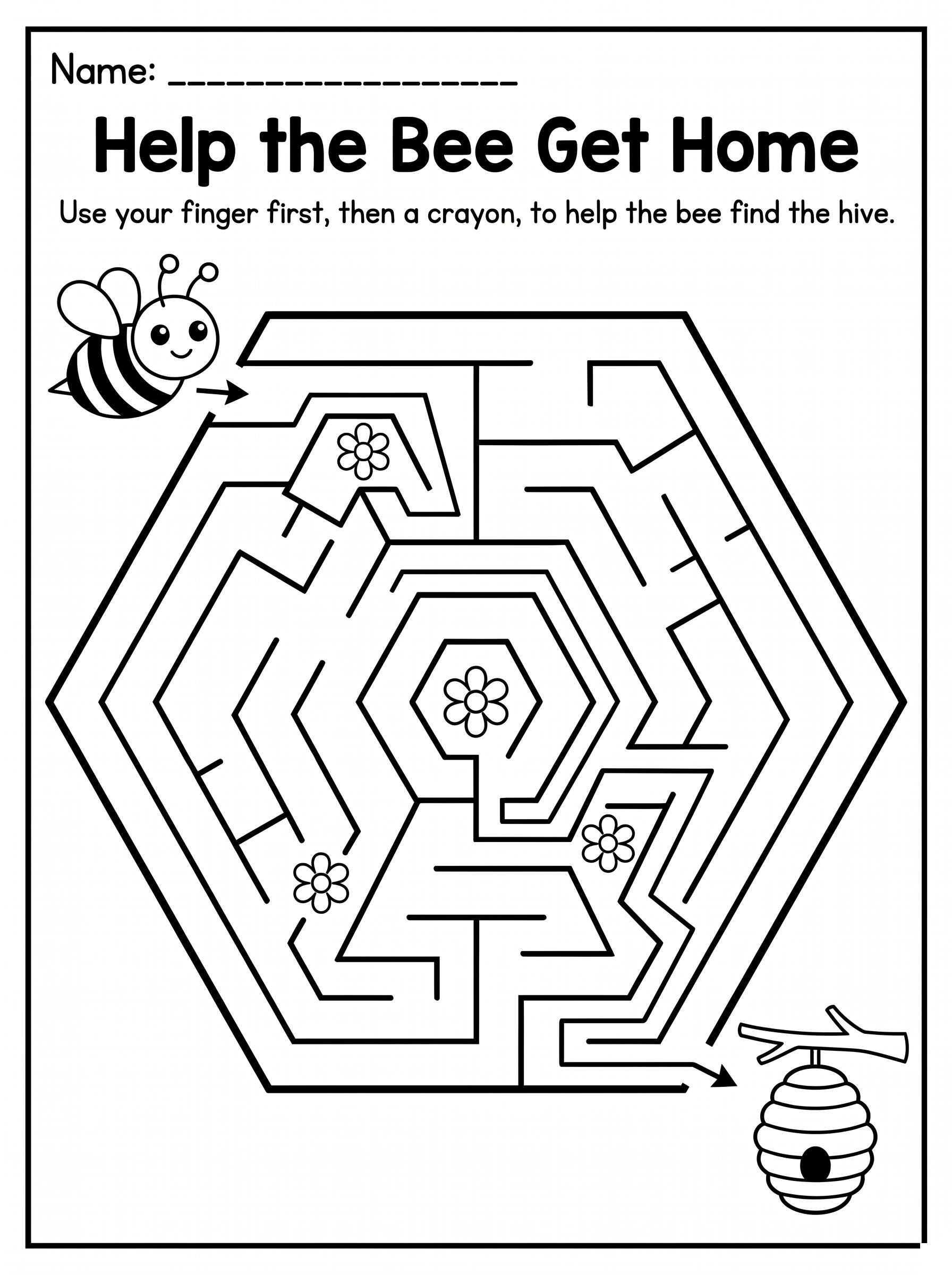
Use your finger first, then a crayon, to help the bee find the hive.
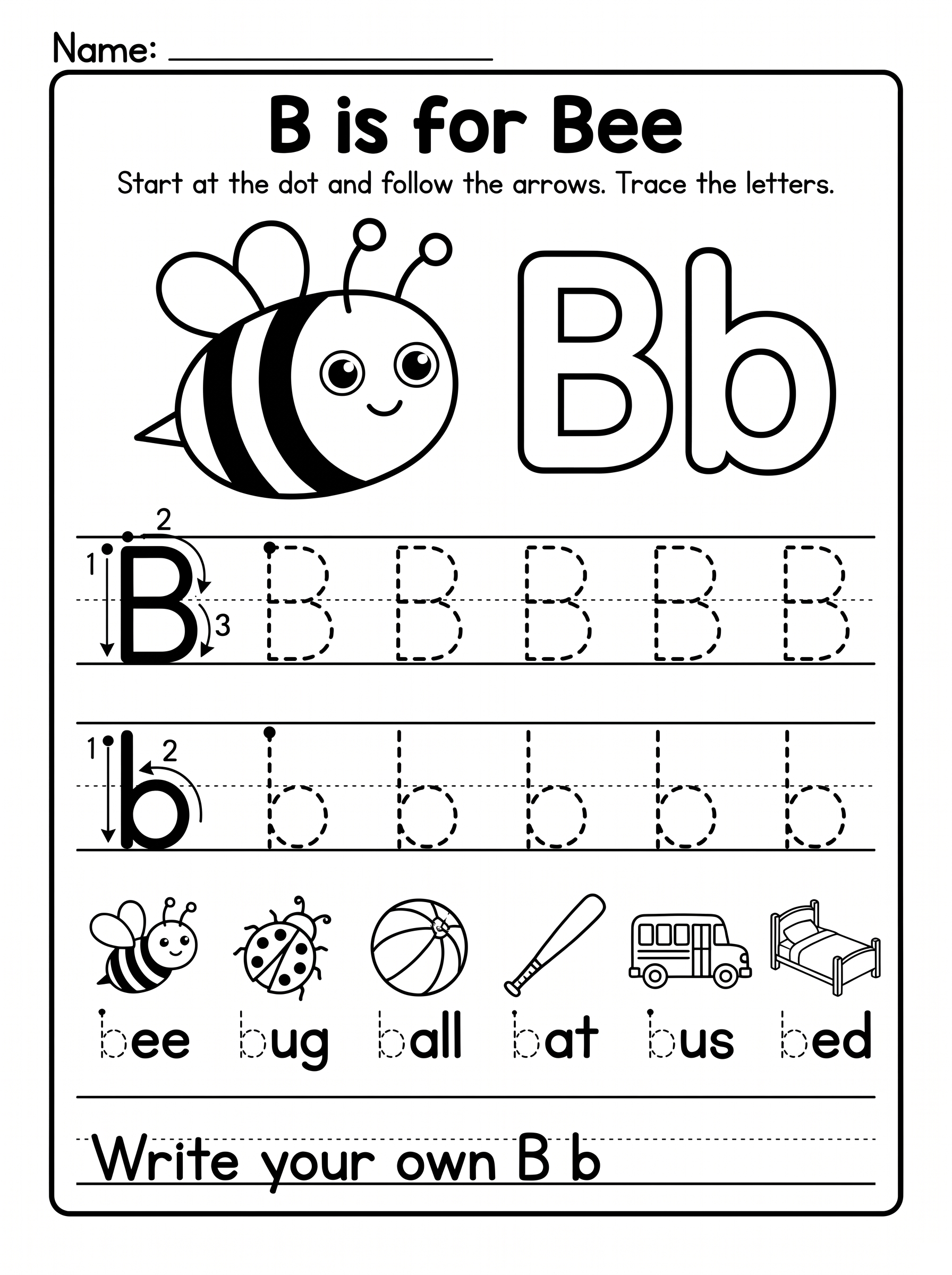
Start at the dot and follow the arrows. Trace the letters.
Read six verified honey bee sentences with picture-choice comprehension checks (RI.1.1), sort facts on a Bees Can, Have, Are chart, and write creative stories inside a hexagon If I Were a Bee prompt.
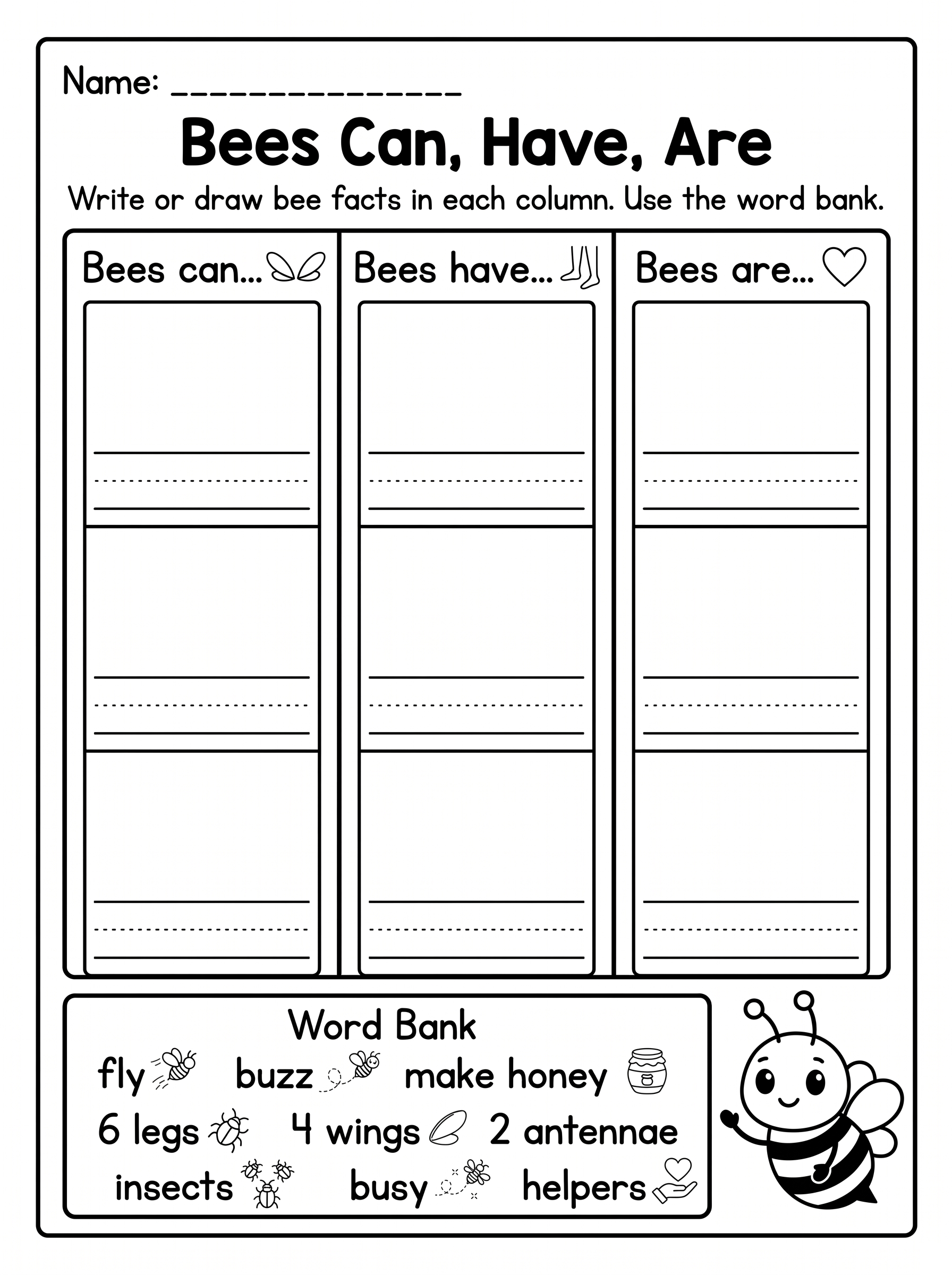
Write or draw bee facts in each column. Use the word bank.
Draw yourself as a bee. Then finish the sentence.
Sequence four apple-blossom pollination steps (NGSS 2-LS2-2), practice calm playground habits with a Safe Choice versus Not Safe sort, and assemble an I Can Bee Kind bulletin-board craft.
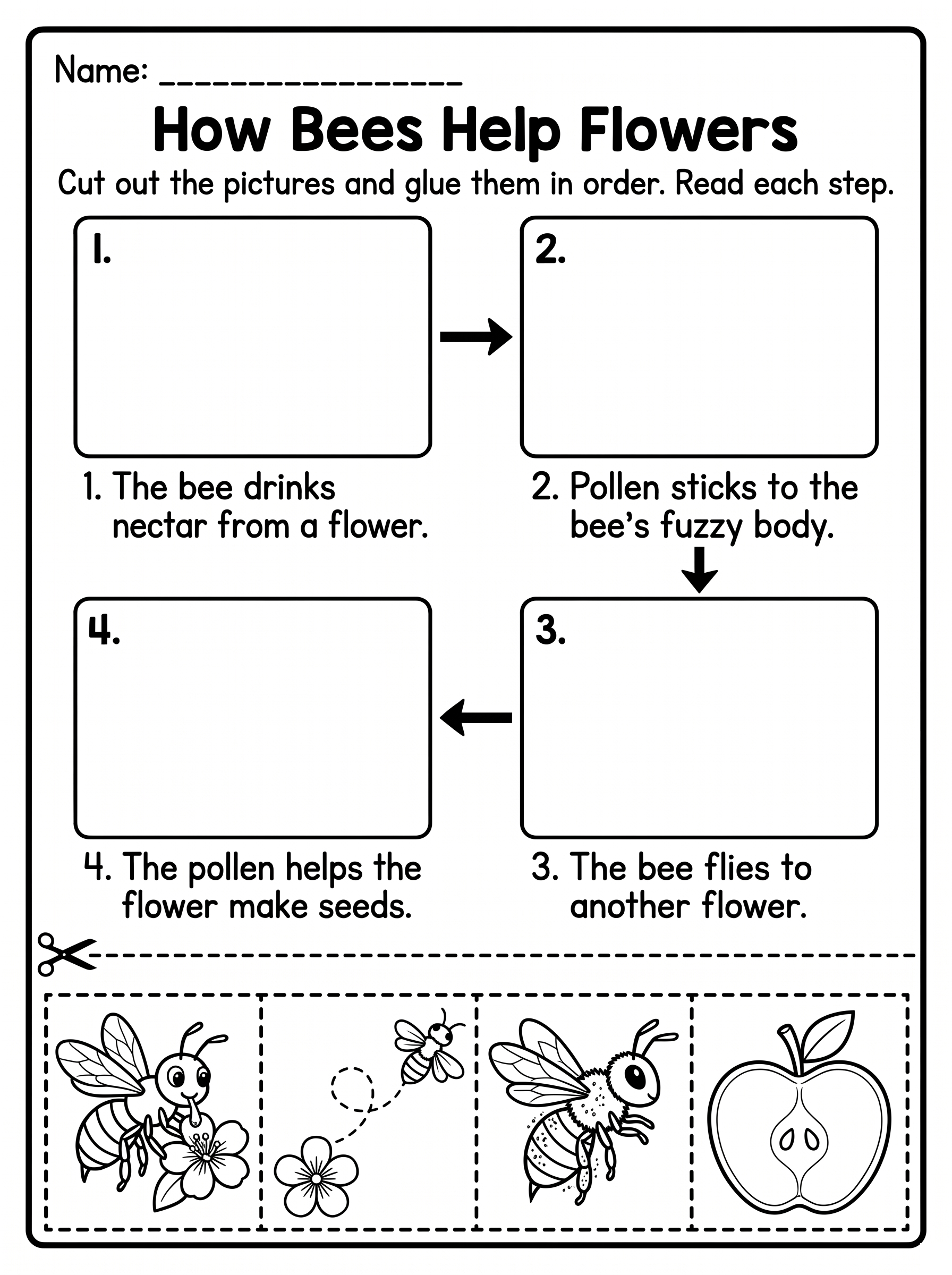
Cut out the pictures and glue them in order. Read each step.
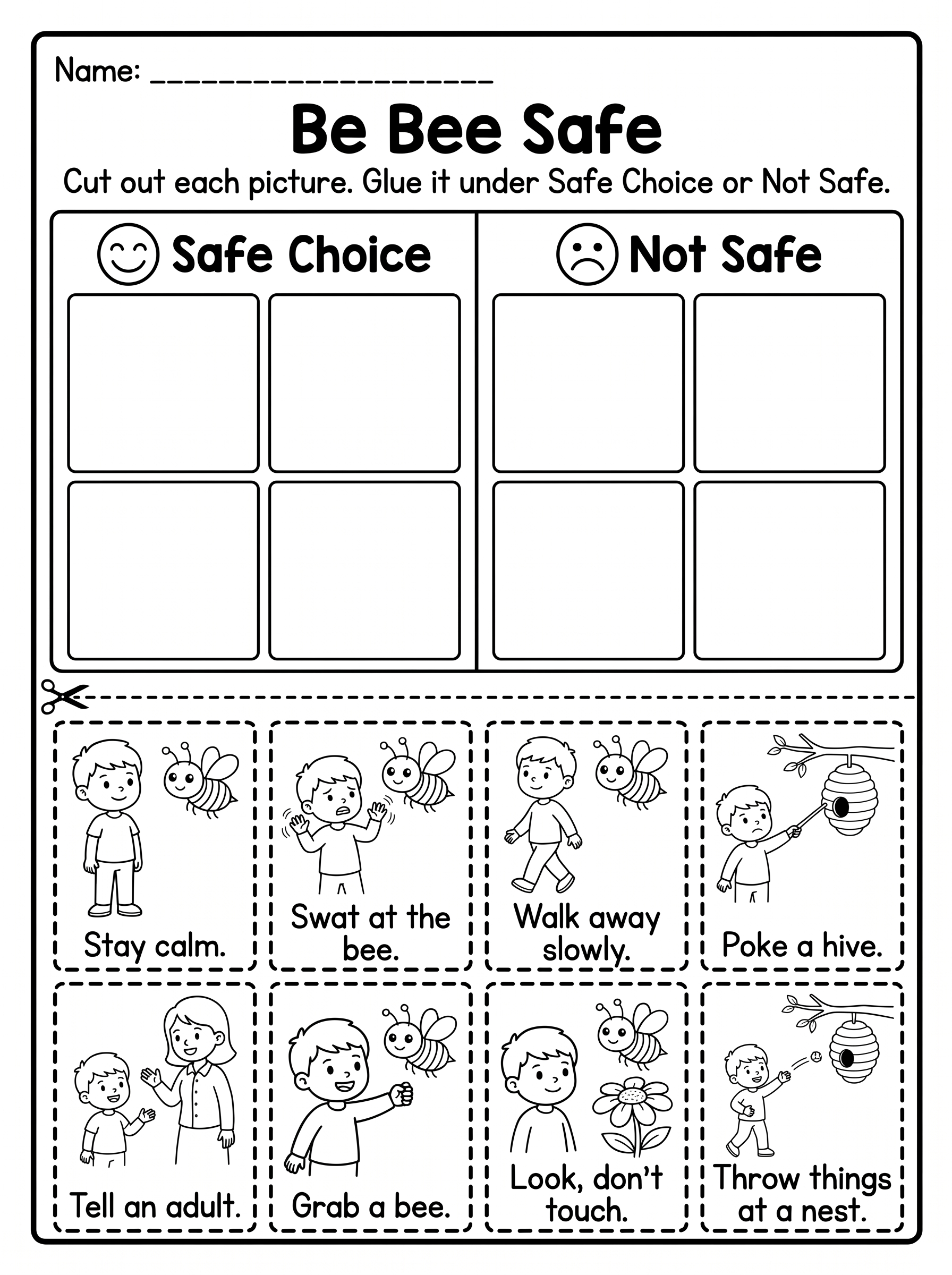
Cut out each picture. Glue it under Safe Choice or Not Safe.
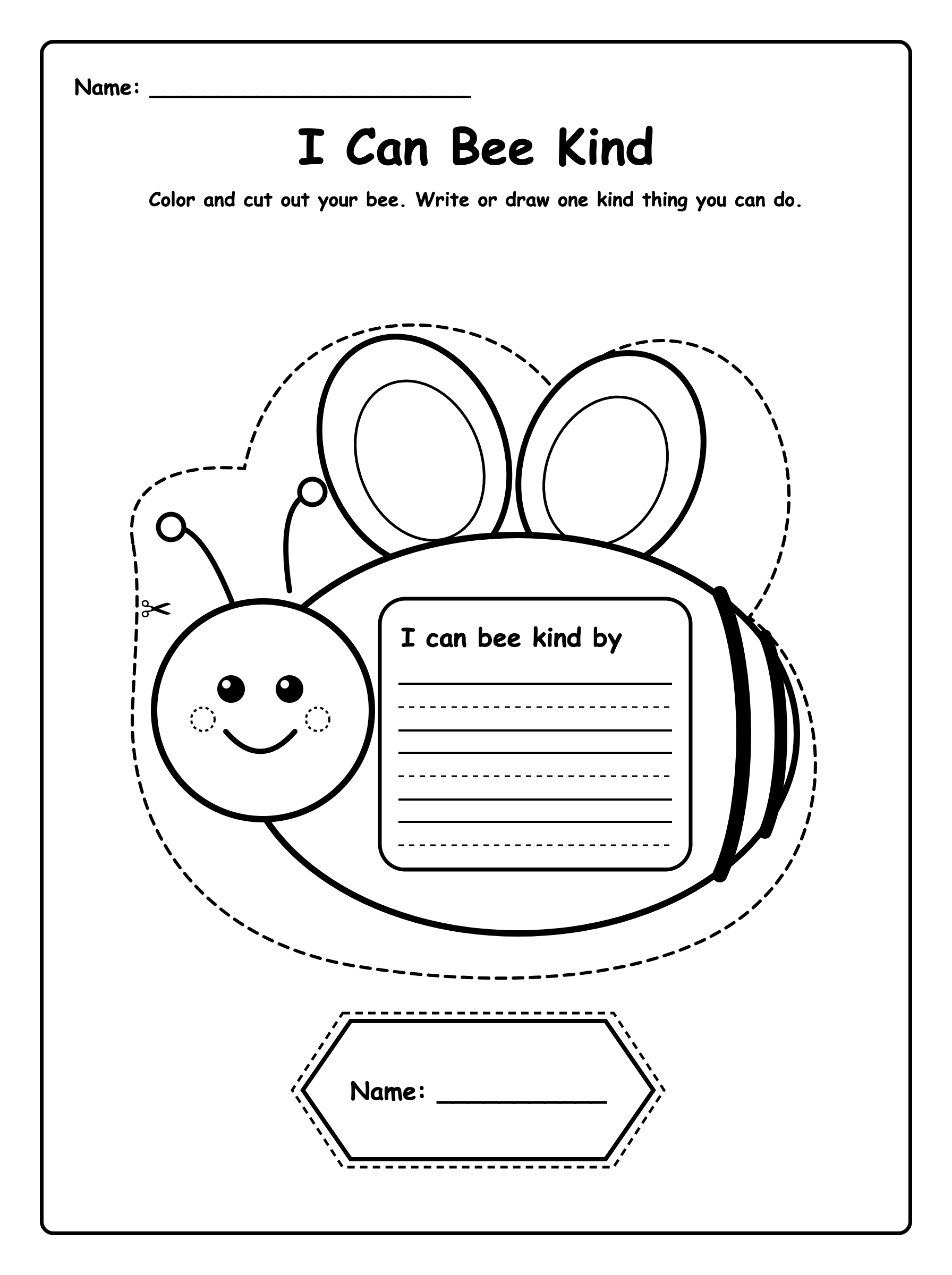
Color and cut out your bee. Write or draw one kind thing you can do.
Grab all 24 newly illustrated black-and-white US Letter pages in one ready-to-copy PDF: honey bee anatomy, life cycle spinner and days chart, 1-inch honeycomb pattern blocks, counting, ee word mapping, letter B tracing, pollination, safety and kindness craft.
Use these worksheets during morning arrival, small-group literacy or math rotations, or as a quick independent check for understanding.
Place the printed sheet inside a dry-erase pocket sleeve so students can trace and solve repeatedly using fine-tip markers before completing their paper copy.
Challenge early finishers to explain their work aloud to a partner, or move on to the next sheet in this collection.
A honey bee is an insect with three main body parts in a row: the head, thorax and abdomen. Two antennae and two large eyes sit on the head, while four wings and six legs (three on each side) attach directly to the middle thorax. Worker bees also make wax from their abdomen and carry pollen on their back legs.
A honey bee grows through four complete stages: egg, larva, pupa and adult bee. A worker bee takes about 21 days from start to finish: 3 days as a tiny rice-shaped egg, about 6 days as a legless white C-shaped larva, and about 12 days as a pupa sealed inside its hexagonal wax cell.
These free bee worksheets cover preschool, pre-K, kindergarten, 1st grade and 2nd grade (ages 3 to 8). Preschoolers can start with bee tracing lines, the wide hexagon maze, Build a Bee and 1 to 10 counting, while kindergarten through 2nd grade learners work on bee body-part jobs, life cycle math, 1-inch honeycomb pattern blocks, ee word mapping and pollination sequencing.
Start the week with Sheet 23 (Be Bee Safe) so anxious children learn four calm actions right away: stay calm, walk away slowly, look without touching and tell an adult. Every worksheet in this pack uses friendly, smiling bees with no stings shown, framing honey bees as gentle garden helpers that pollinate apples, clover and flowers.
Most preschool and elementary classrooms teach honey bee units during spring insect and plant studies from March through May, or right around World Bee Day on May 20. The phonics, counting, tracing and kindness pages also work smoothly any time of year when your class practices letter B, vowel team ee or 2D hexagons.