menu_bookScience of Reading & UFLI Aligned Phonics

Free Printable Digraph Worksheets (SH, CH, TH, WH, CK & PH Phonics PDF)

Made by the BeeWorksheets Editorial Team · Editorial standards

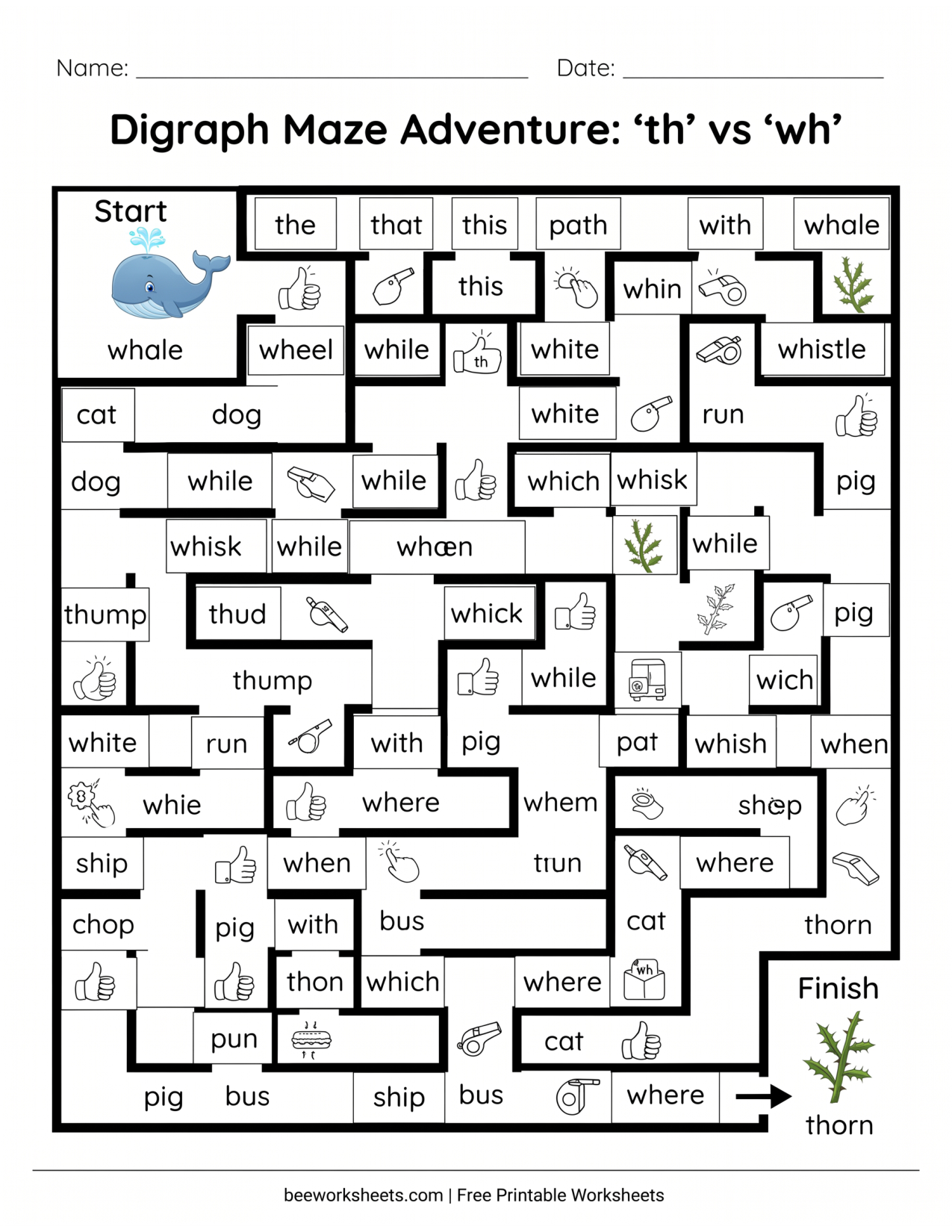
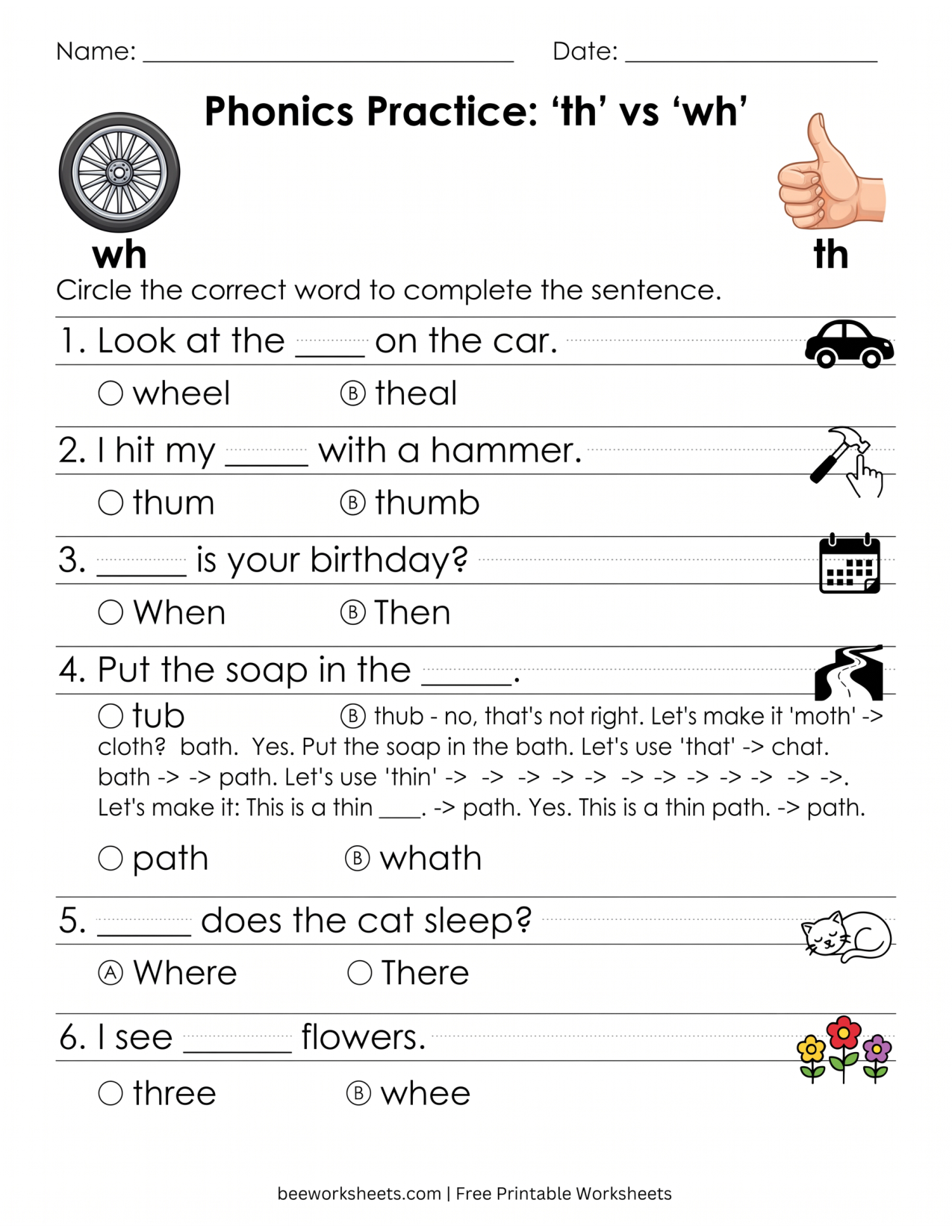
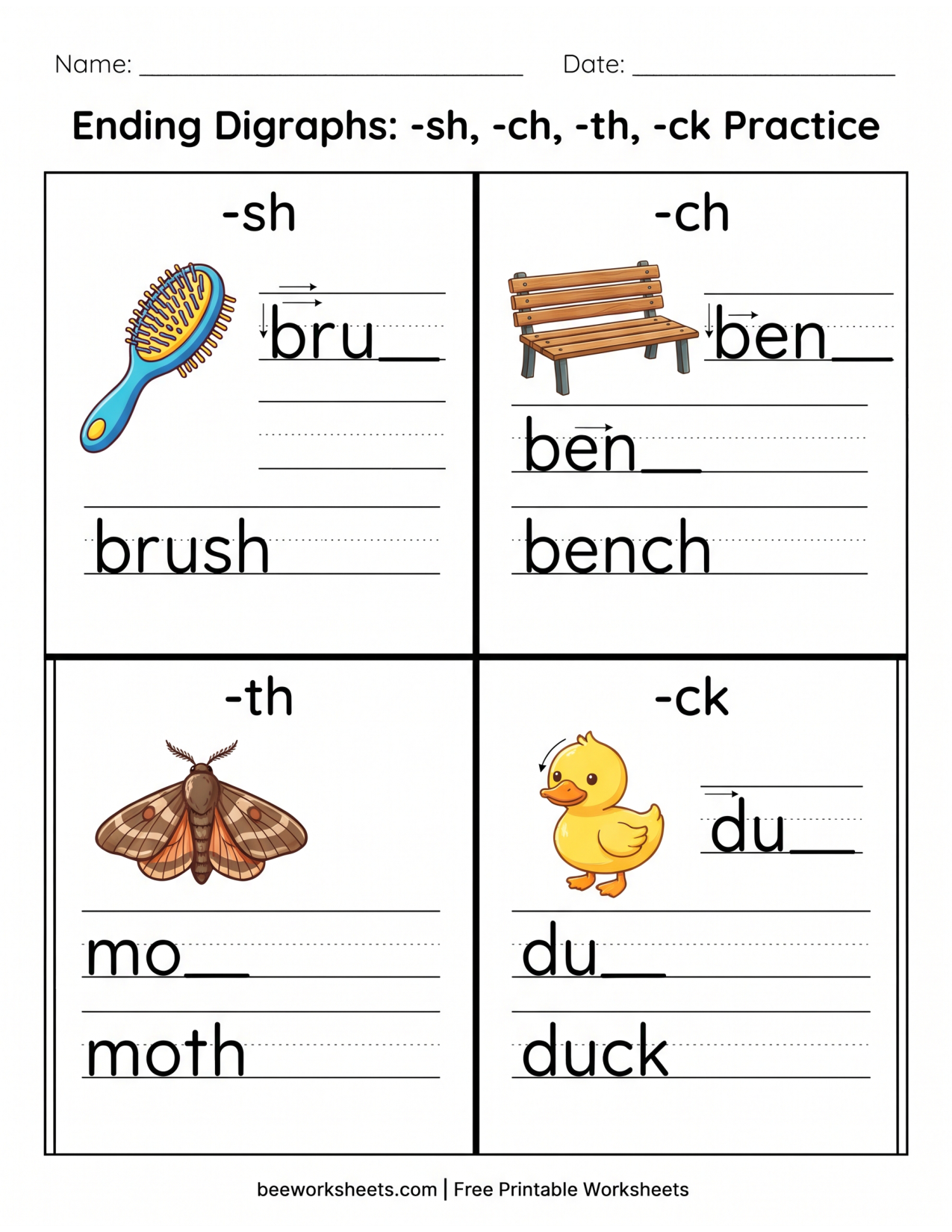
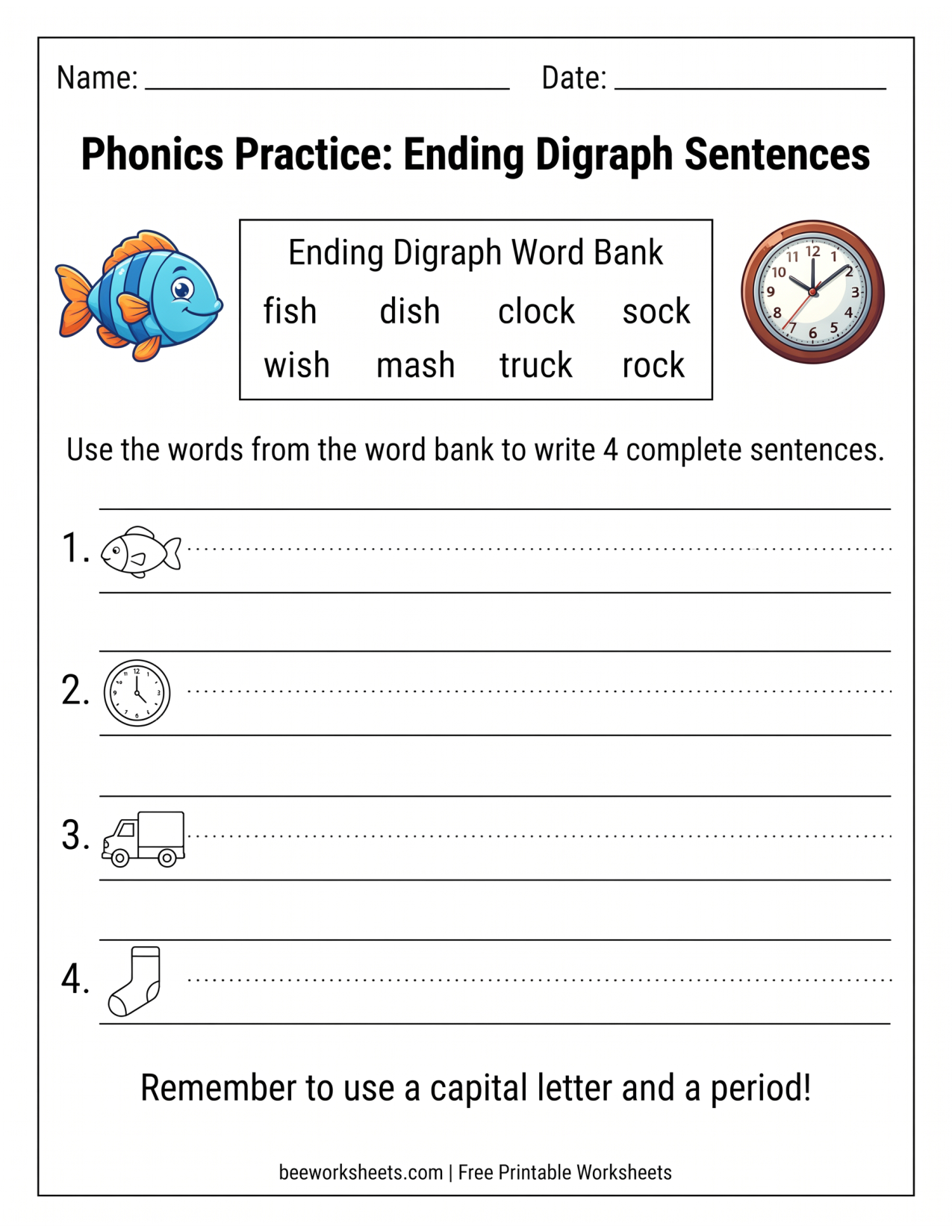
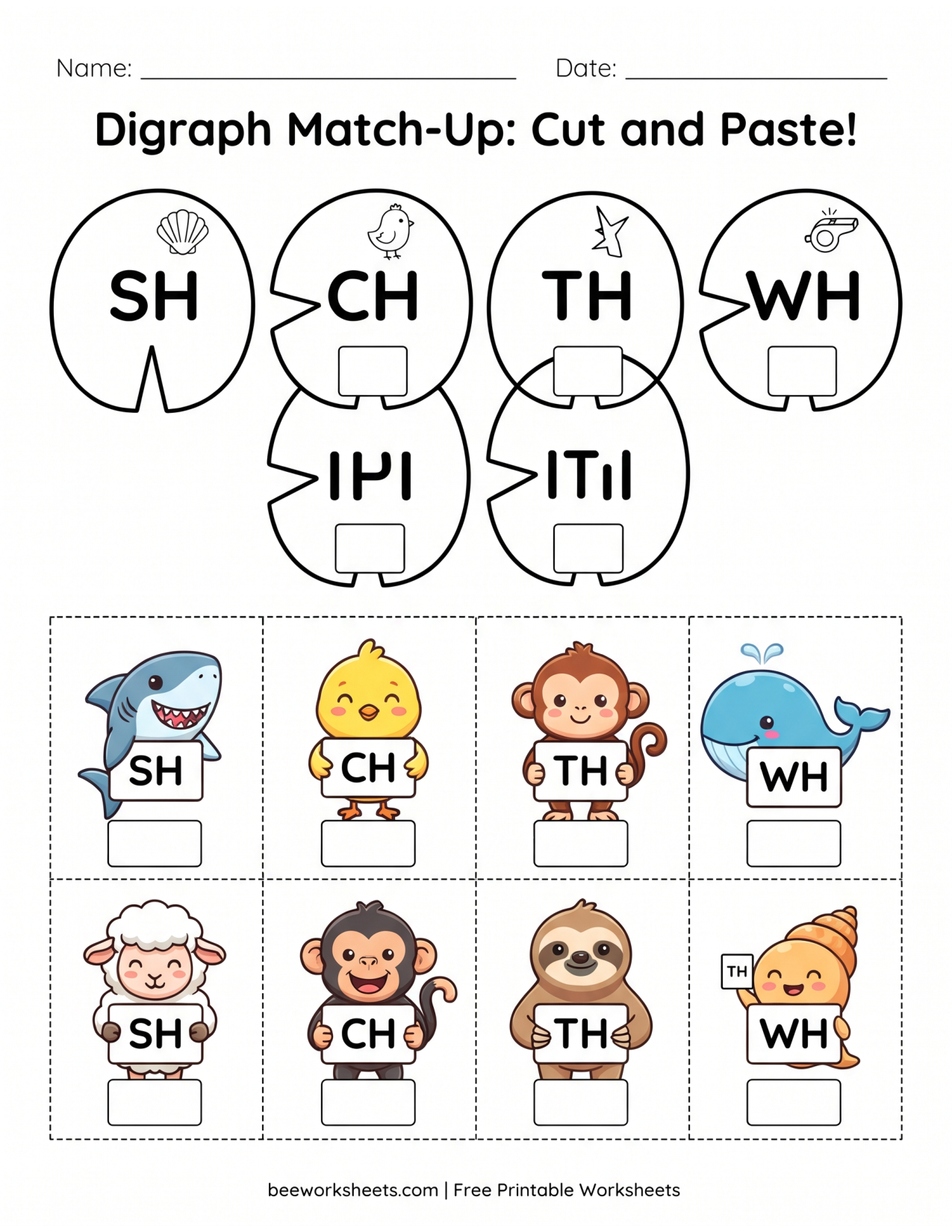
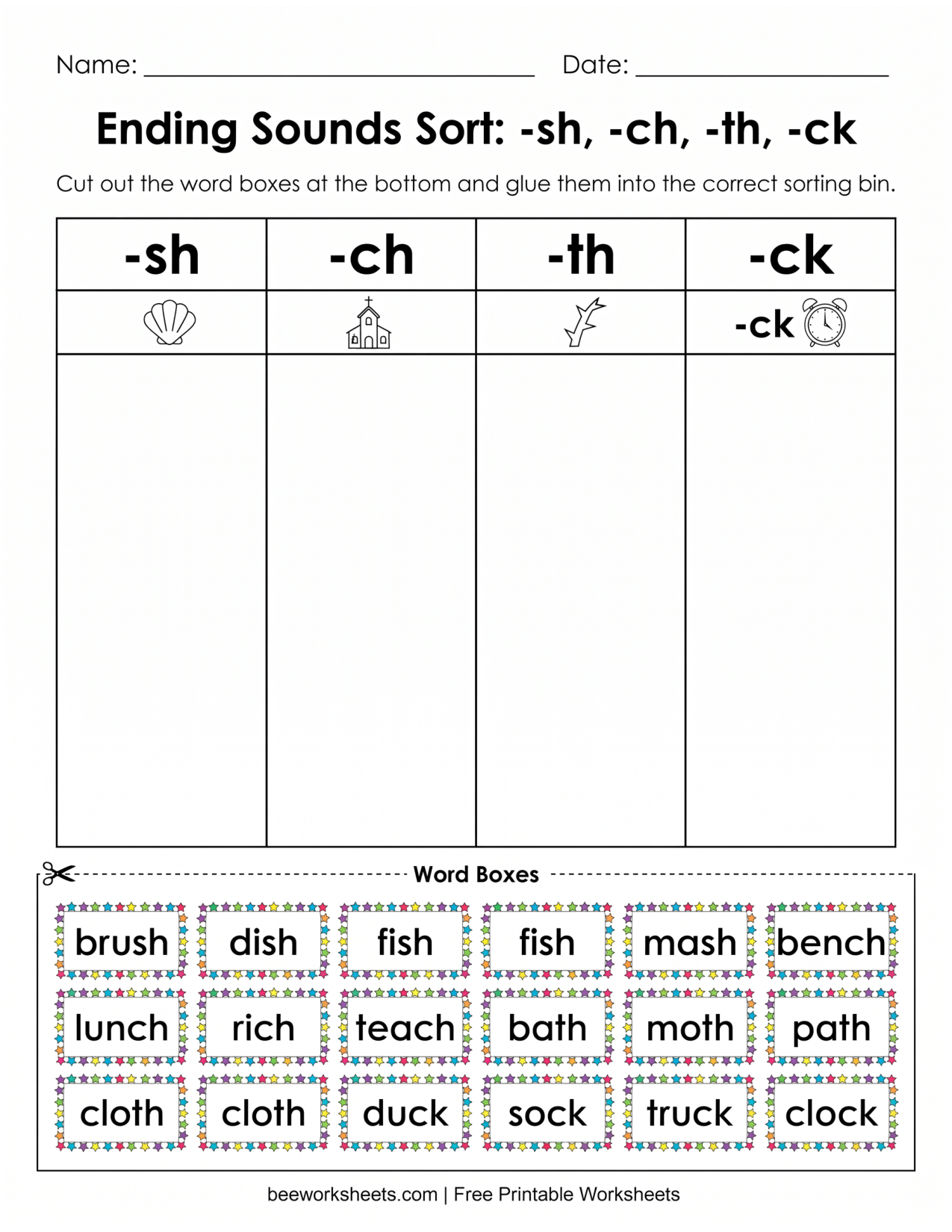
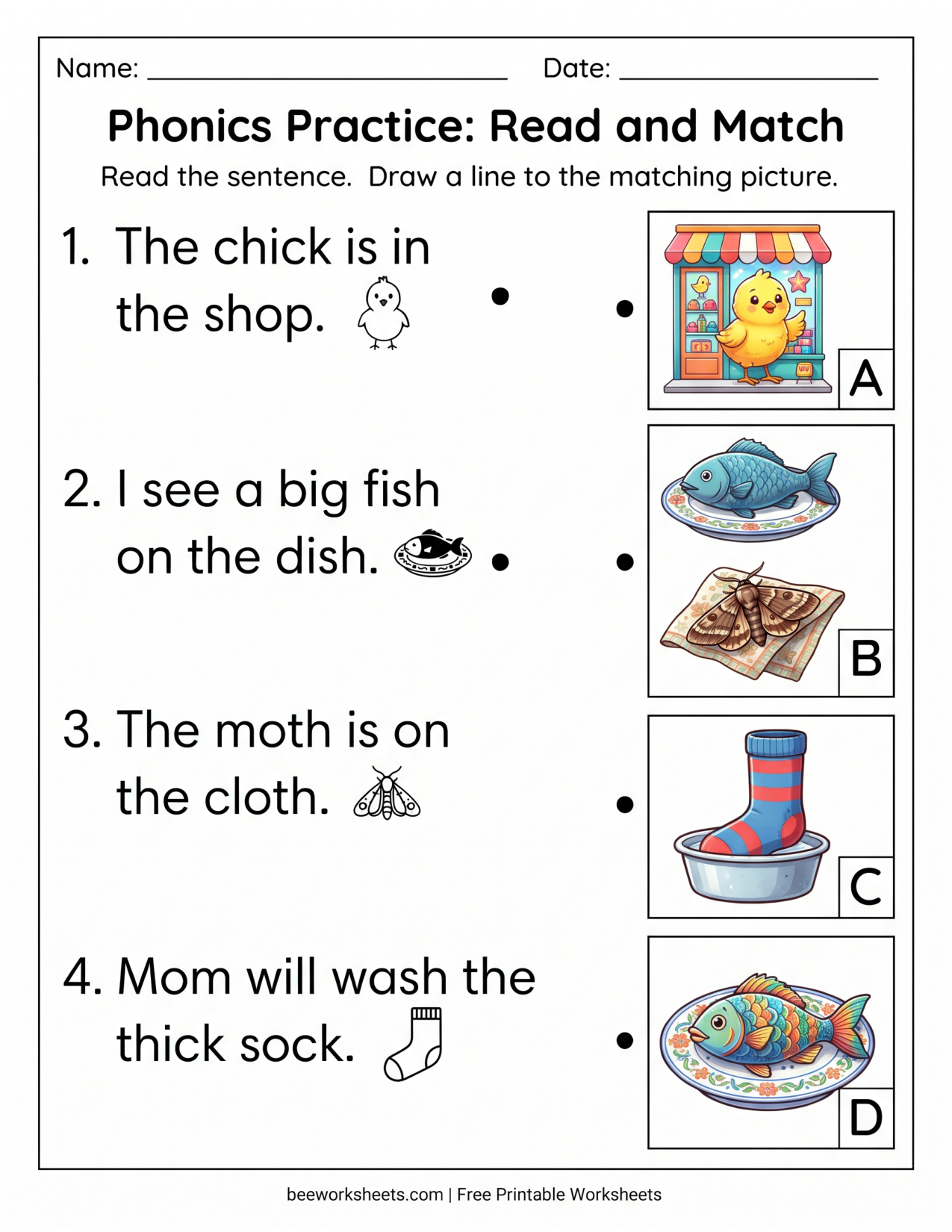
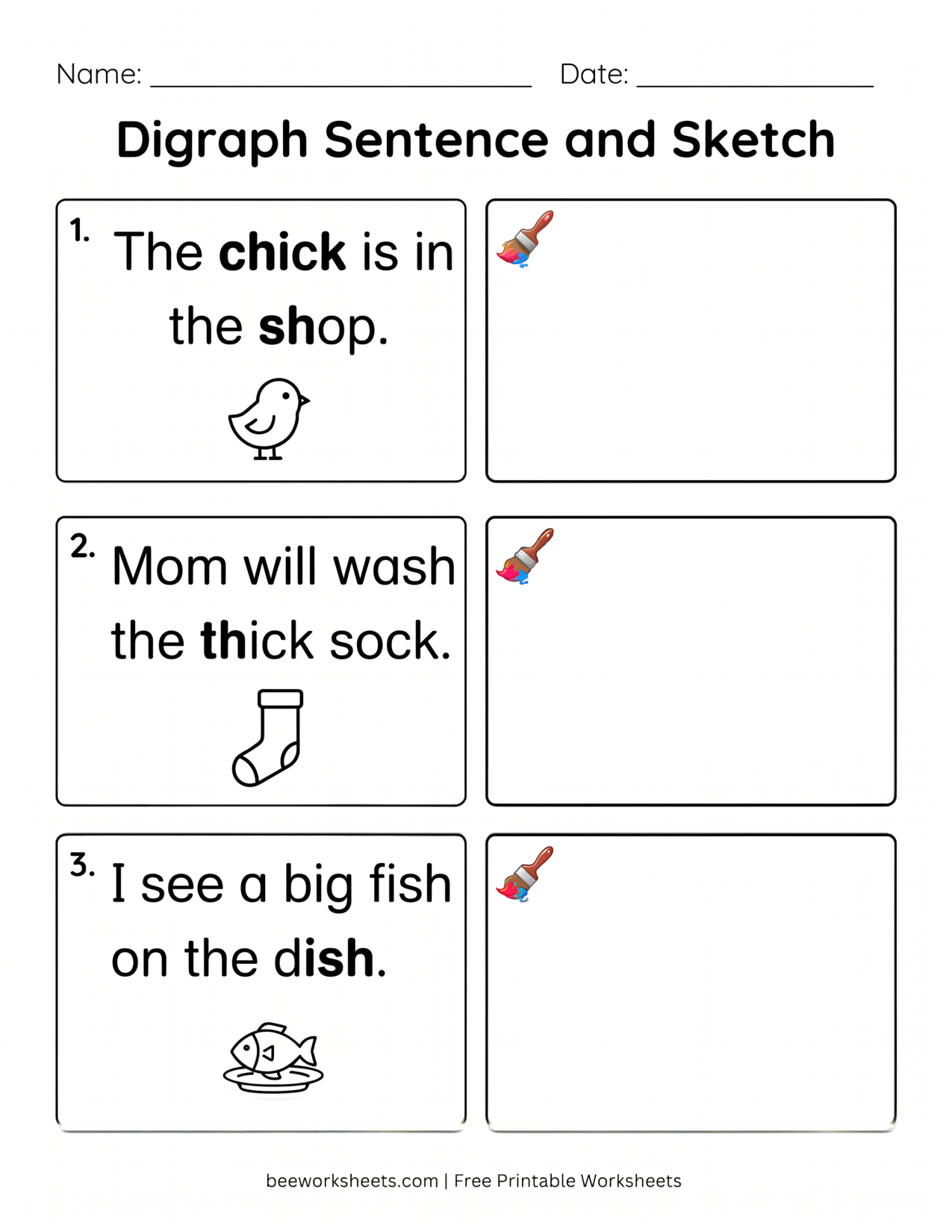
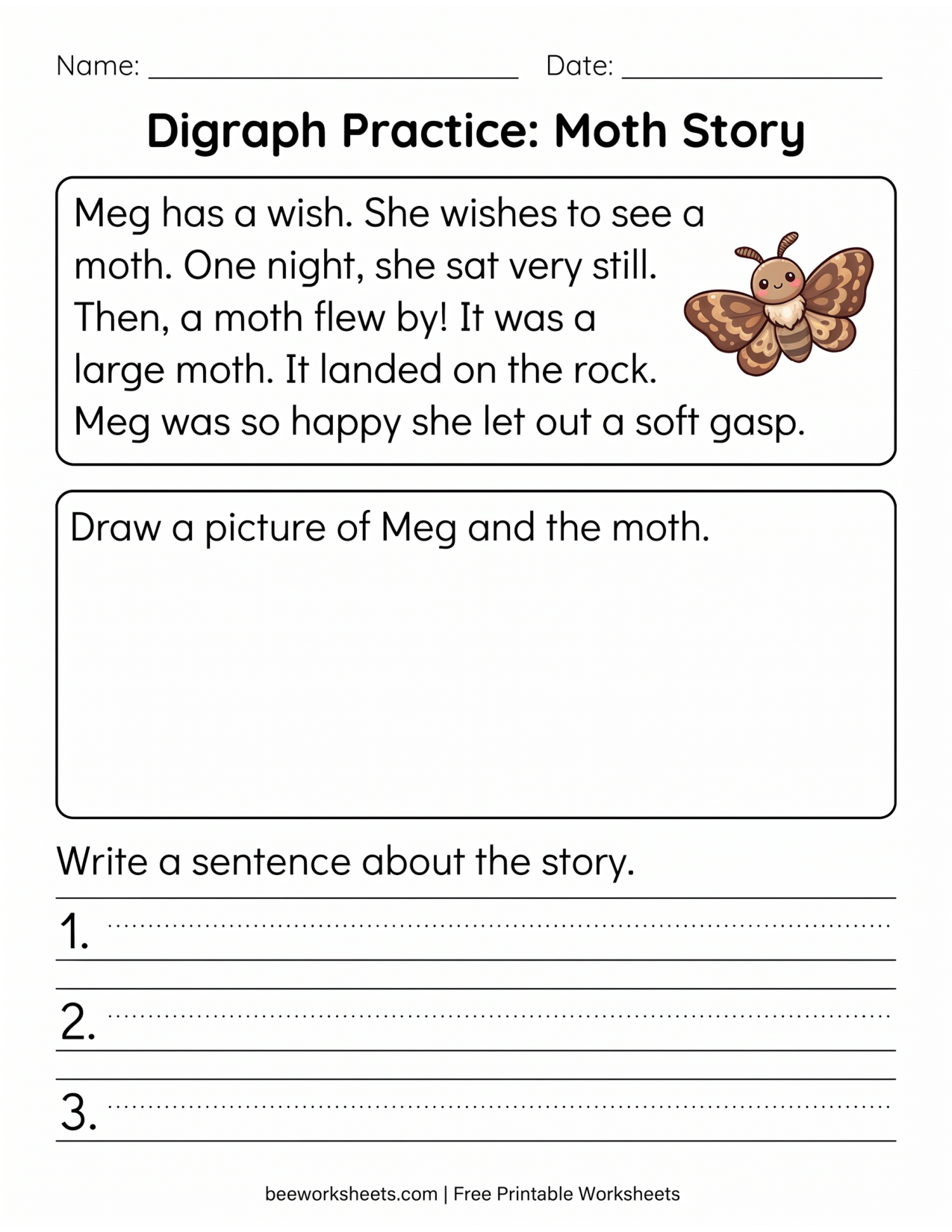
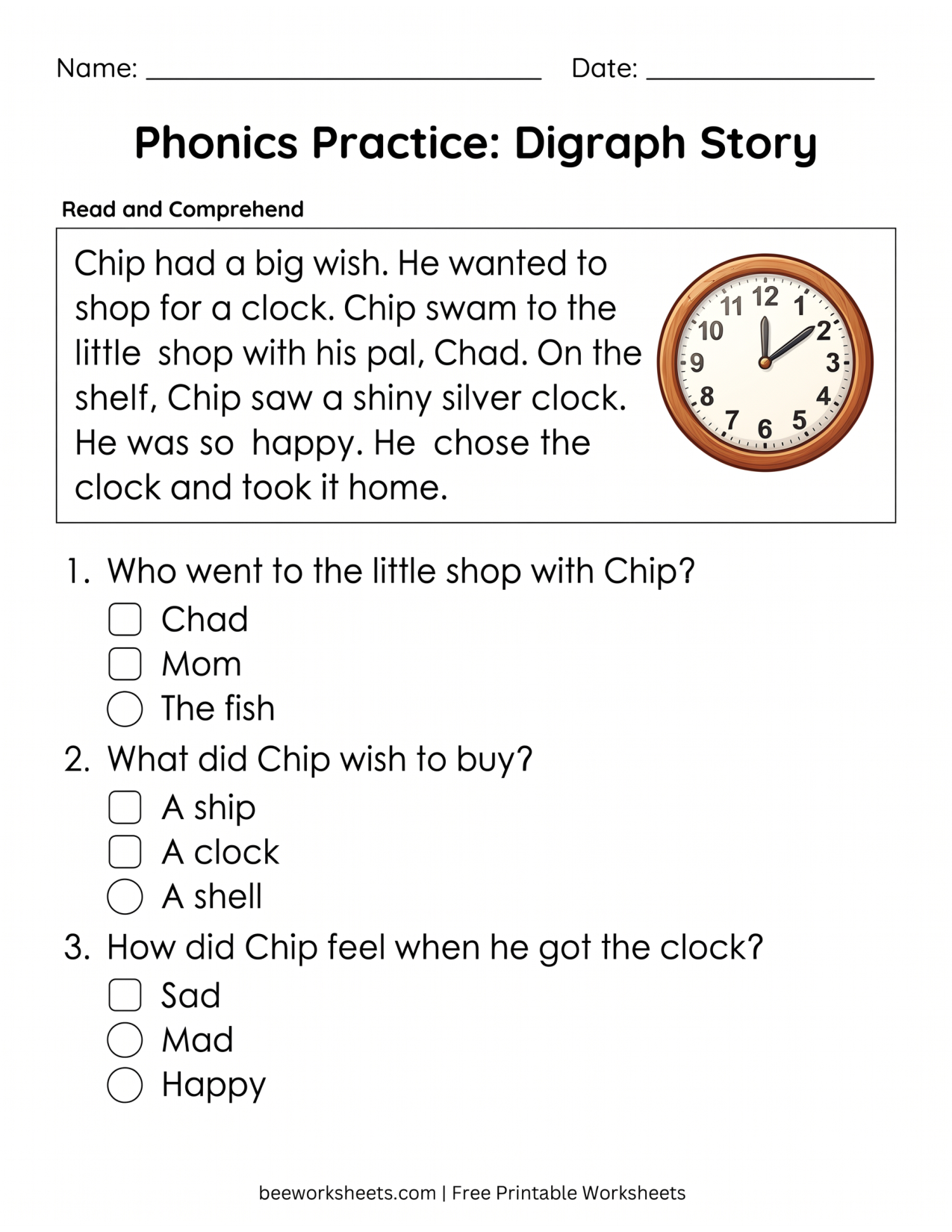
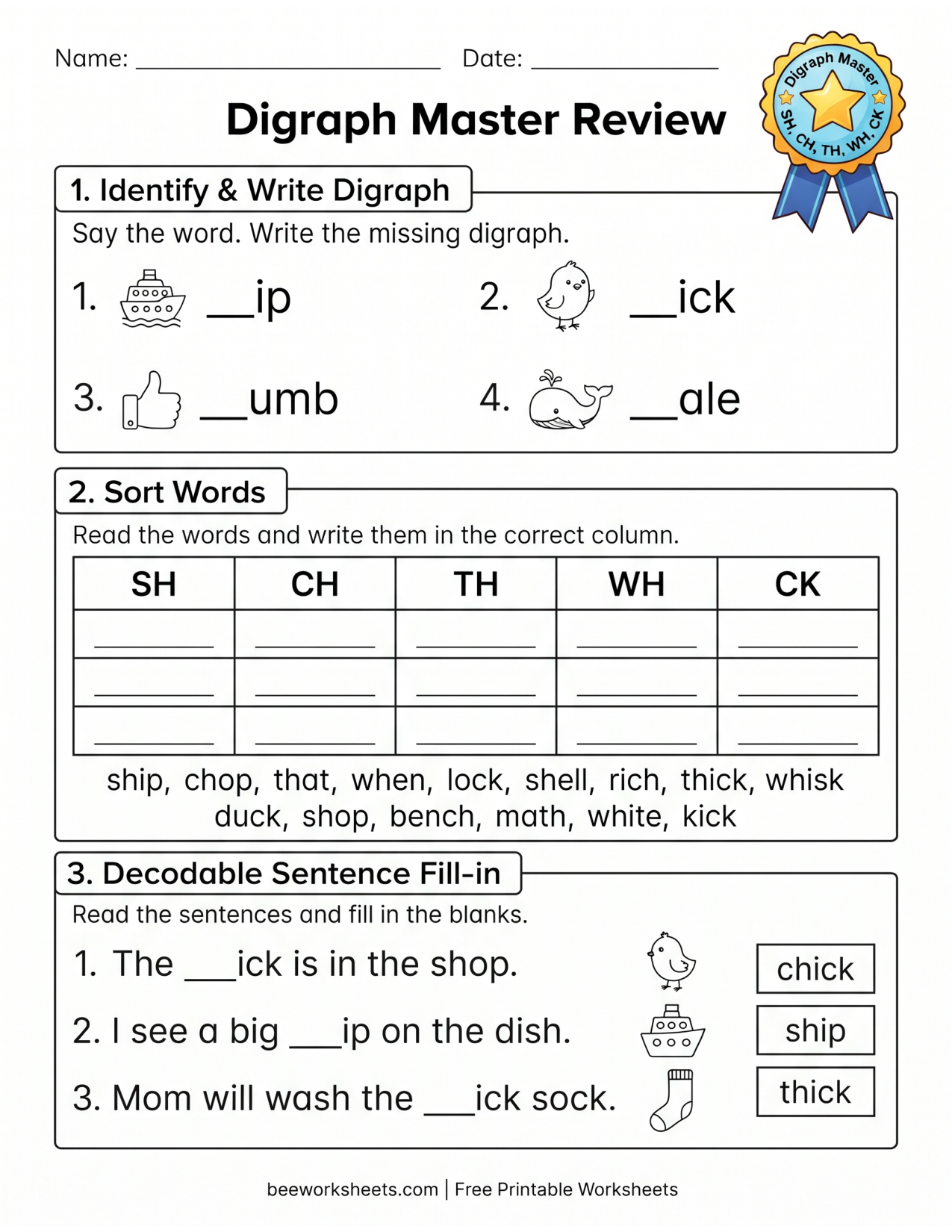
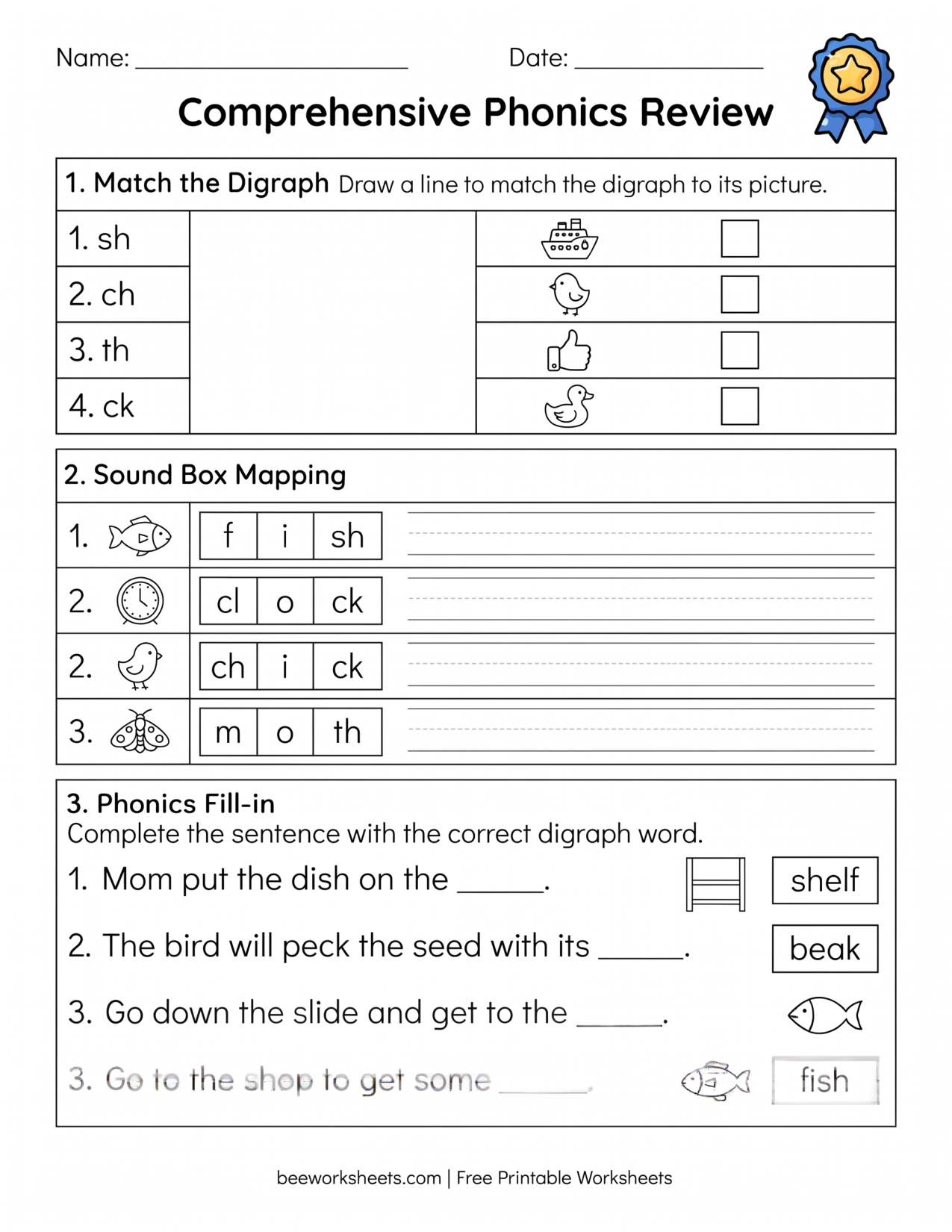
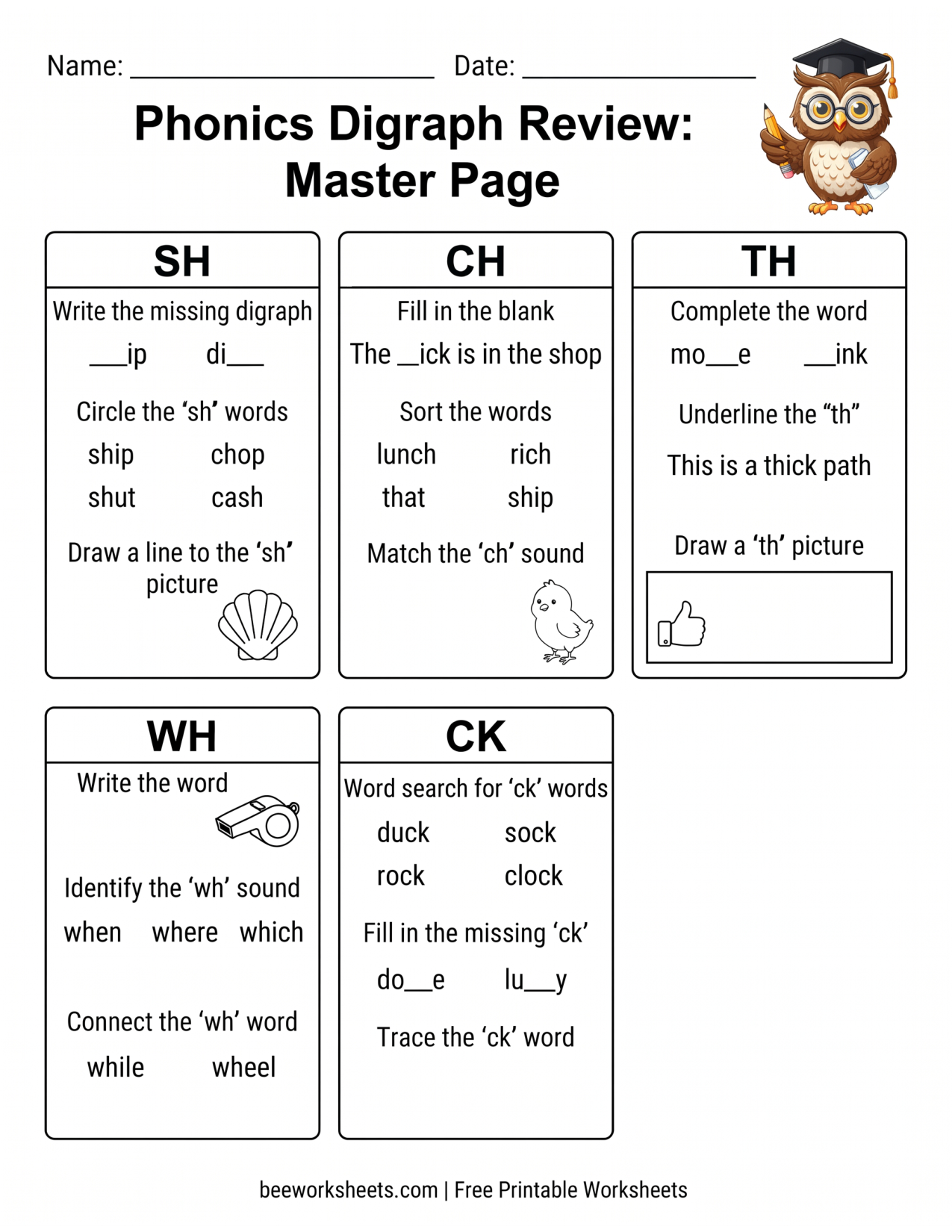
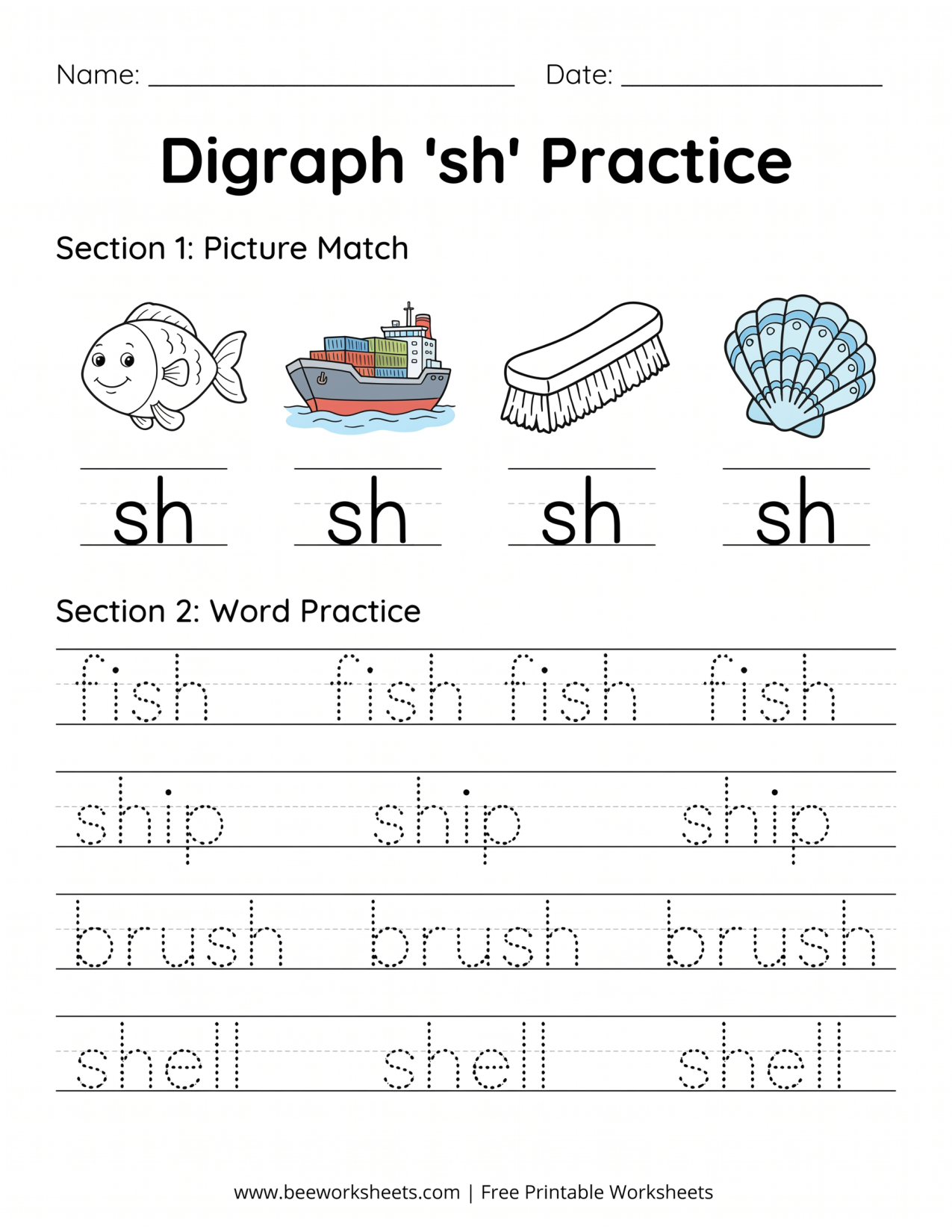
Help Kindergarten, 1st Grade, and 2nd Grade readers master beginning and ending consonant digraphs with our library of 48 free printable digraph worksheets. Includes sh, ch, th, wh, -ck, and ph picture sorts, minimal pairs, Elkonin sound boxes, cut-and-paste activities, and decodable reading passages with comprehension questions.

check_circle48 Printable Phonics Sheetscheck_circleSH, CH, TH, WH, -CK & PHcheck_circleElkonin Boxes & Decodable Storiescheck_circle100% Free US Letter PDF
Complete Classroom Pack

Download Complete 48-Page Consonant Digraphs Workbook

Get all 48 consonant digraph worksheets—from beginning sound sorts and orthographic word mapping to decodable stories—in one print-ready PDF workbook.

file_downloadDownload 48-Page Bundle (PDF)

How This Consonant Digraphs Collection Is Structured (Scope & Sequence)

1

Core Digraphs (SH, CH, TH, WH, -CK, PH)

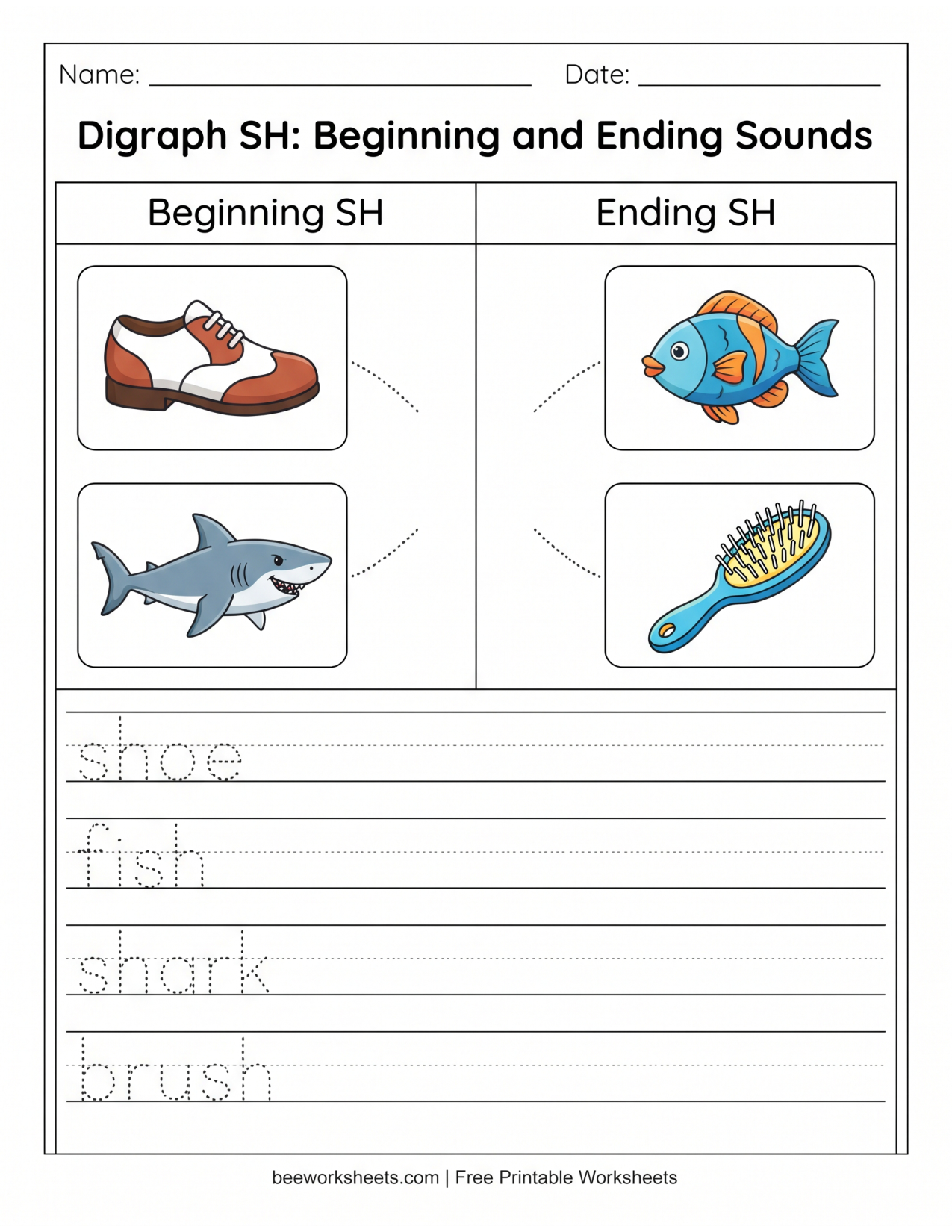
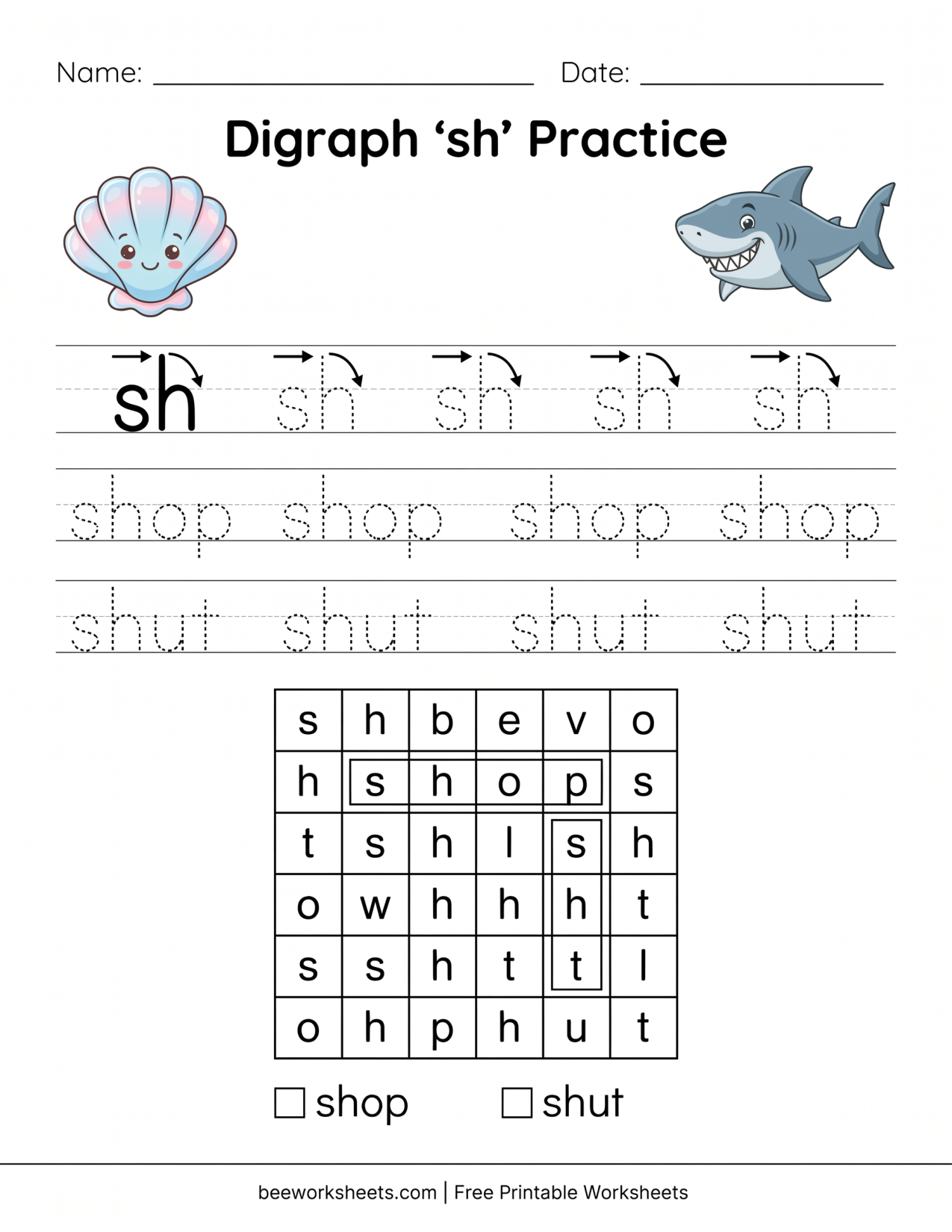
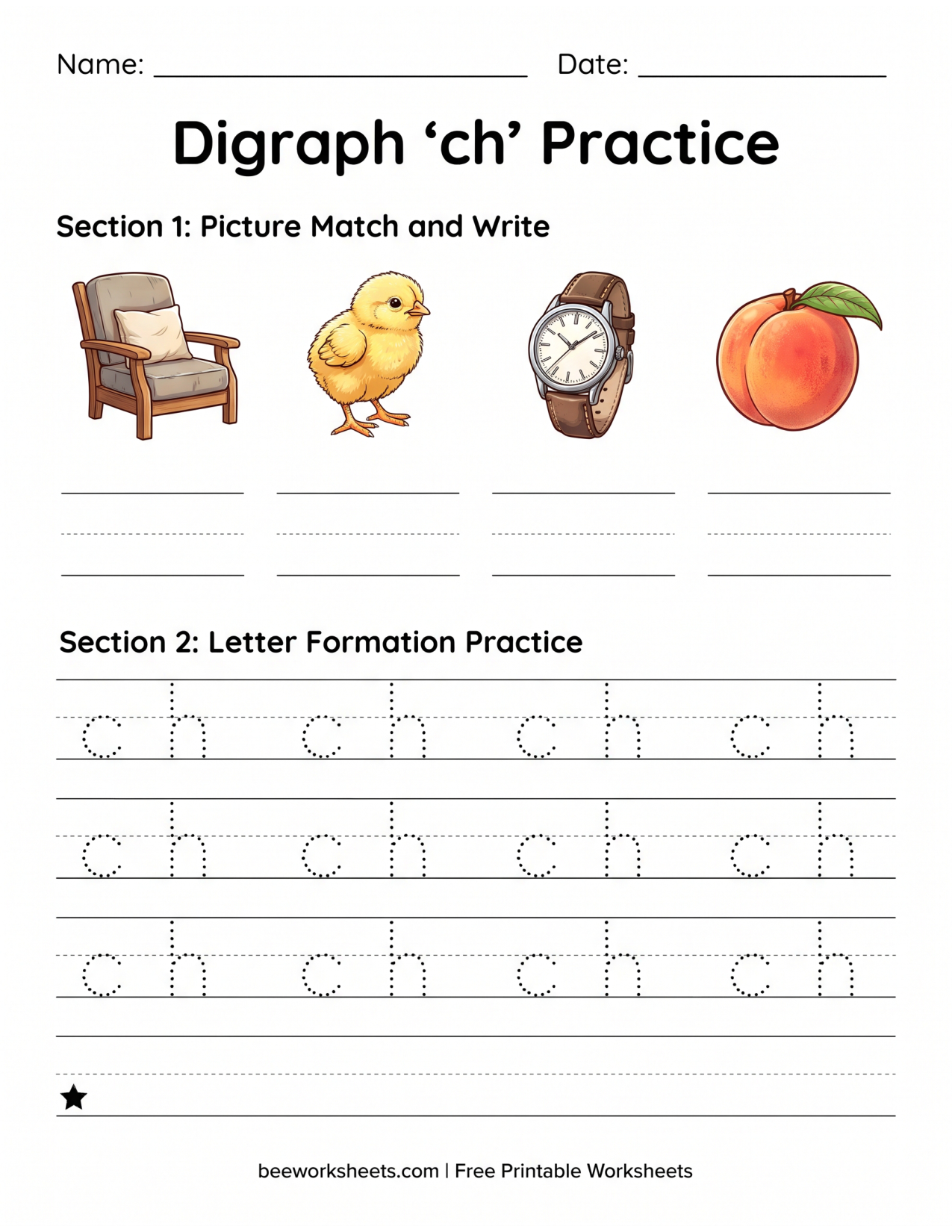
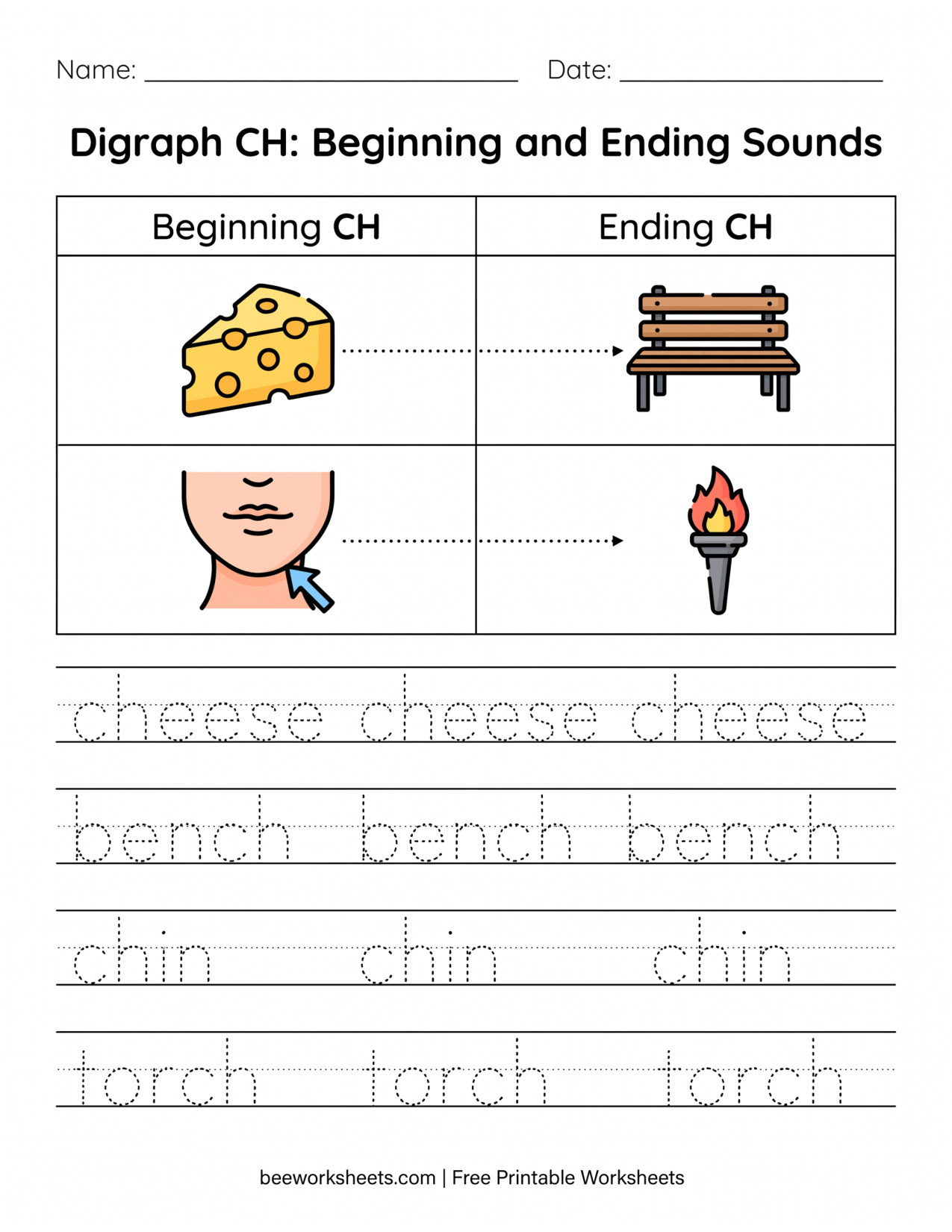
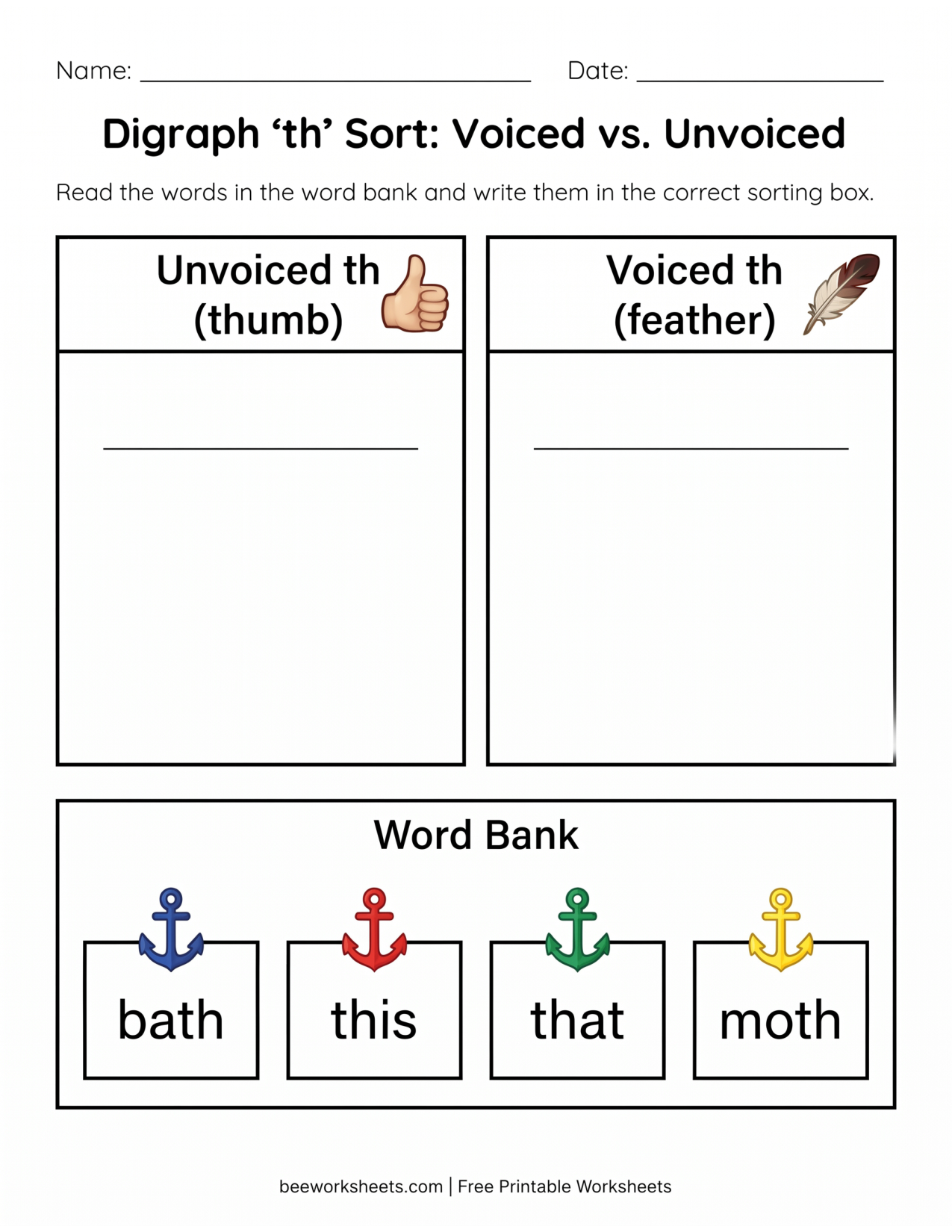
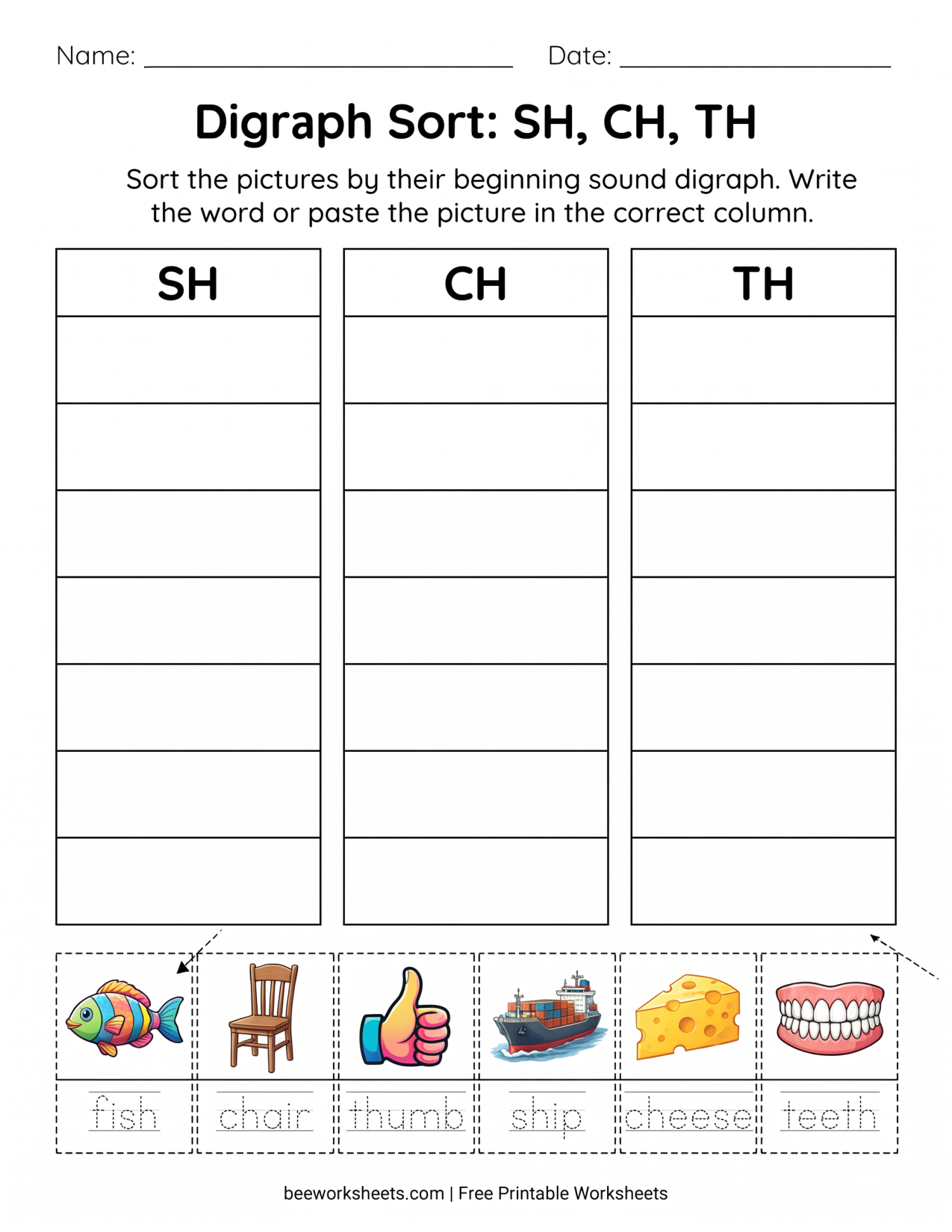
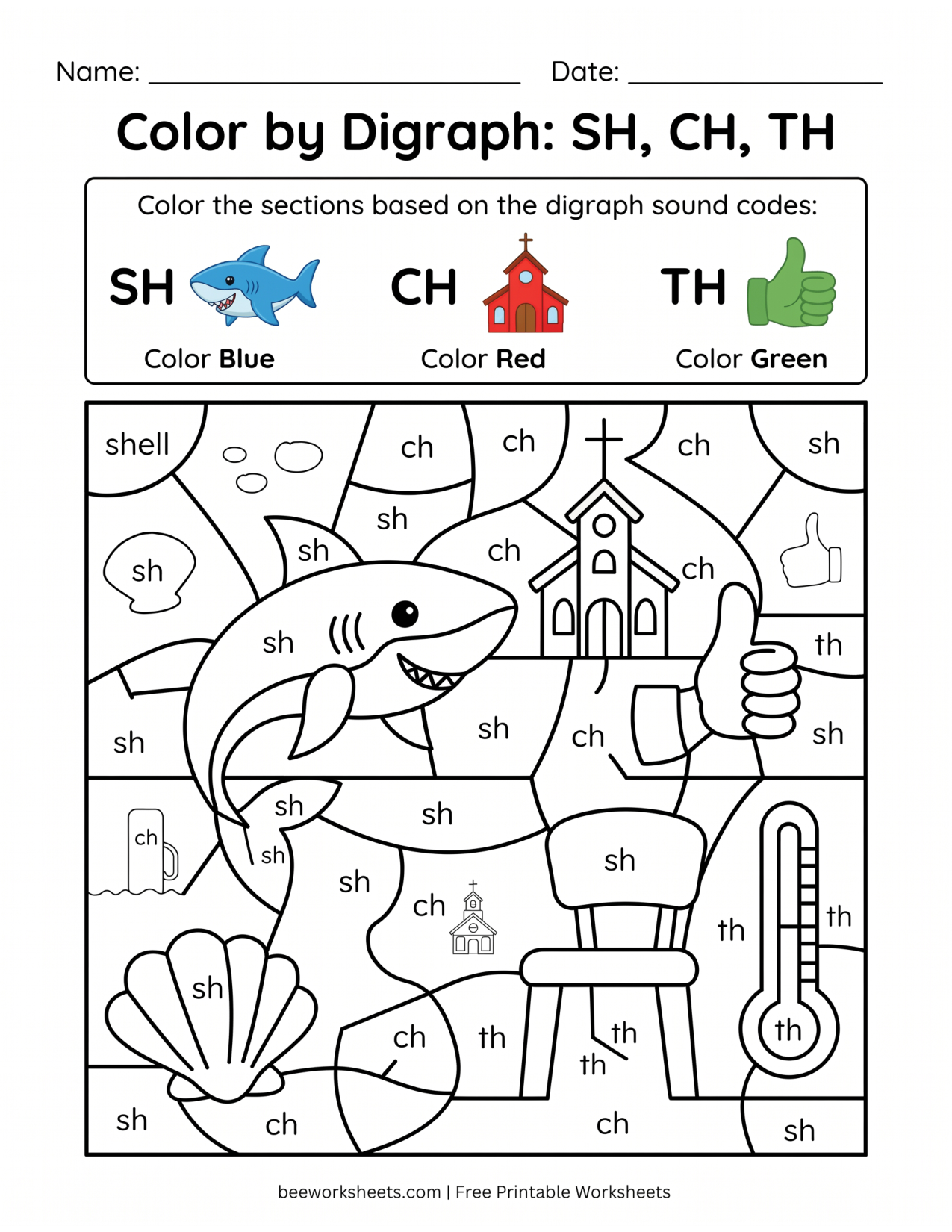
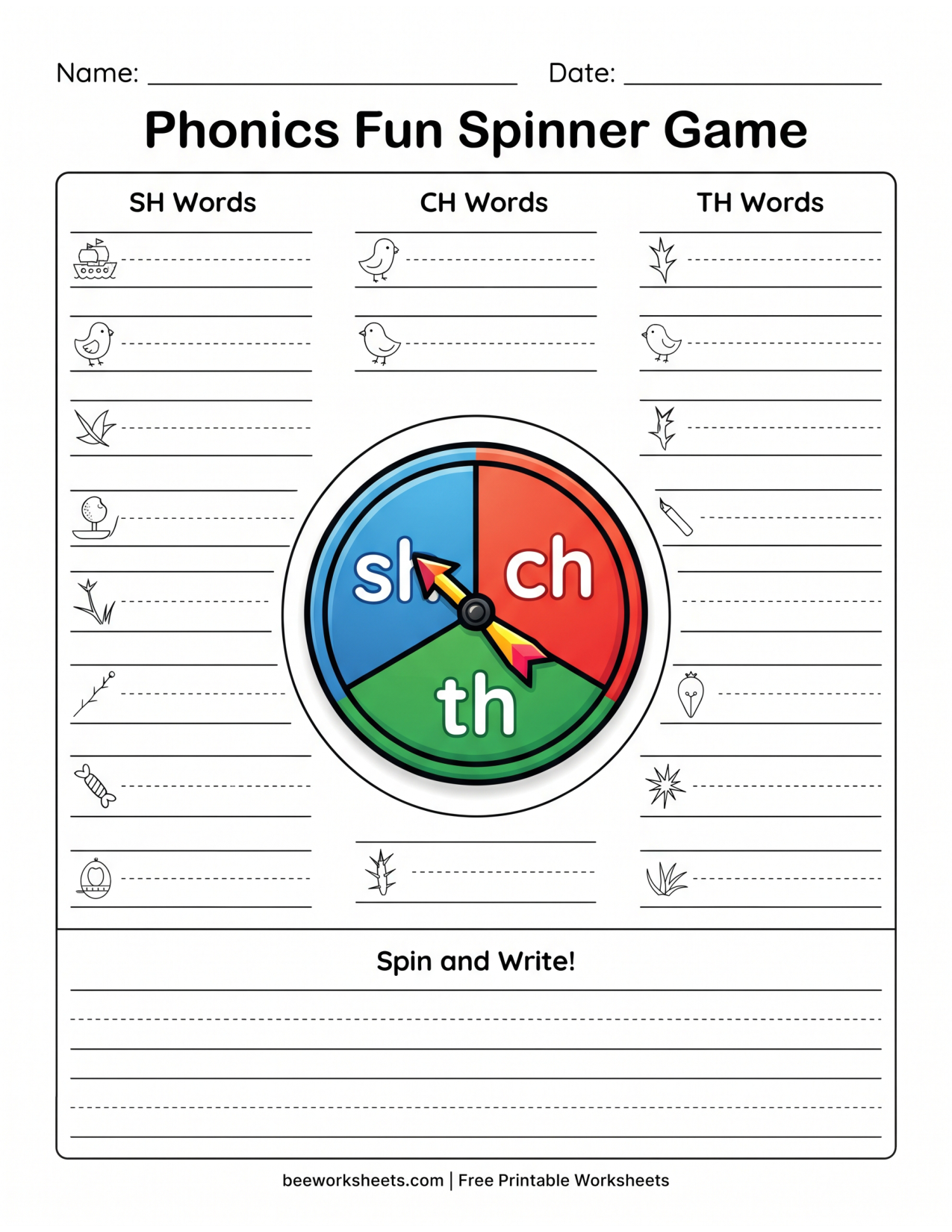
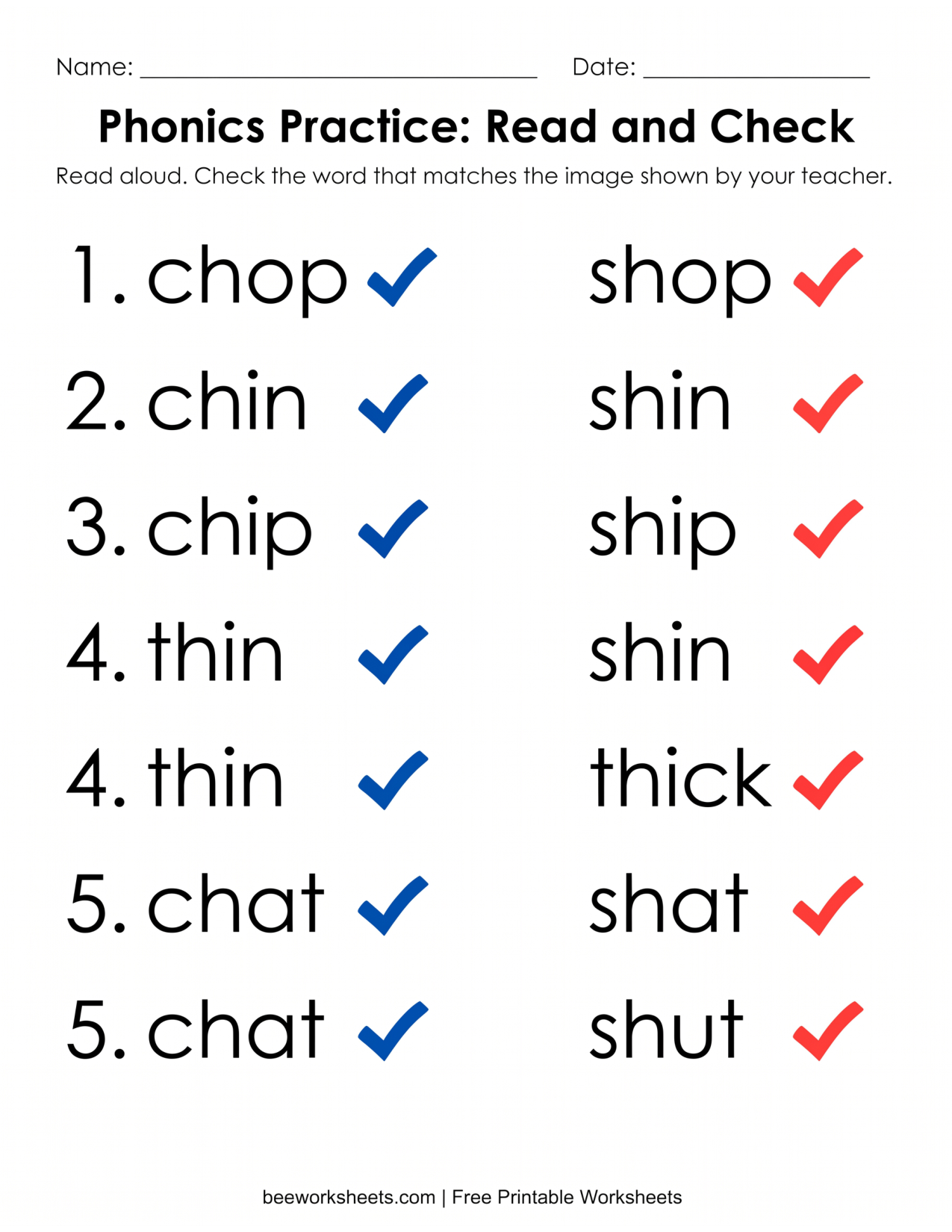
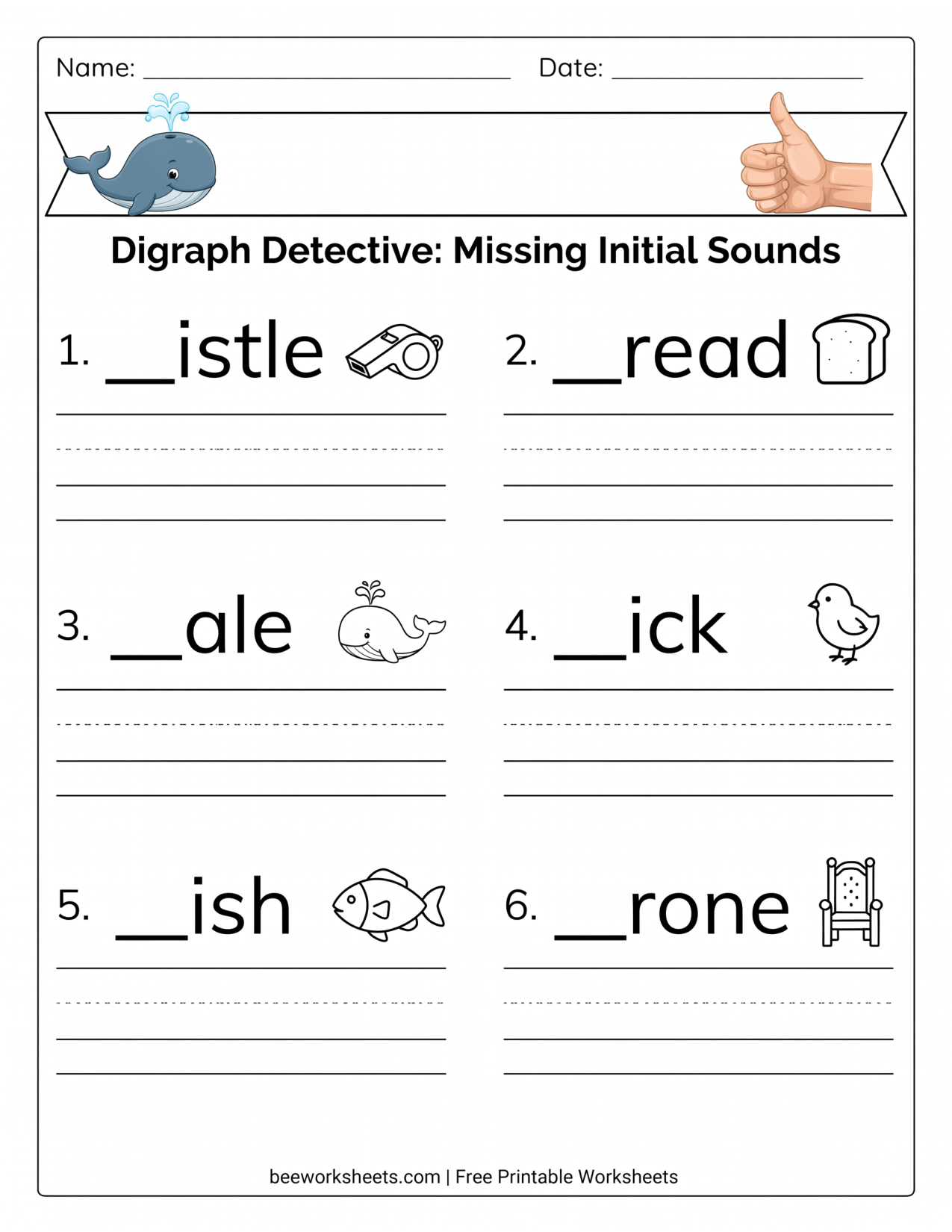
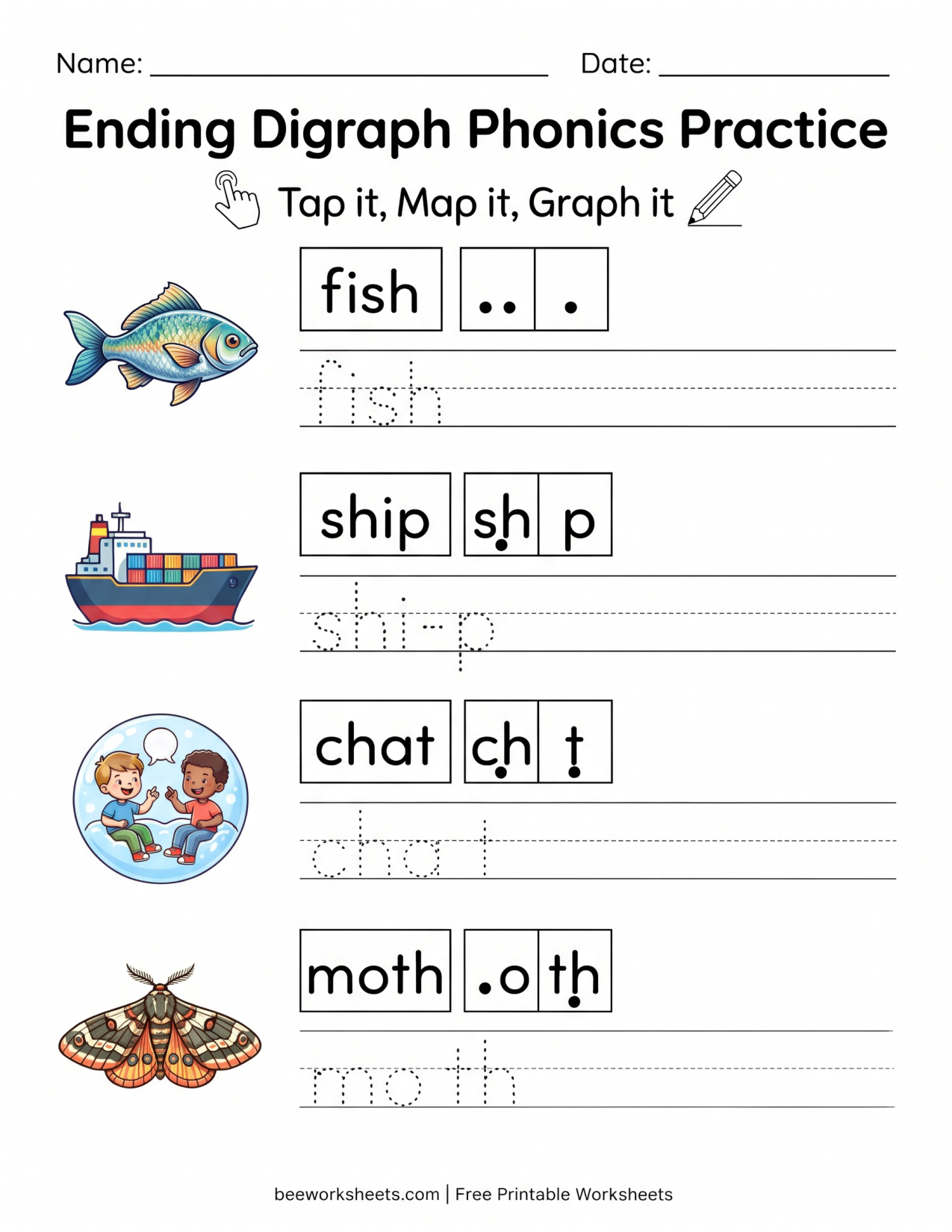
Sheets #1–#18 introduce each consonant digraph individually with beginning vs. ending sound sorts, voiced vs. unvoiced th discrimination, and the short-vowel -ck spelling rule.

2

SH/CH/TH Sorts & Elkonin Word Mapping

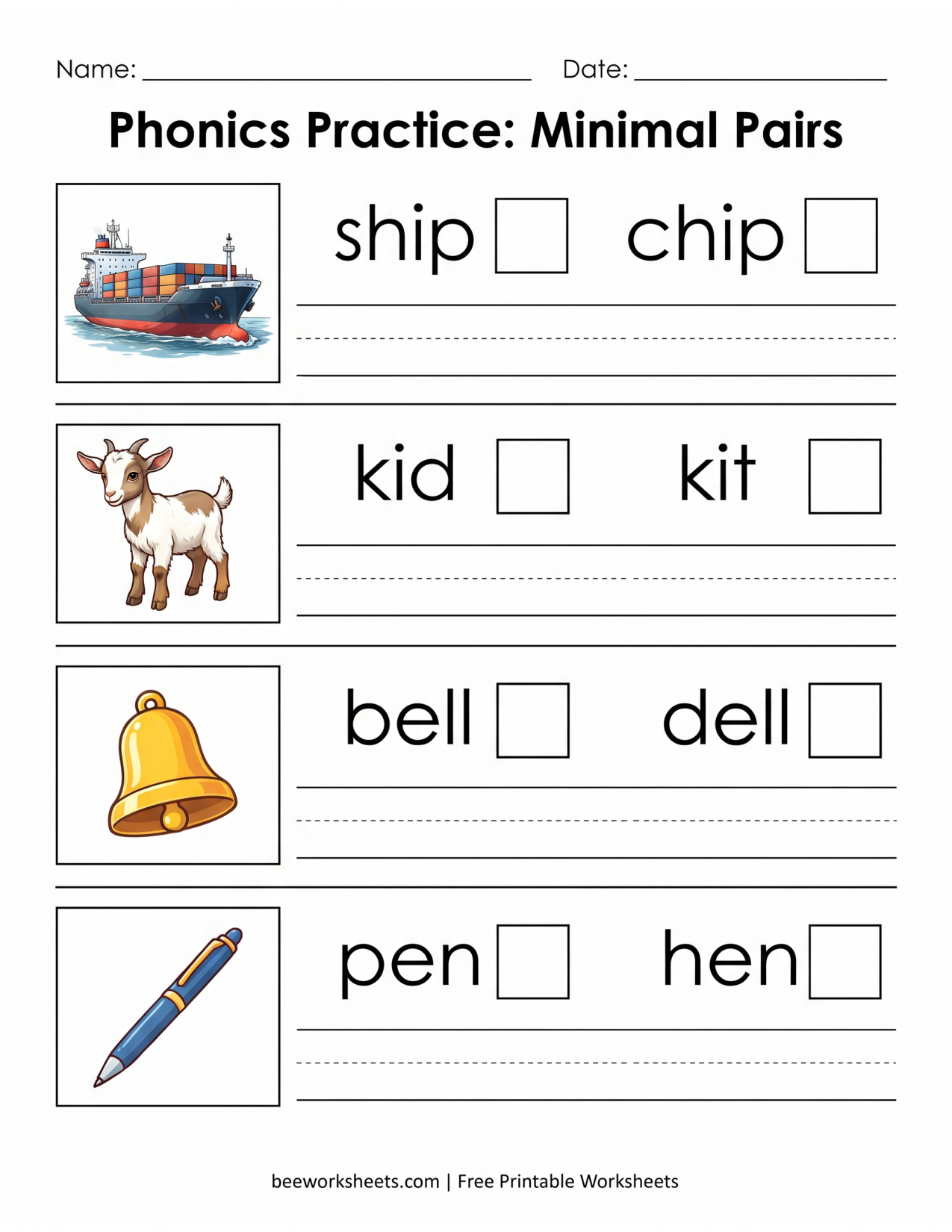
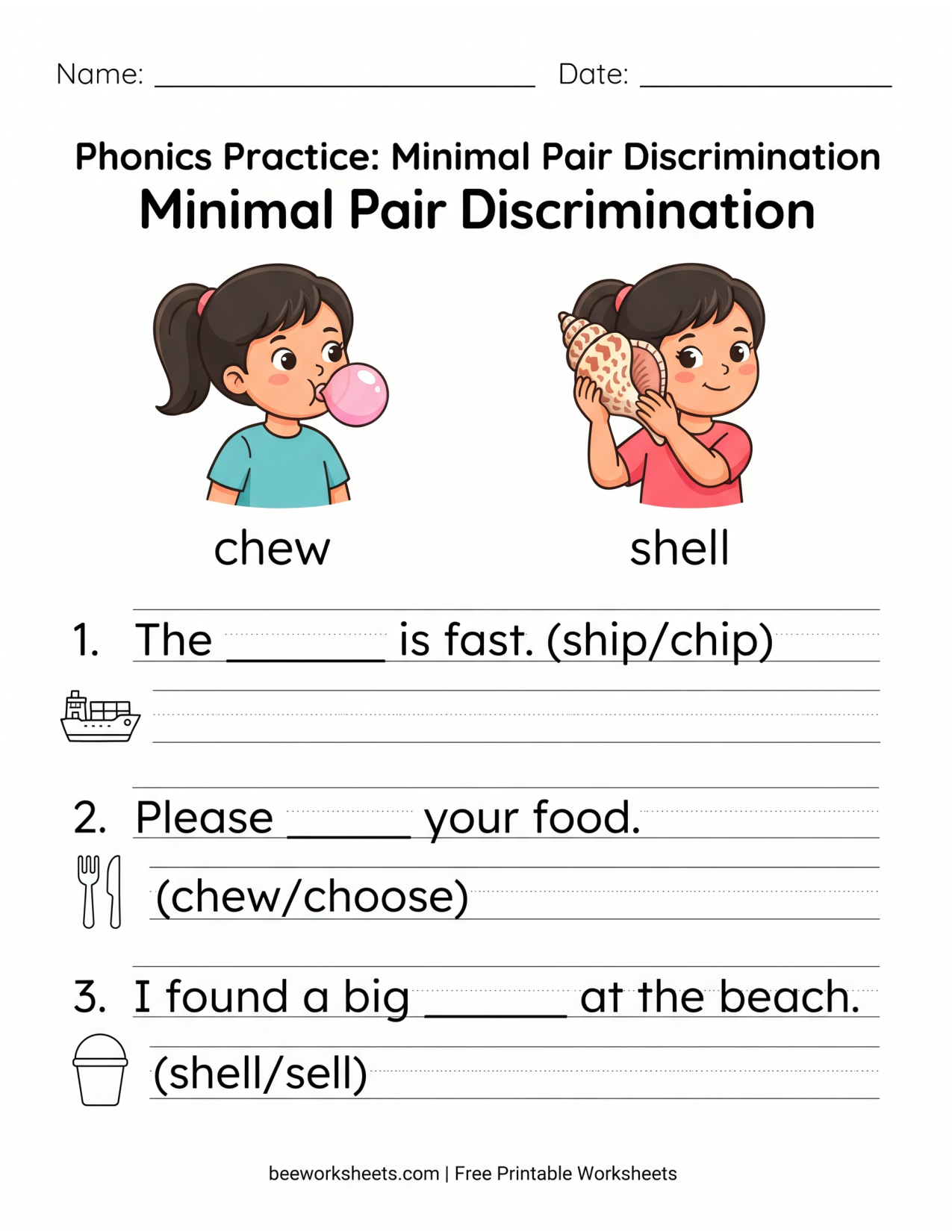
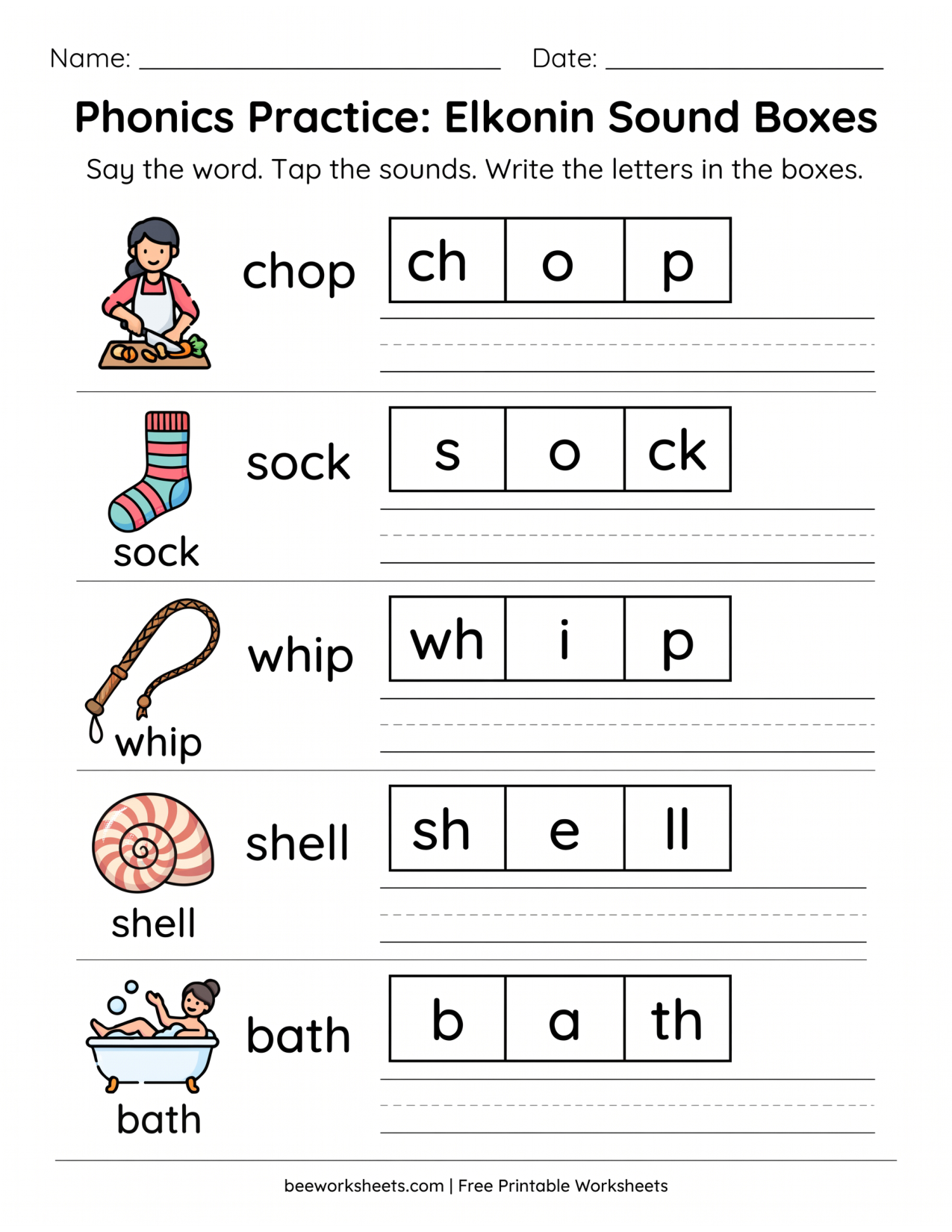
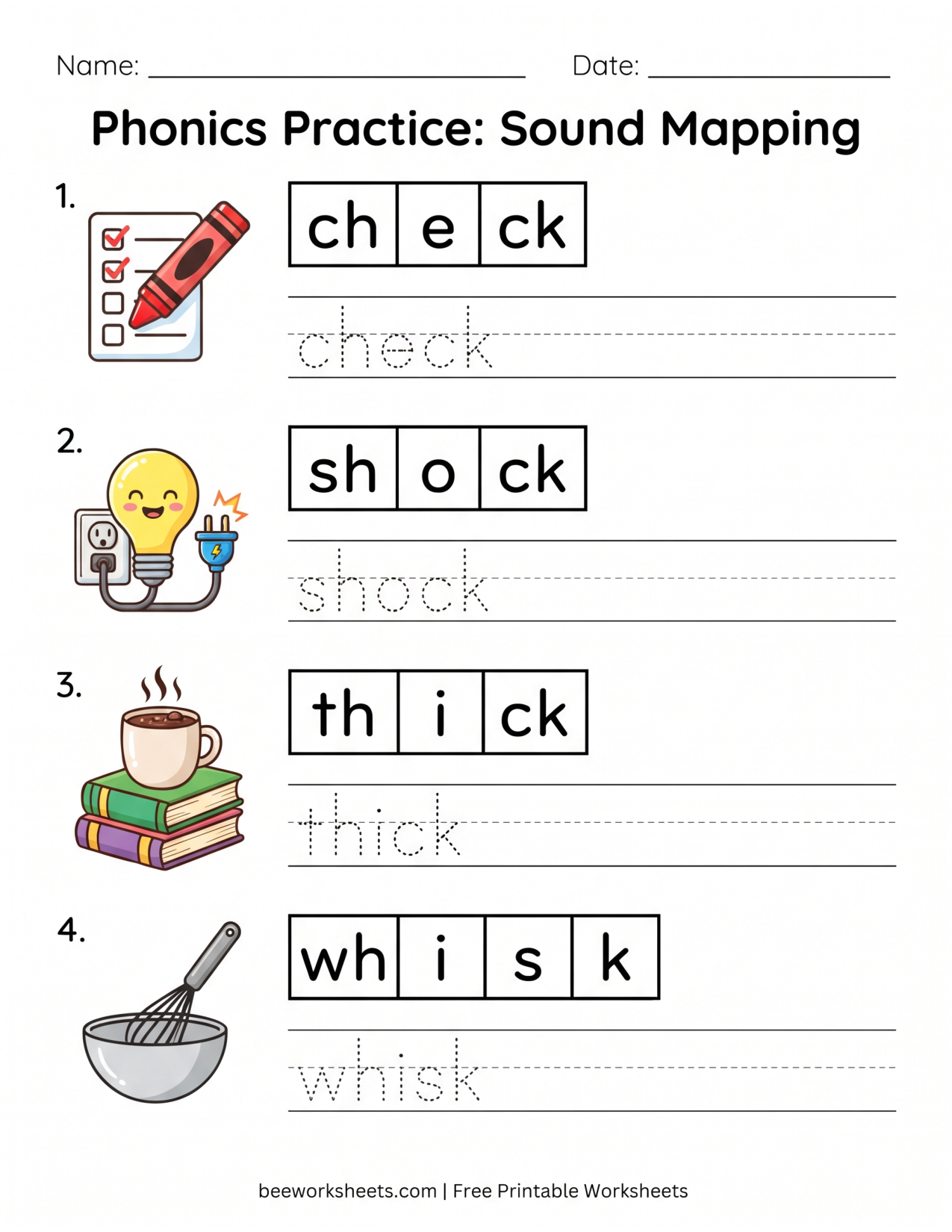
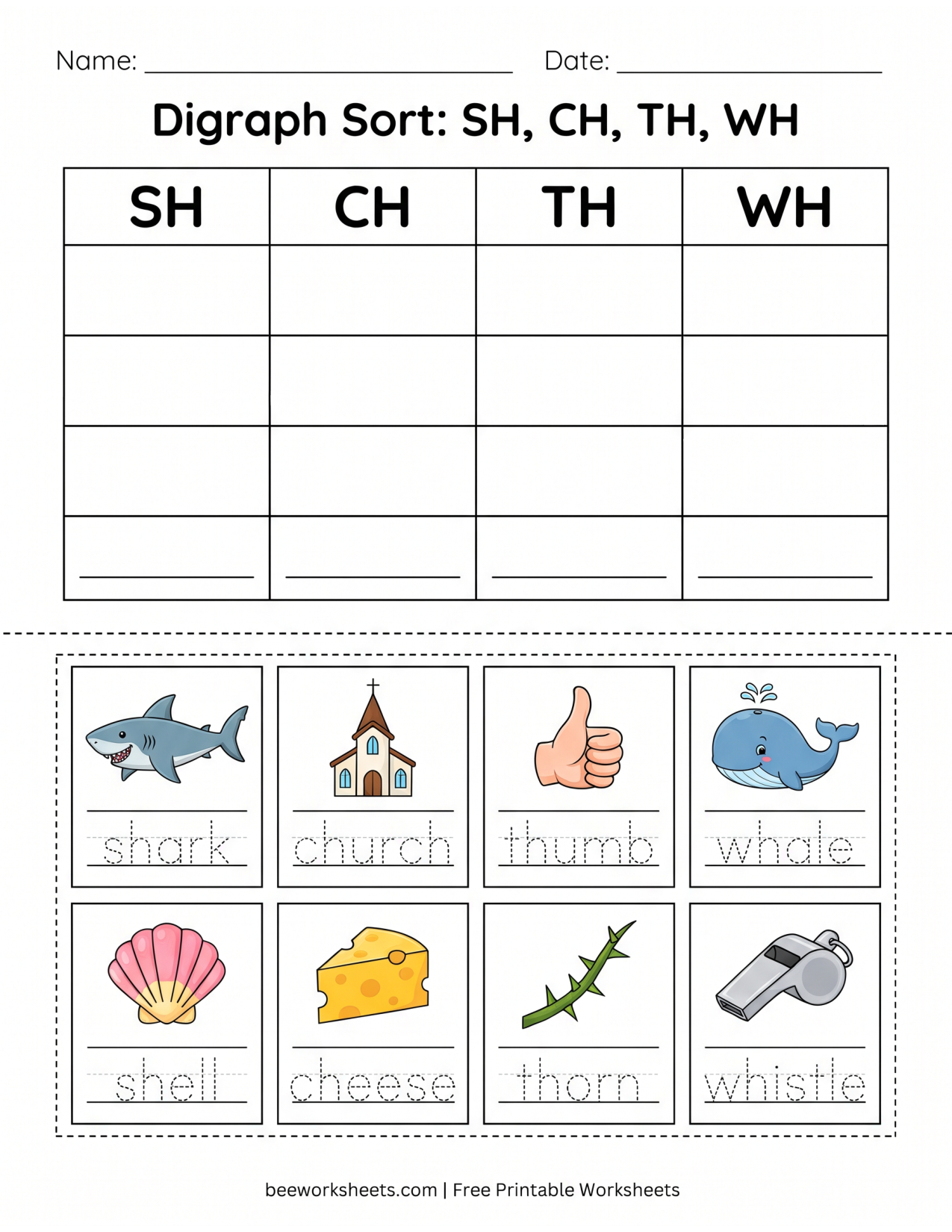
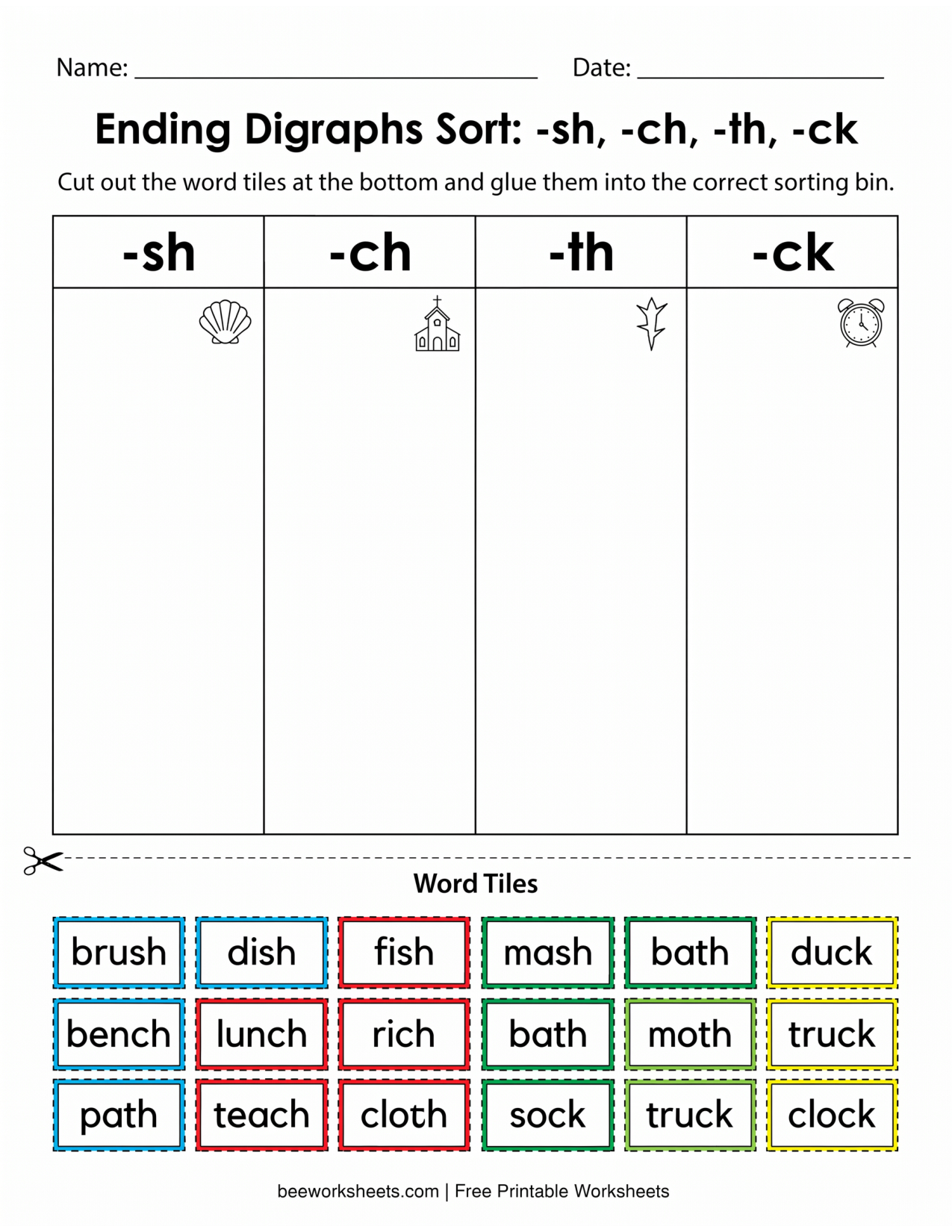
Sheets #19–#36 build phoneme-grapheme connections through sh vs. ch minimal pairs (ship/chip), 3-box Elkonin orthographic mapping, and hands-on cut-and-paste sorts.

3

Decodable Passages & Master Review

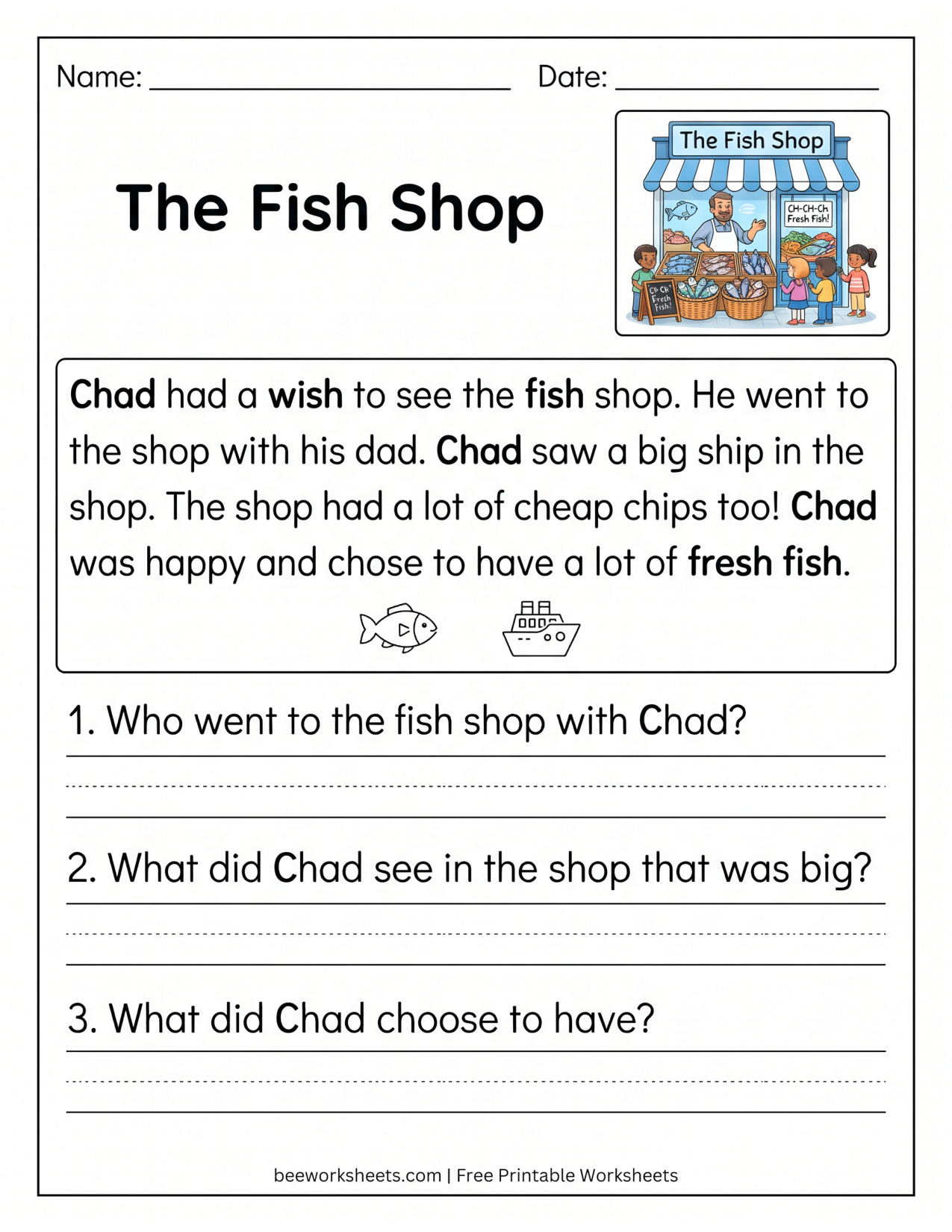
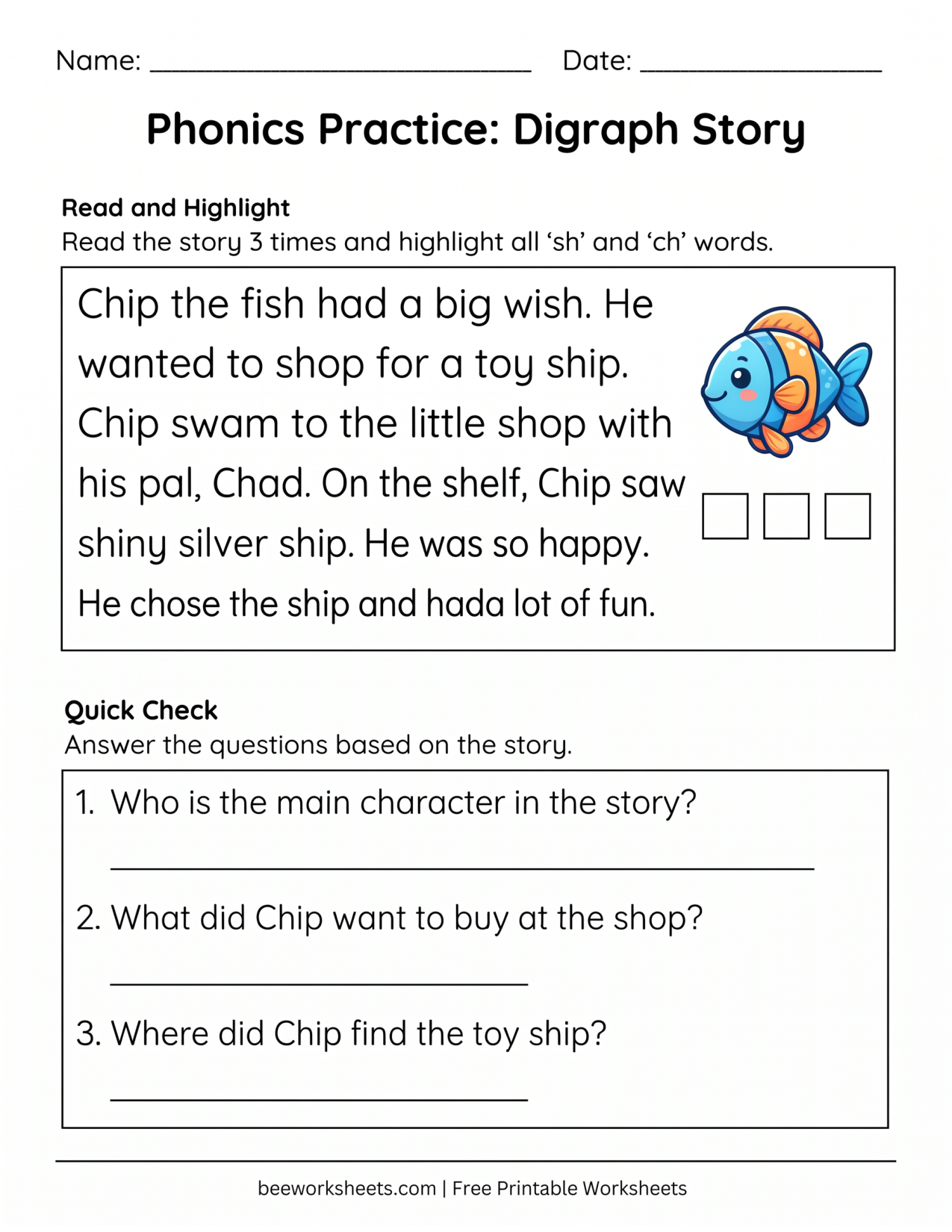
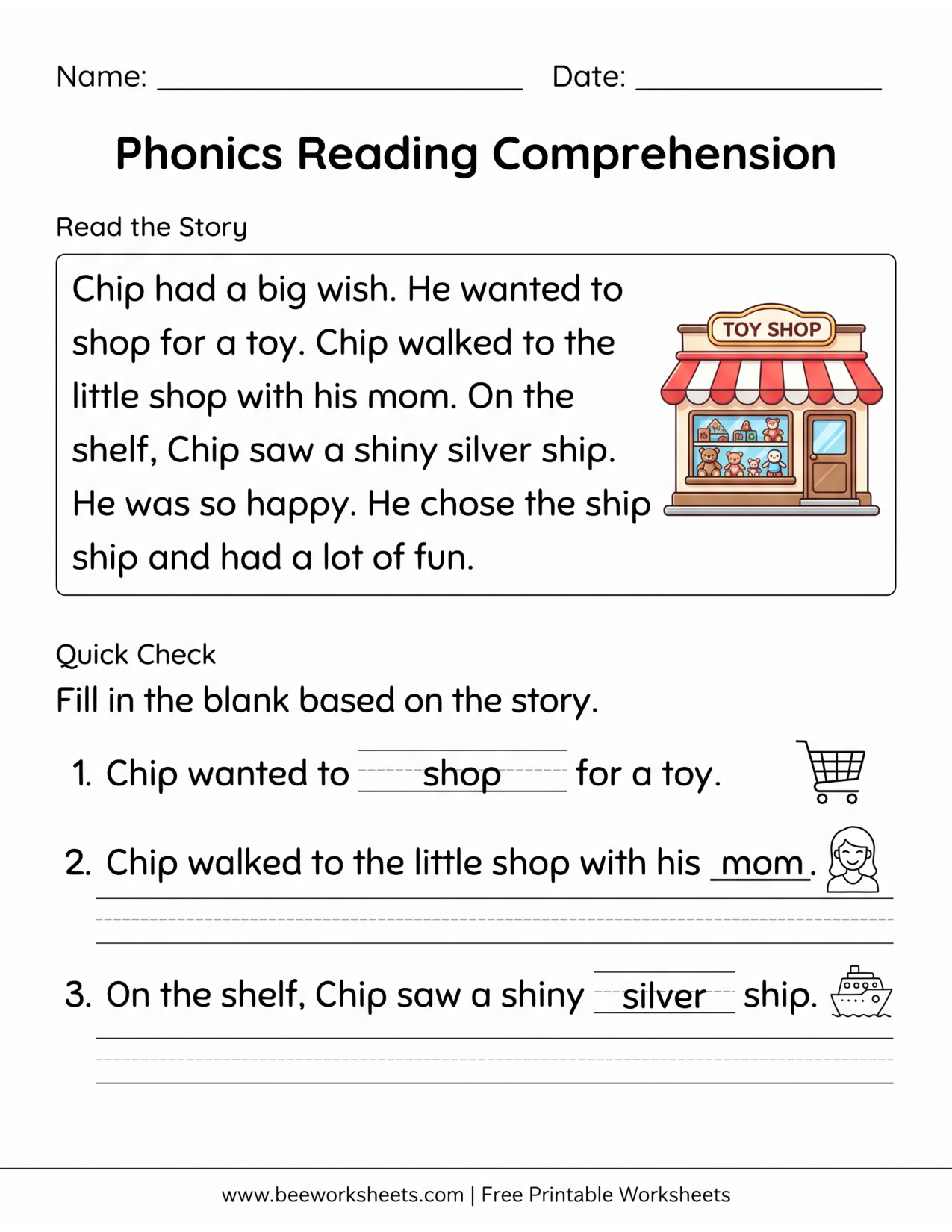
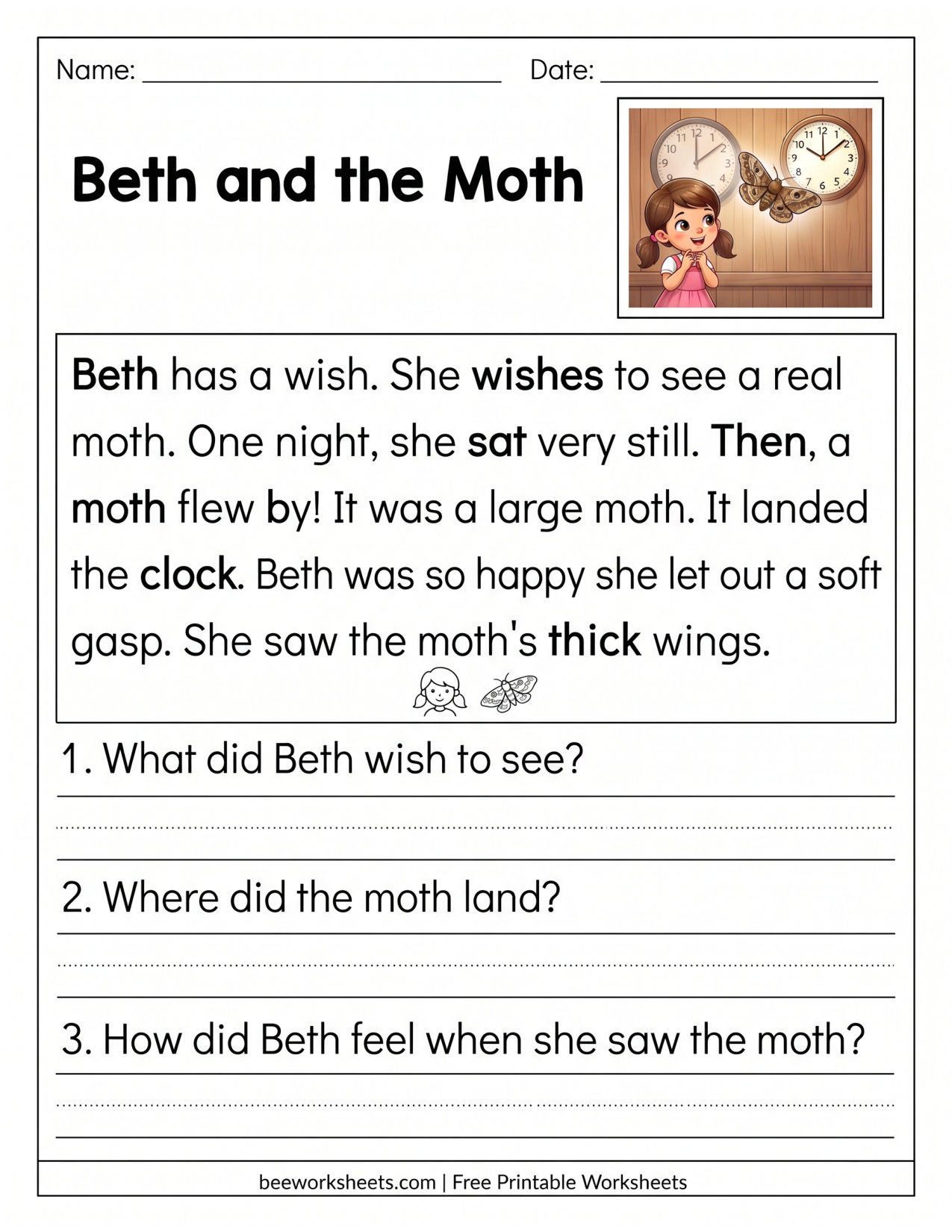
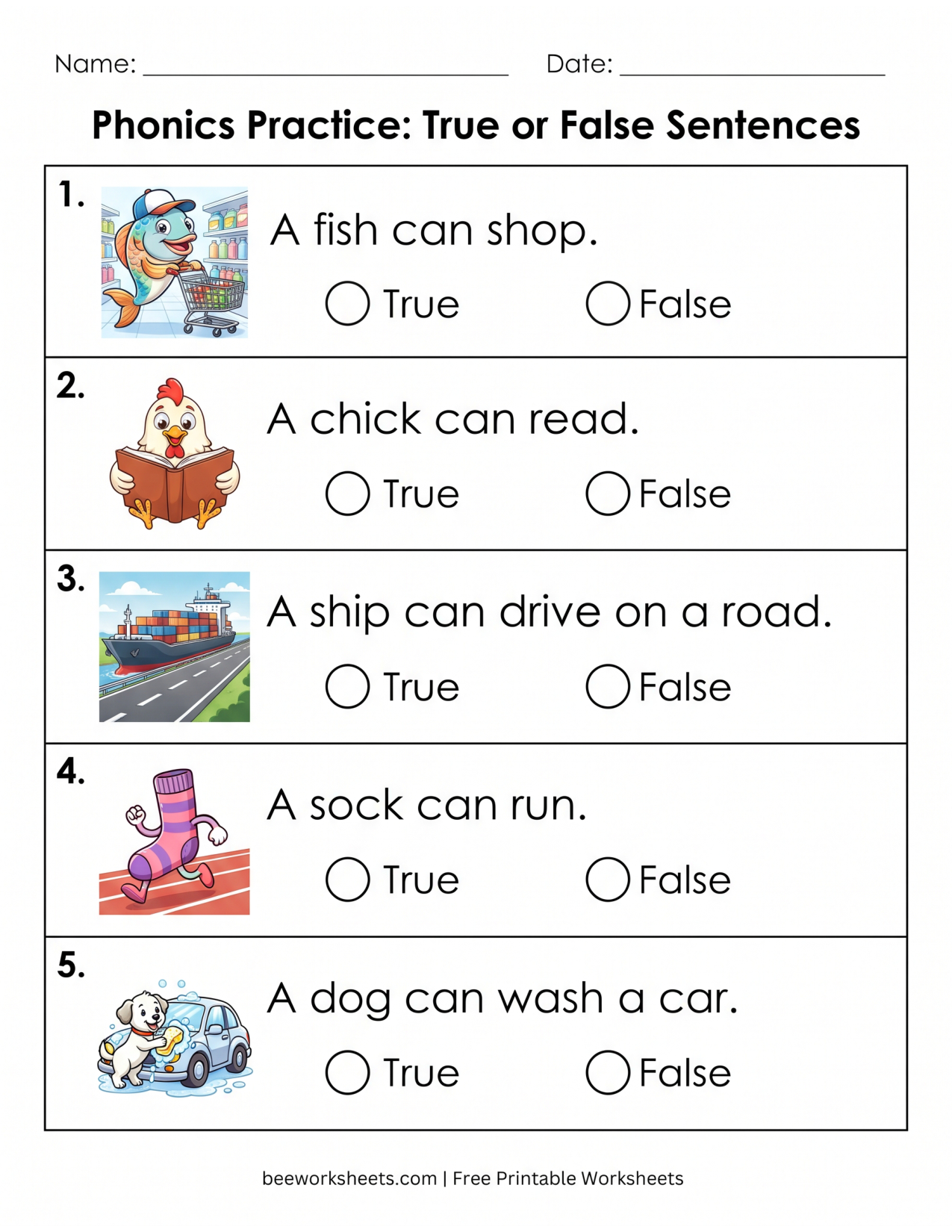
Sheets #37–#48 transition students from isolated words to connected text using decodable sentences, UFLI-style decodable stories with comprehension questions, and unit assessments.

Filter by Skill:

All 48 Consonant Digraph Worksheets

Click any worksheet below to preview, print, or download the US Letter PDF instantly.

Download All 48 as One PDF Bundlearrow_forward
Free Interactive Phonics Games

Play Digraph Games Online
Practice these same Digraph words on a Smartboard, Chromebook or tablet — free, no sign-up.

How to use these worksheets in class

Core Instruction

Model orthographic mapping or phoneme-grapheme correspondence at your small-group table first, having students tap and blend each sound aloud before writing.

Scaffolding & Support

Highlight baseline cues or use two-color pencils (blue for consonants, red for vowels or heart parts) to scaffold visual discrimination for early readers.

Fast Finisher Extension

Ask students to use two target words or letters from the sheet in an original oral or written sentence on the back of their page.

Frequently Asked Questions About Digraph Worksheets

What is a consonant digraph in phonics?

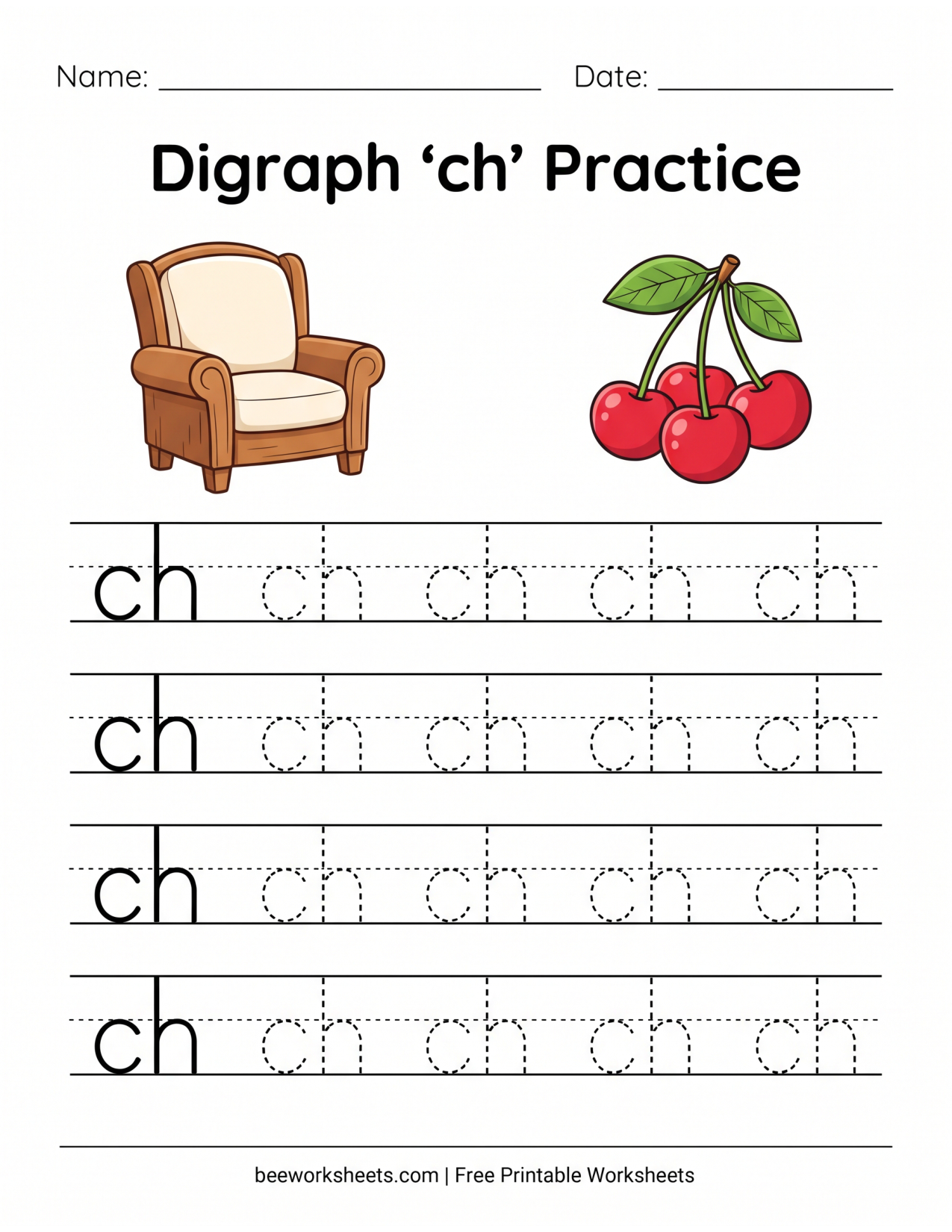
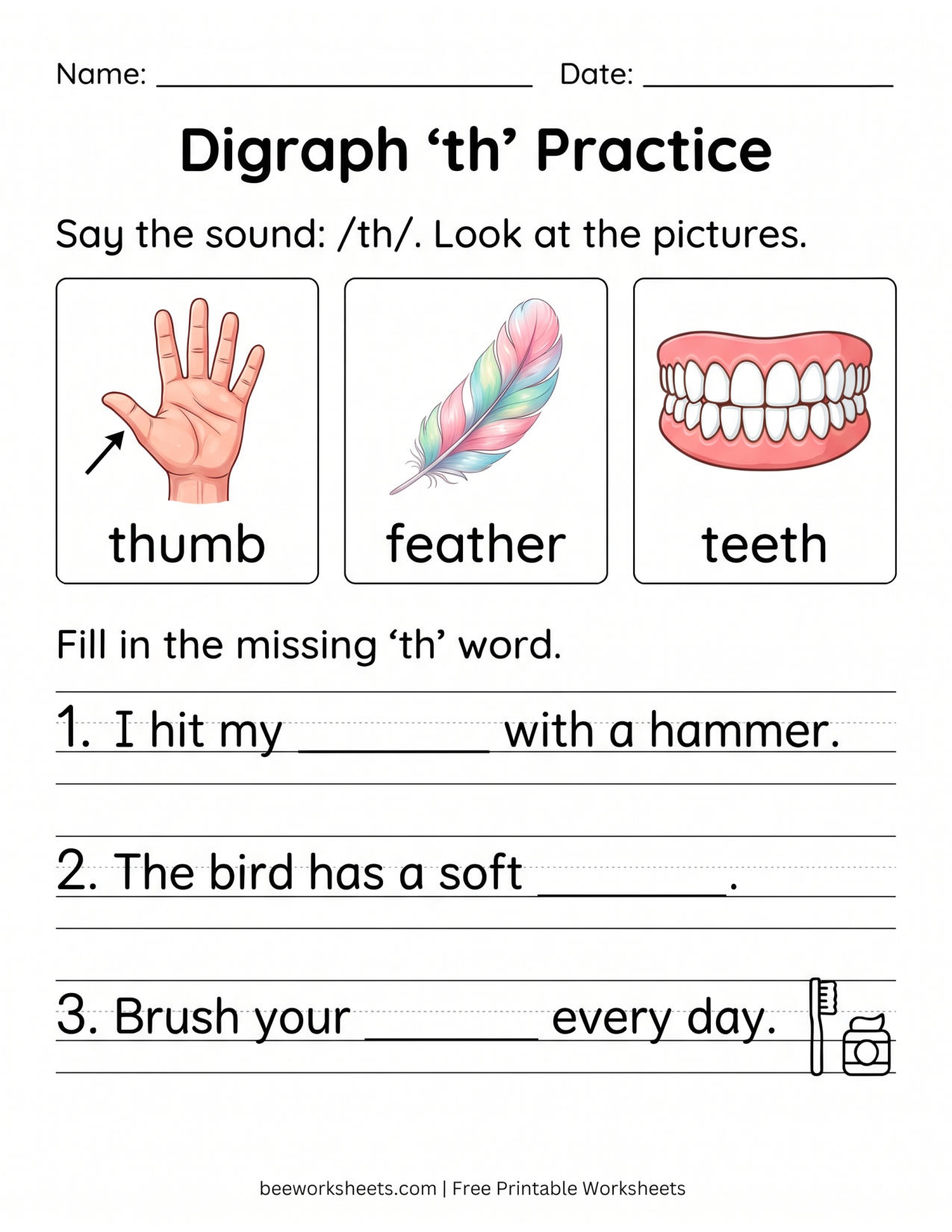
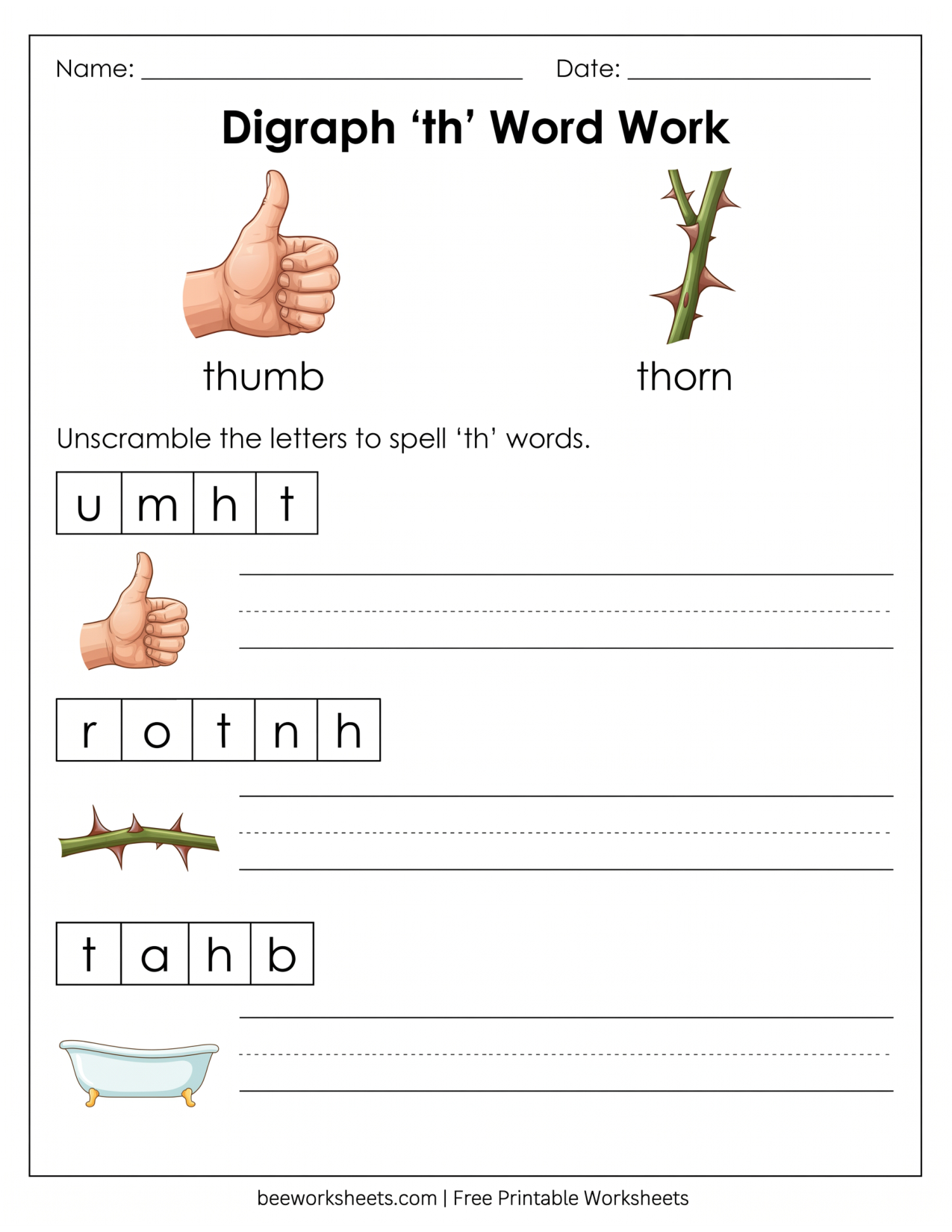
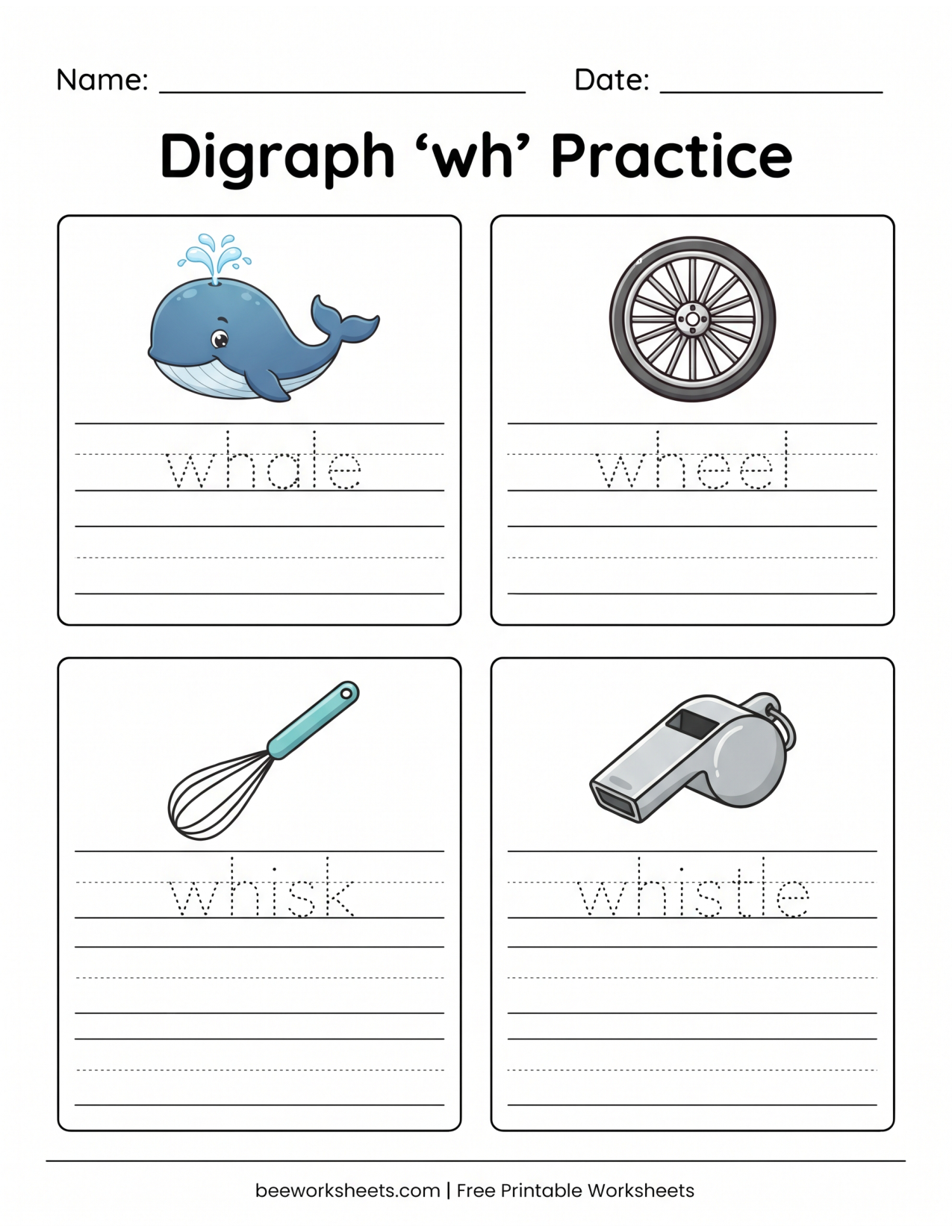
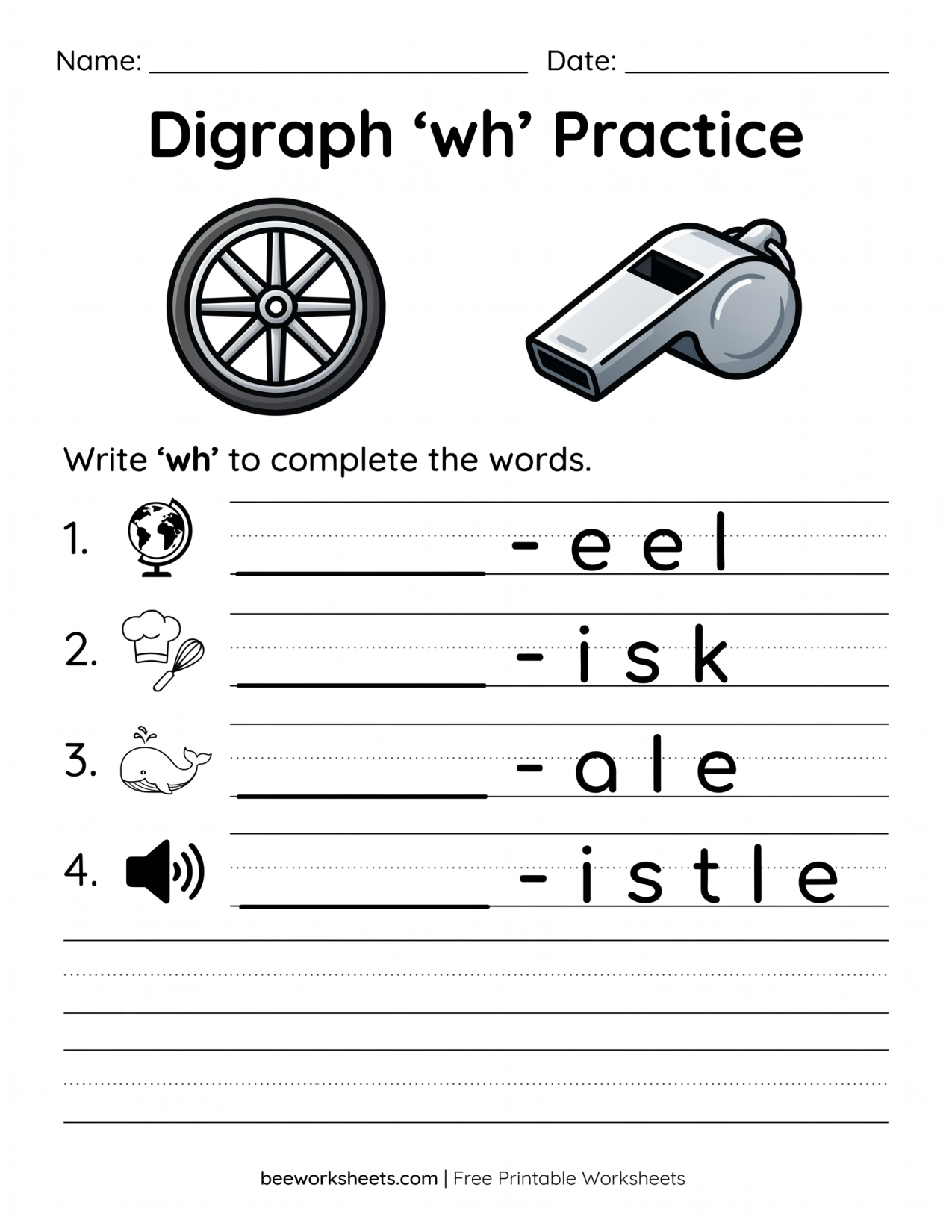
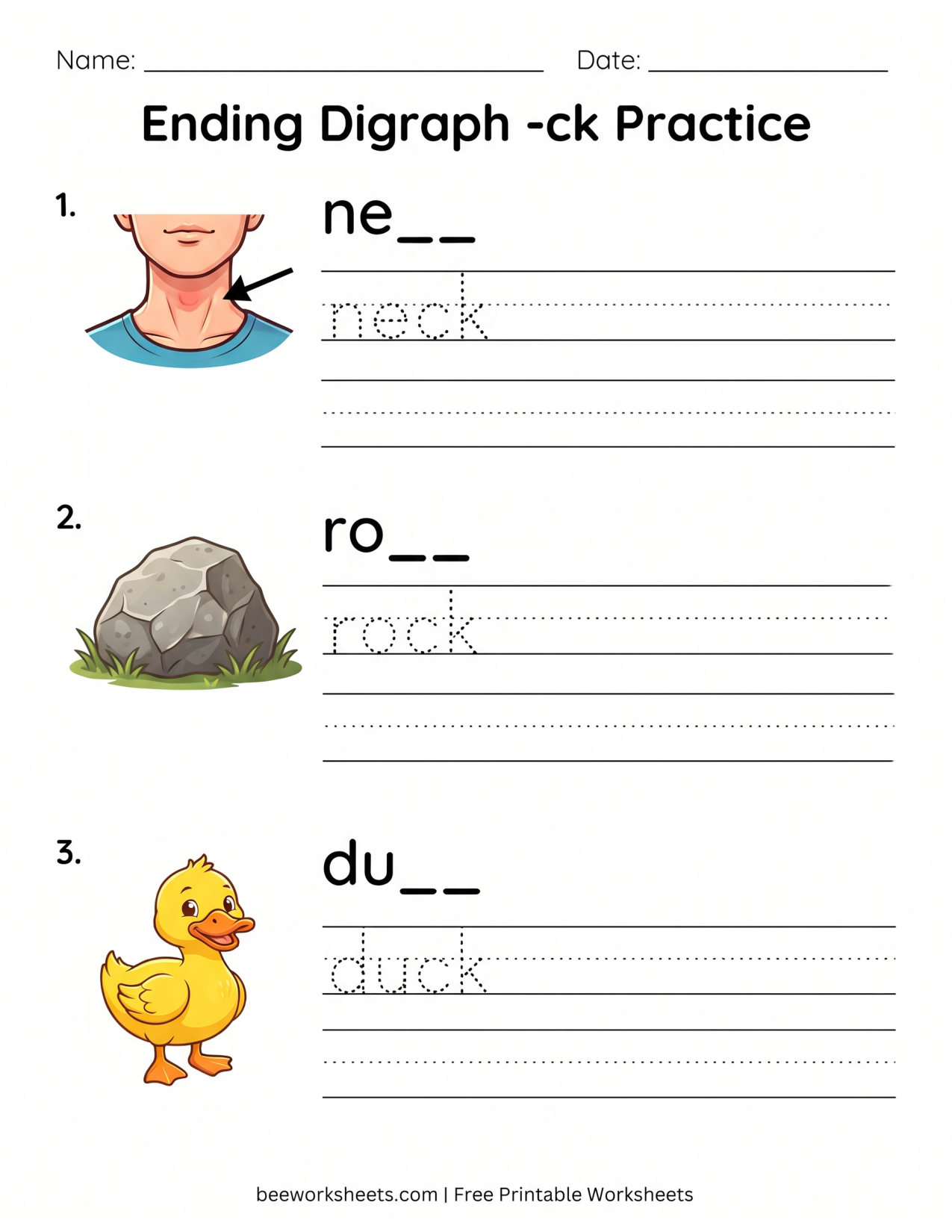
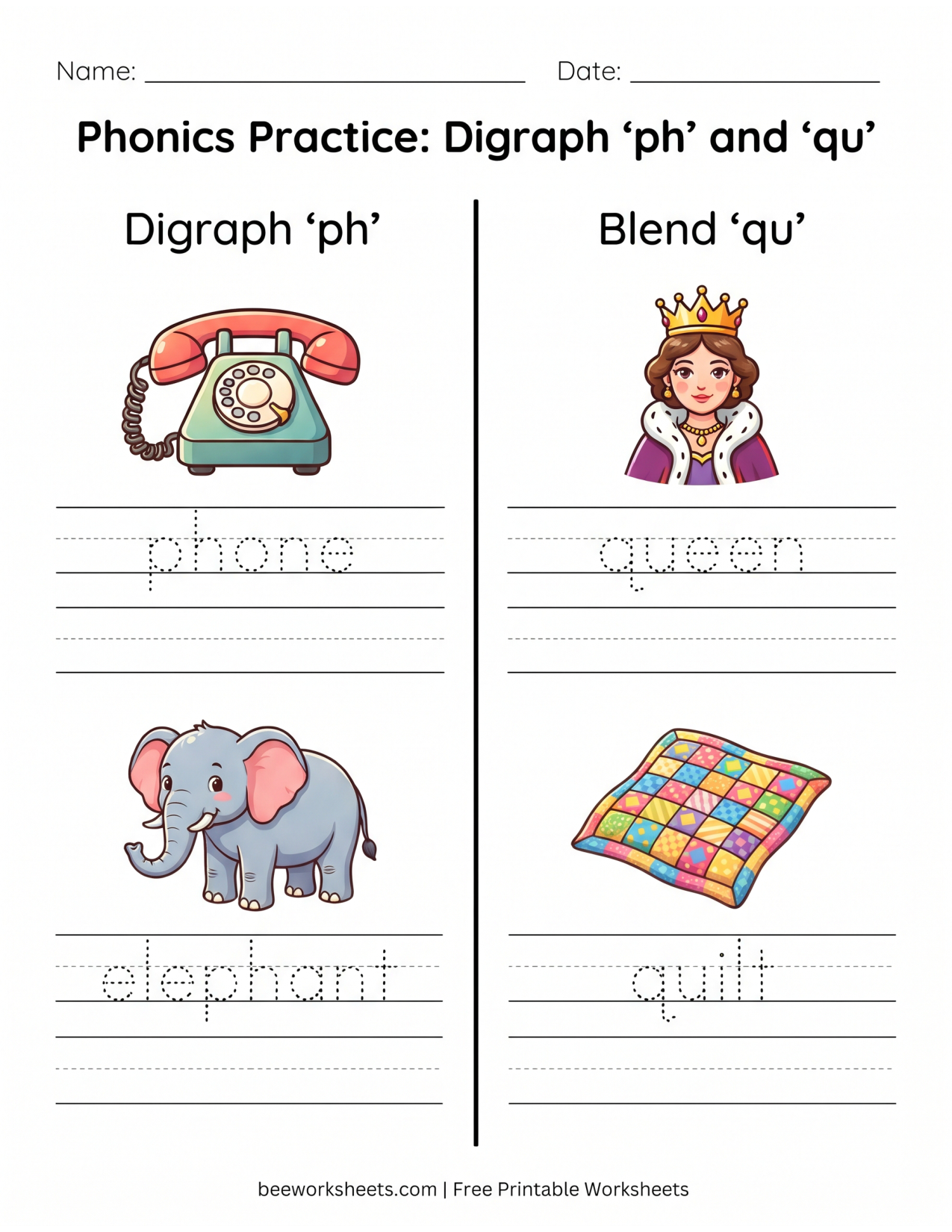
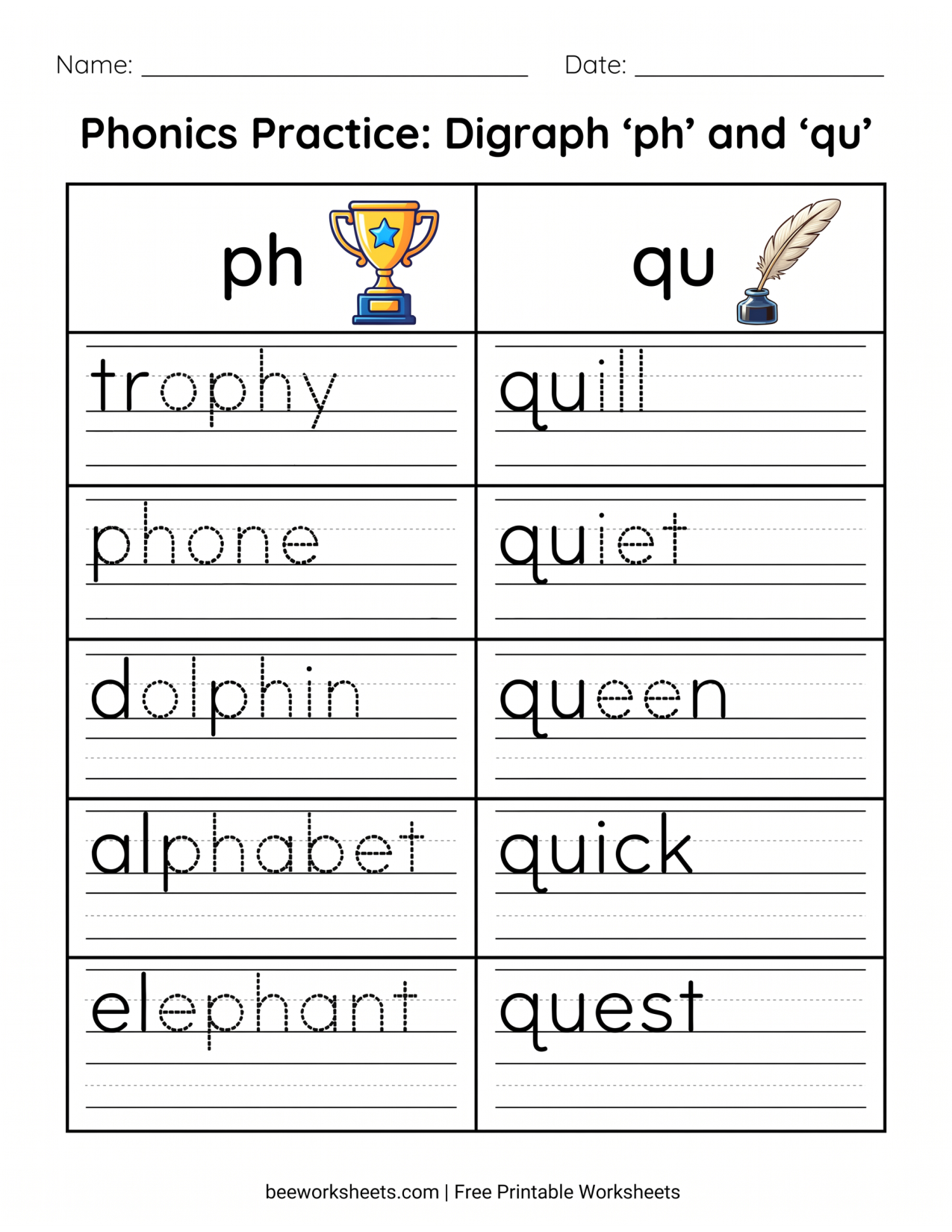
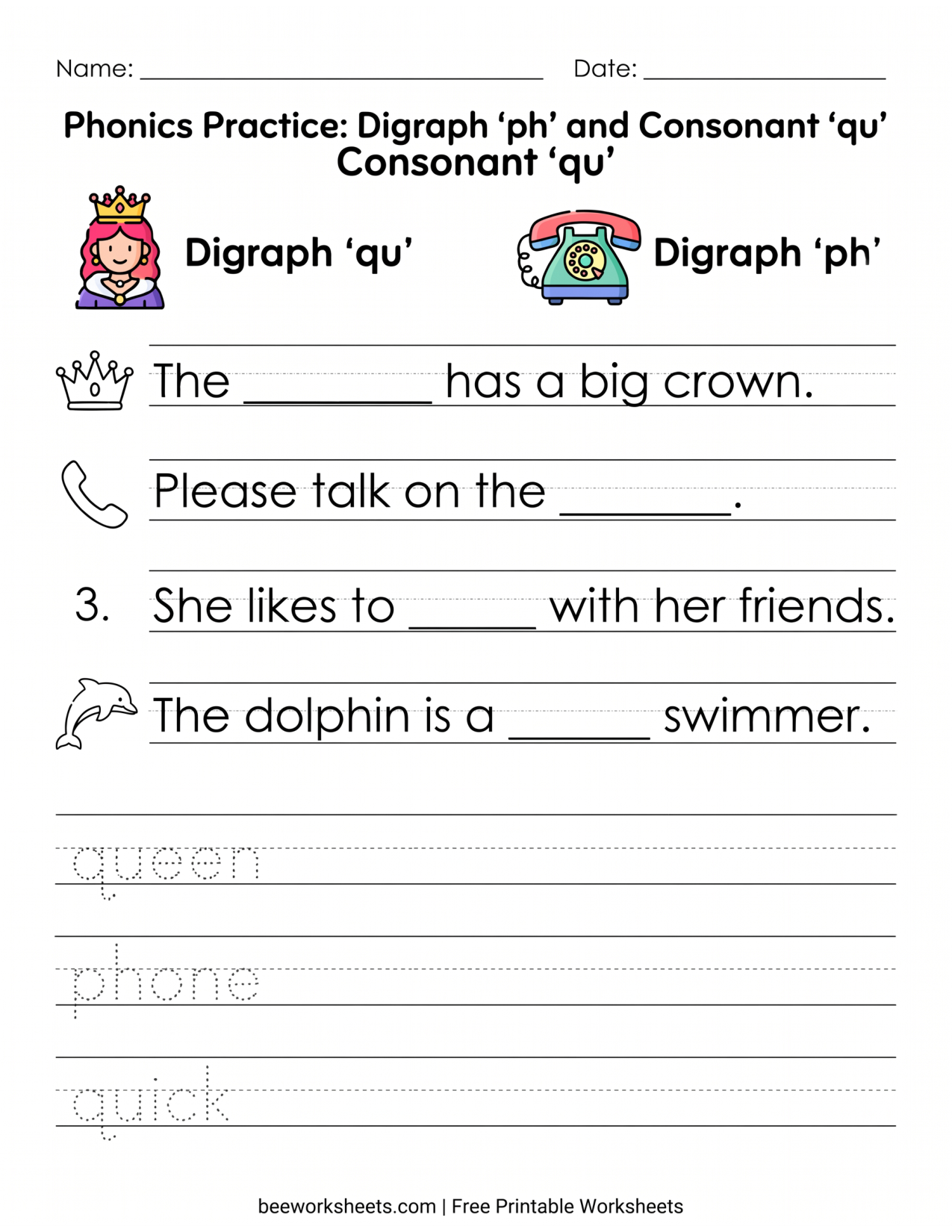
A consonant digraph is a pair of consonant letters that together make a single sound. Common examples taught in Kindergarten and 1st Grade include sh (ship, fish), ch (chin, much), th (thumb, this), wh (whale, wheel), ph (phone, graph), and ending -ck (duck, sock).

Are the digraph worksheets free to print?

Yes. Every worksheet on this page can be downloaded and printed for free as a PDF, with no login or email sign-up. See the Terms of Use for the free classroom license.

How do you map digraphs in Elkonin sound boxes?

Each box stands for one sound, not one letter. Because a digraph makes a single sound, both letters go inside one shared box. For example, chop has four letters but three sounds (/ch/ /o/ /p/), so students write ch in box 1, o in box 2 and p in box 3.

When should students use -ck vs. -k at the end of a word?

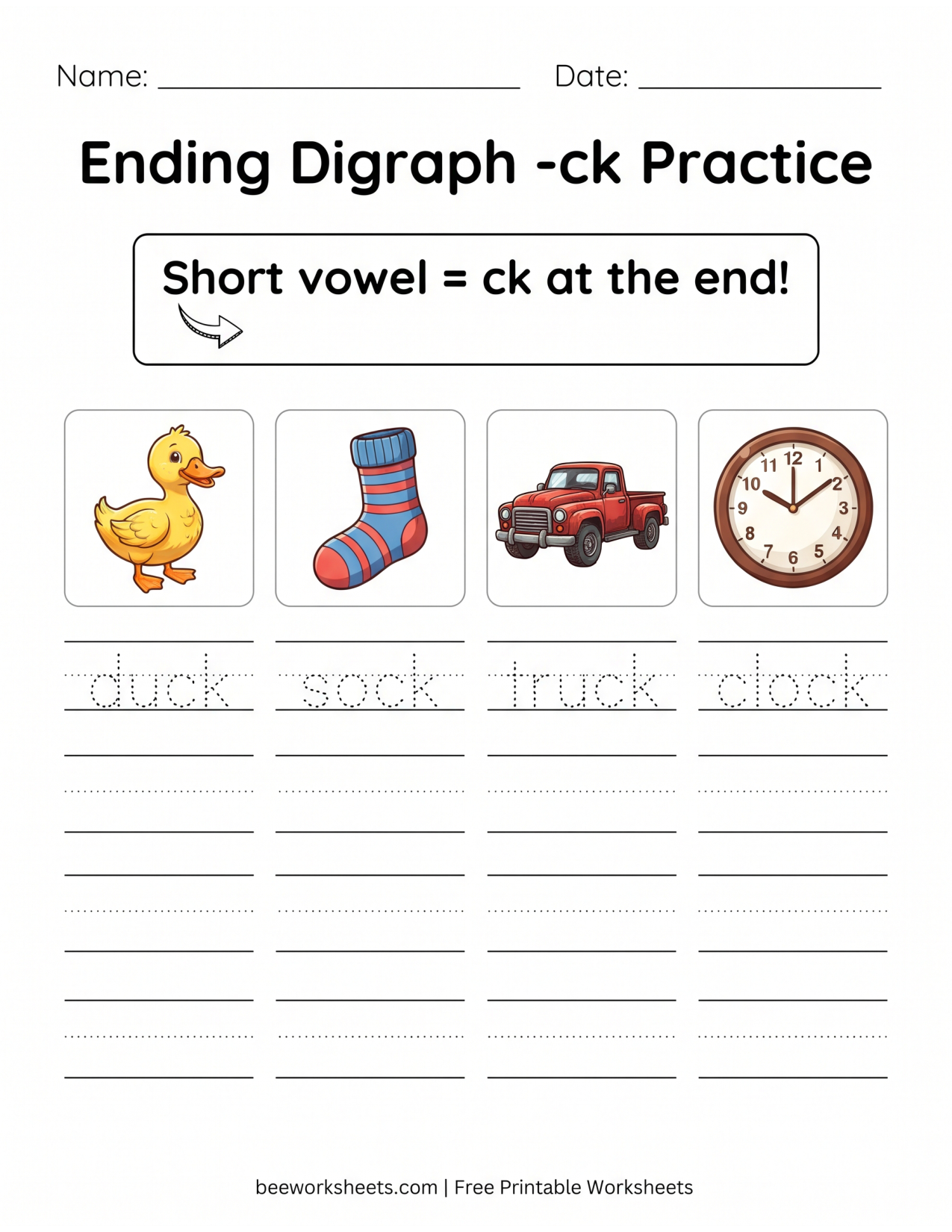
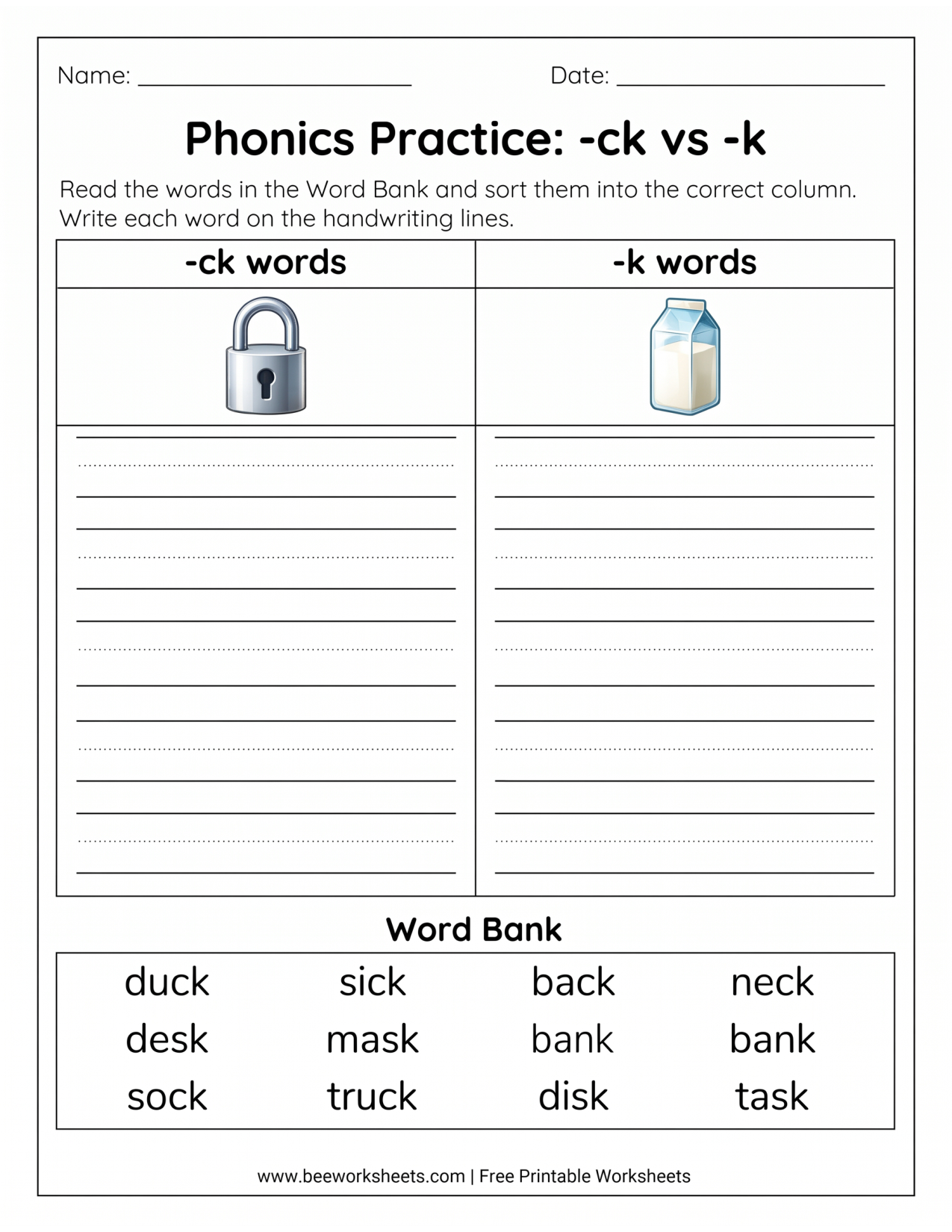
Use -ck right after a single short vowel in a one-syllable word (back, neck, sick, lock, duck). Use a single -k after a consonant, a long vowel or a vowel team (milk, bank, bike, book).

What phonics skill comes after consonant digraphs?
Many teachers move on to glued sounds (-all, -am, -an, -ng, -nk) and heart words once learners can read beginning and ending digraphs smoothly. Our Glued Sounds Worksheets and Heart Words Worksheets are good next steps, though the order depends on your own program.

BeeWorksheets is independent; "UFLI-aligned" describes general phonics scope compatibility and does not imply affiliation with or endorsement by the University of Florida Literacy Institute.