Pre-K, Kindergarten, 1st GradeE1

Opening your printable PDF file.
Made by the BeeWorksheets Editorial Team · Editorial standards
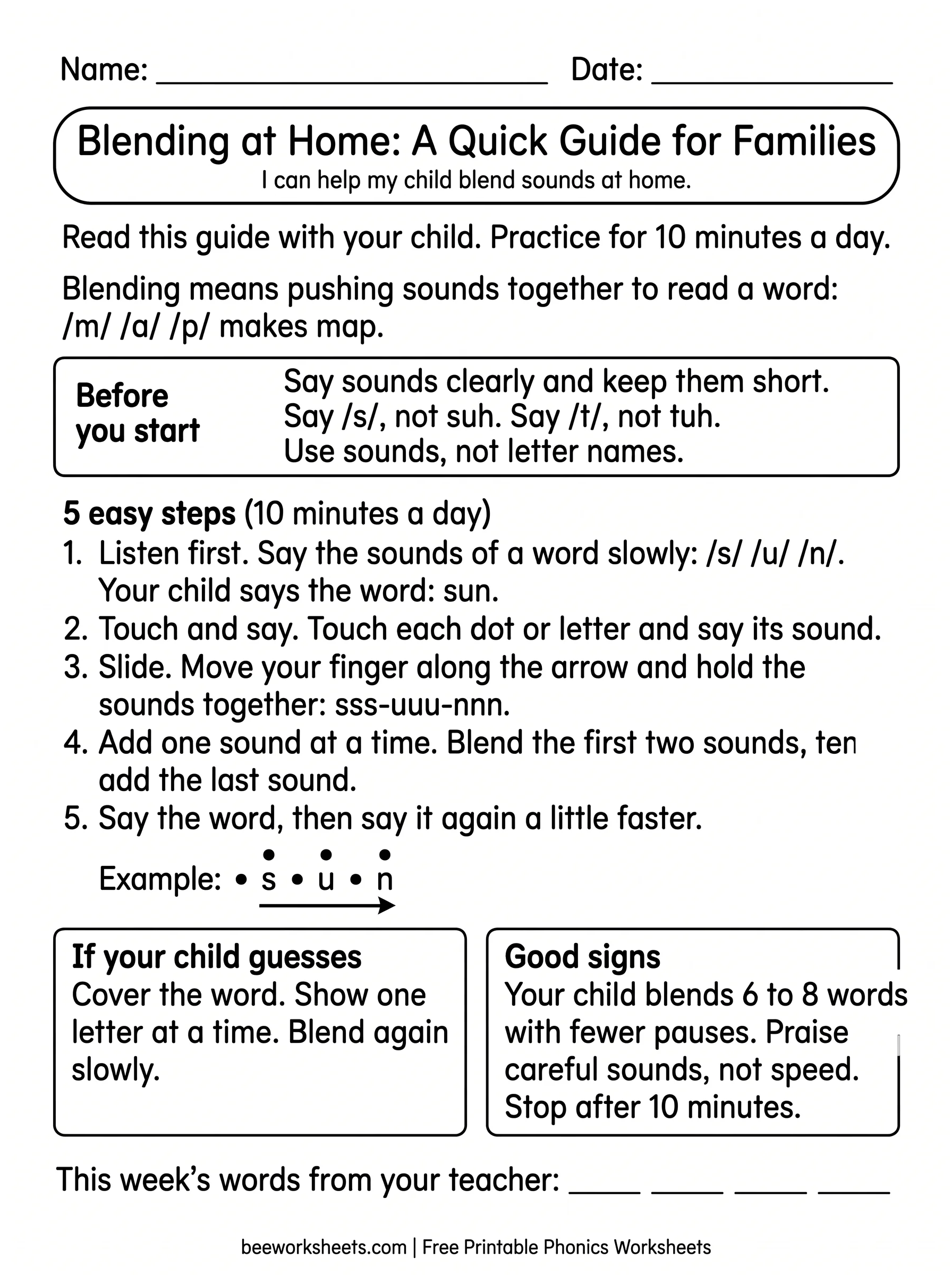
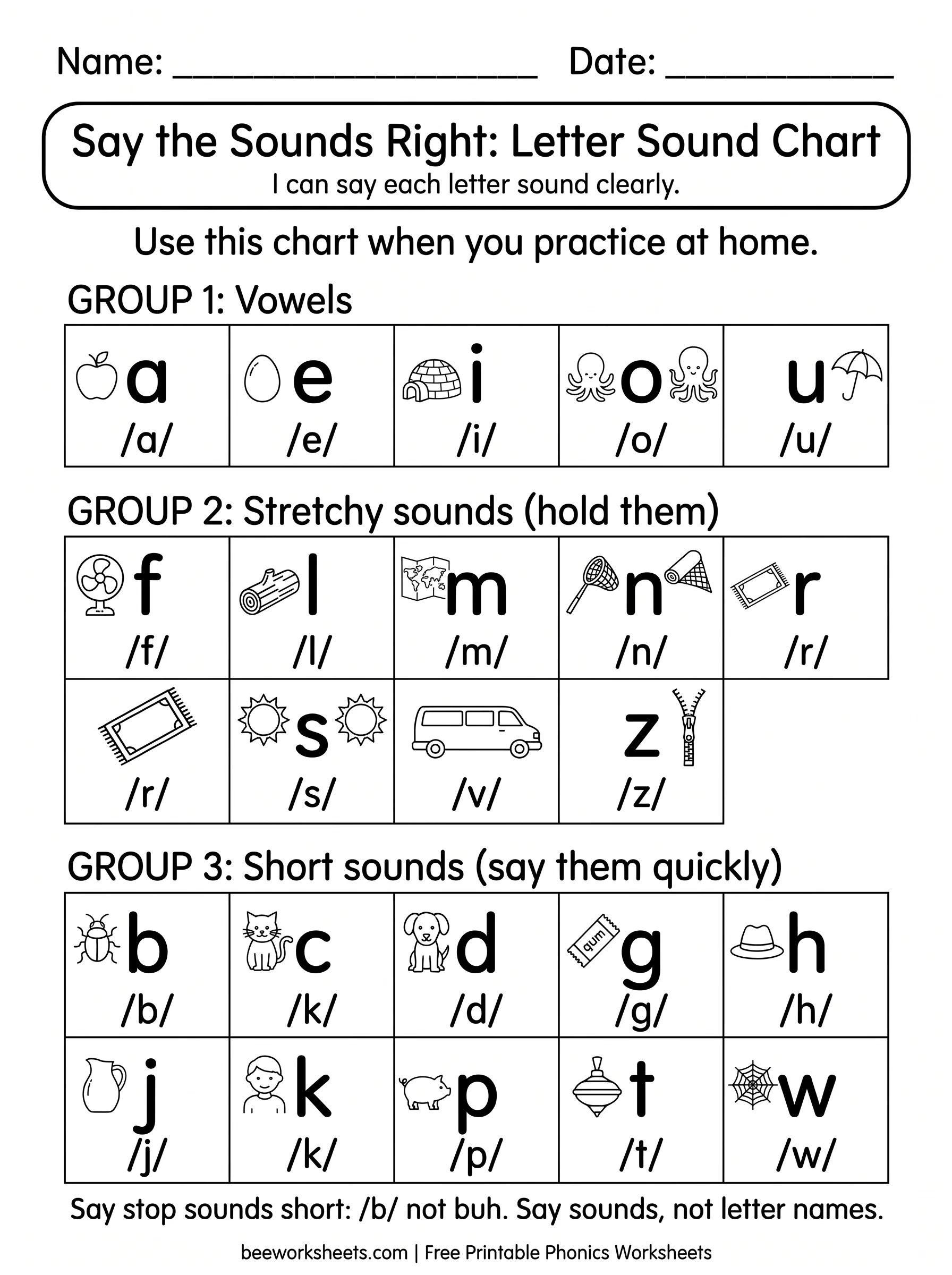
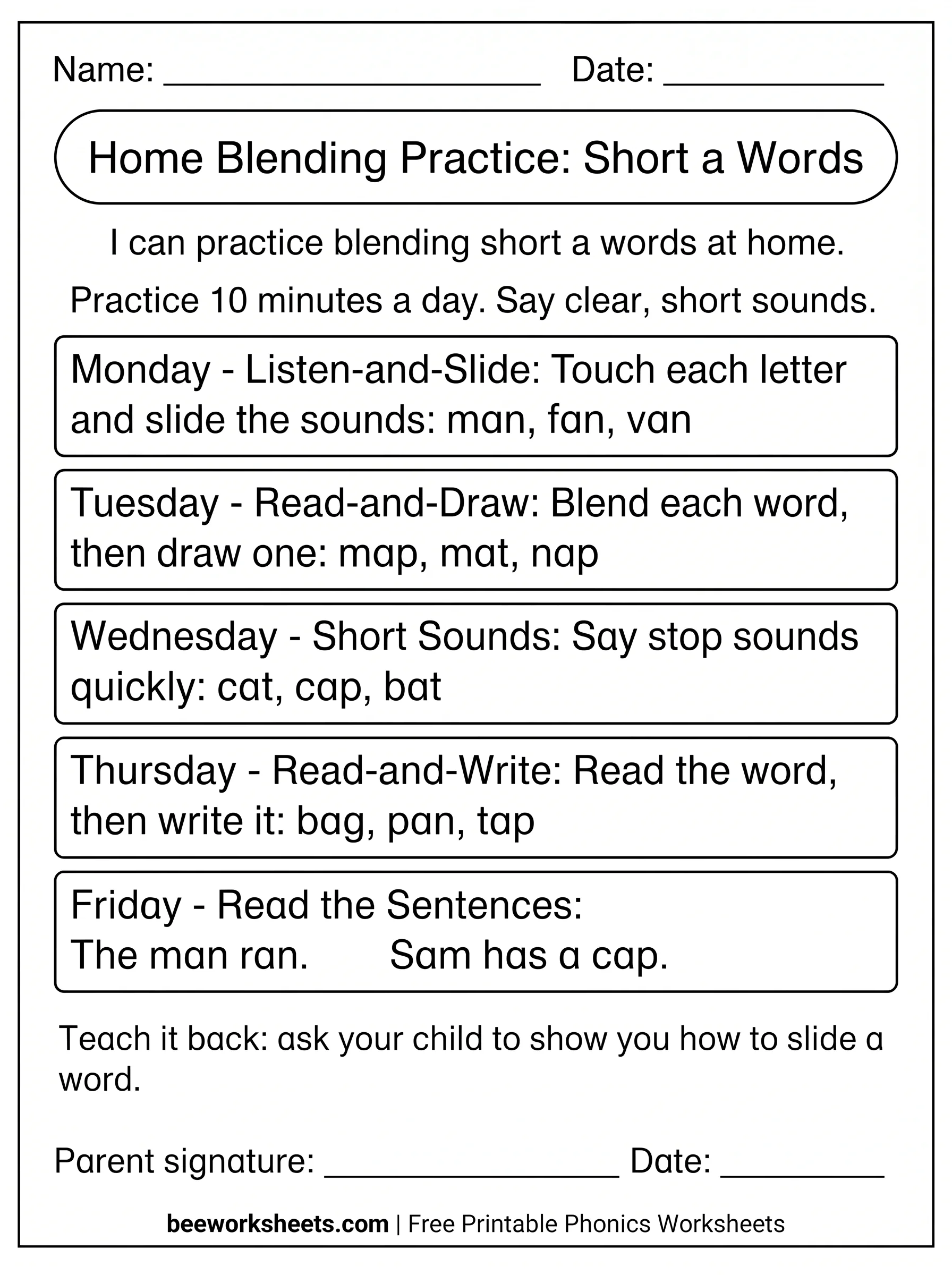
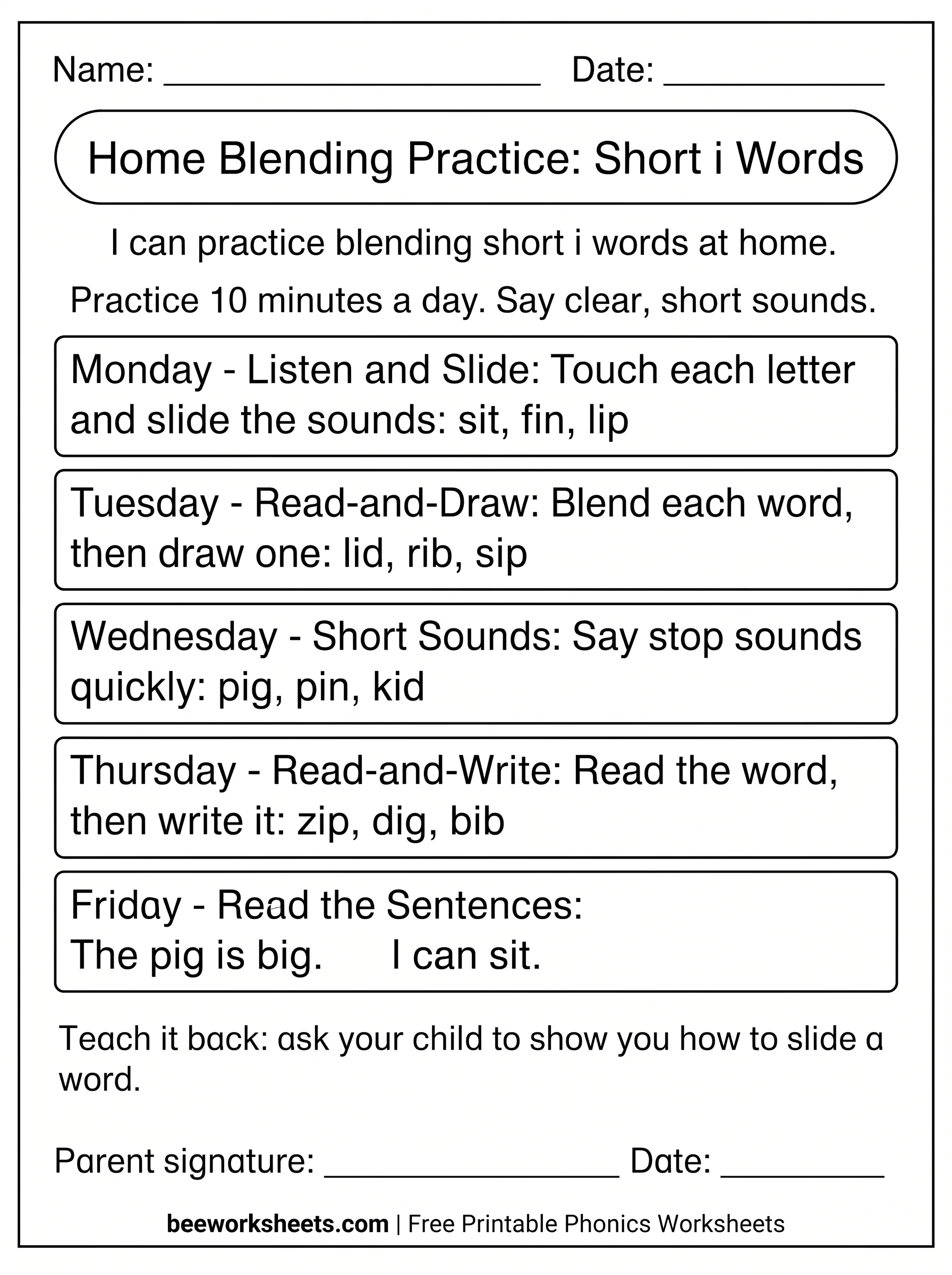
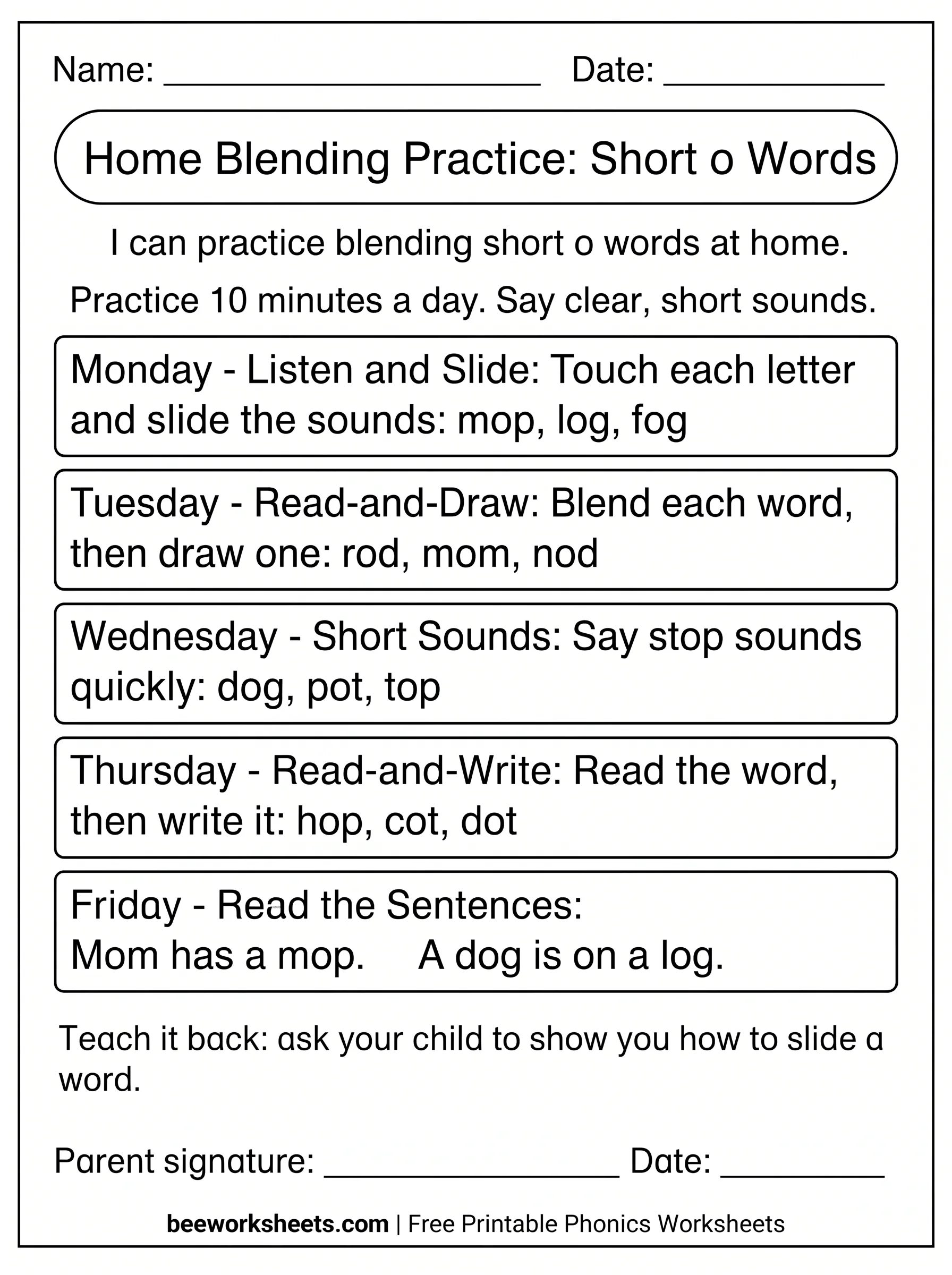
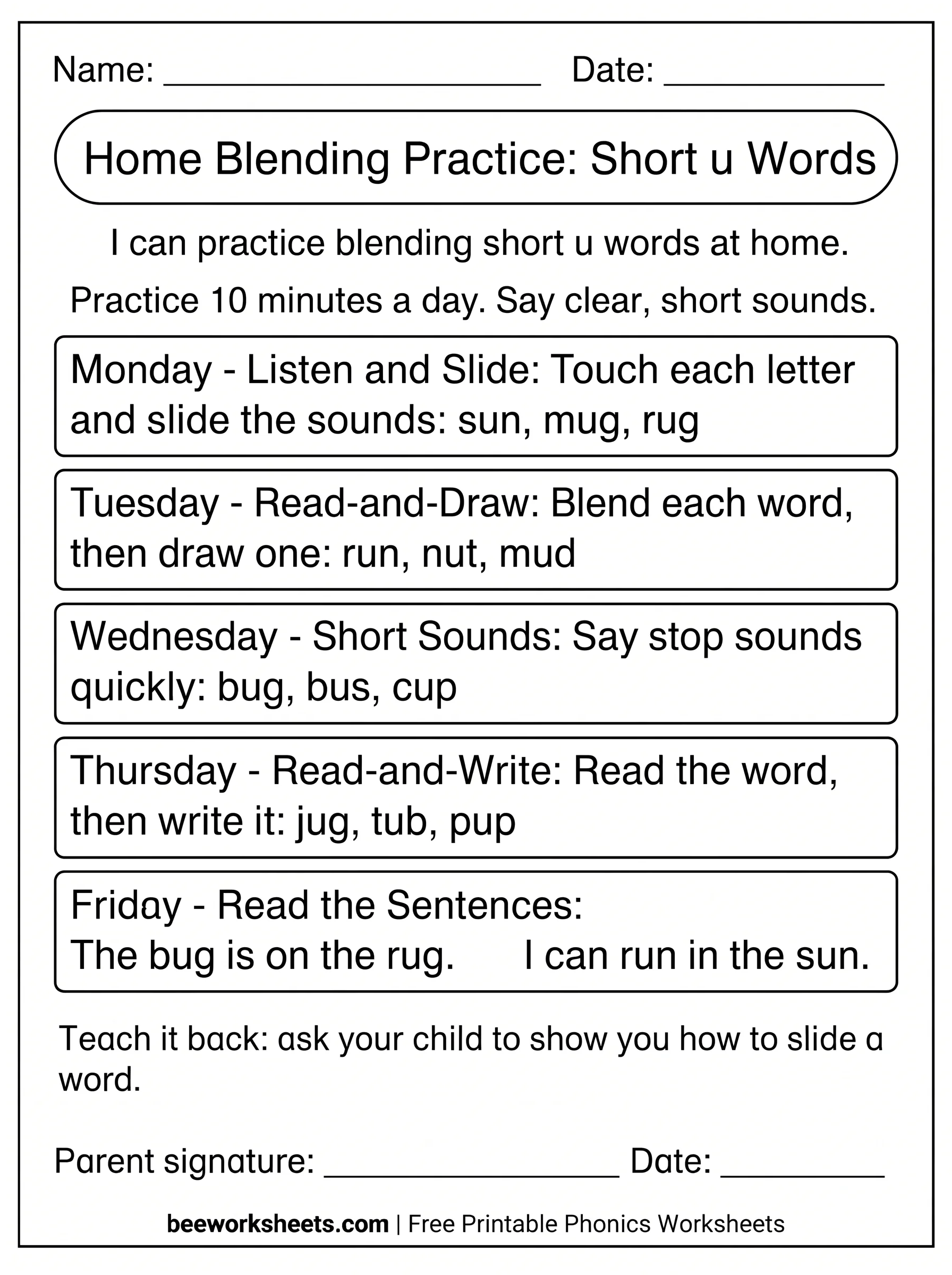
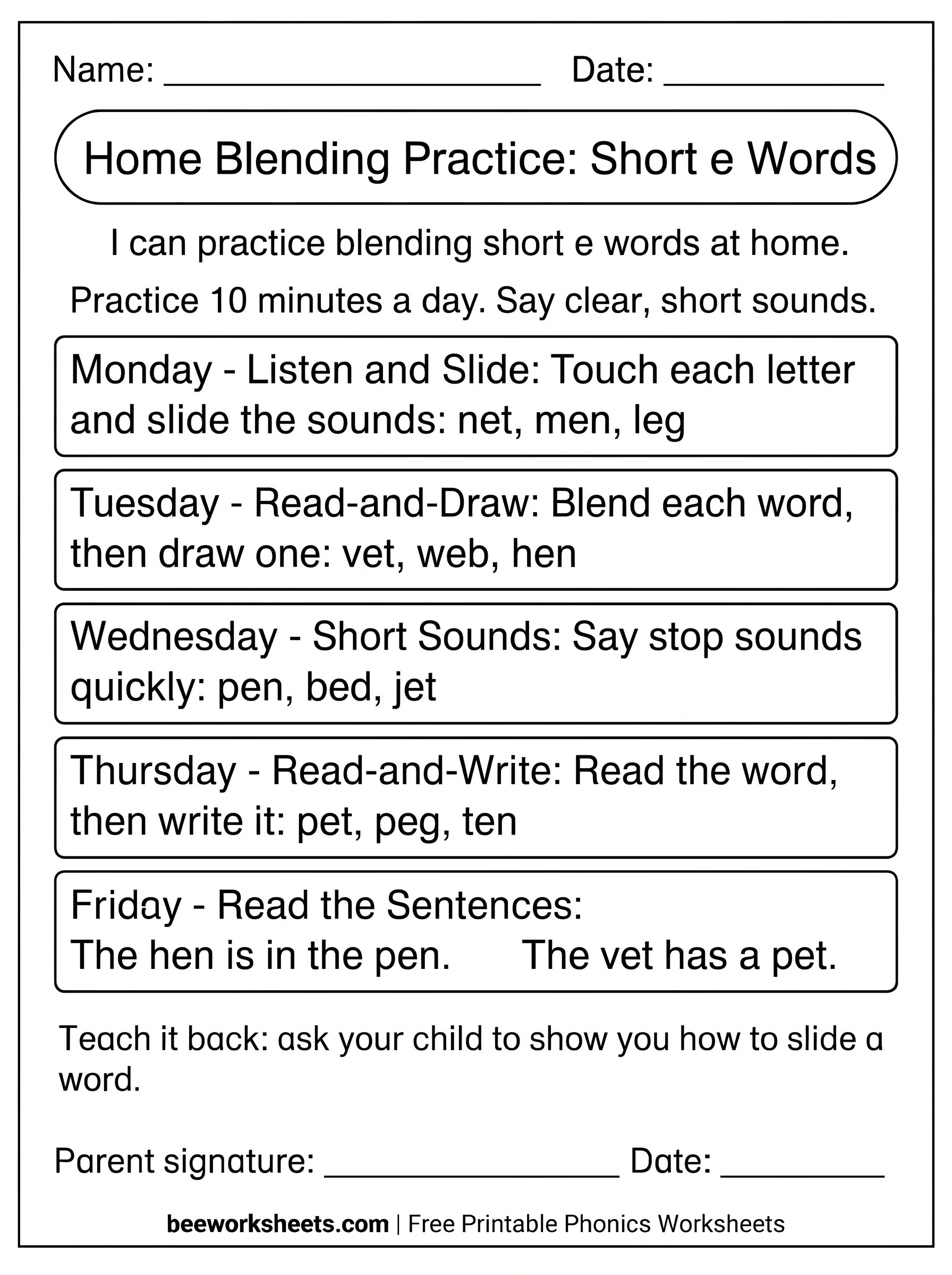
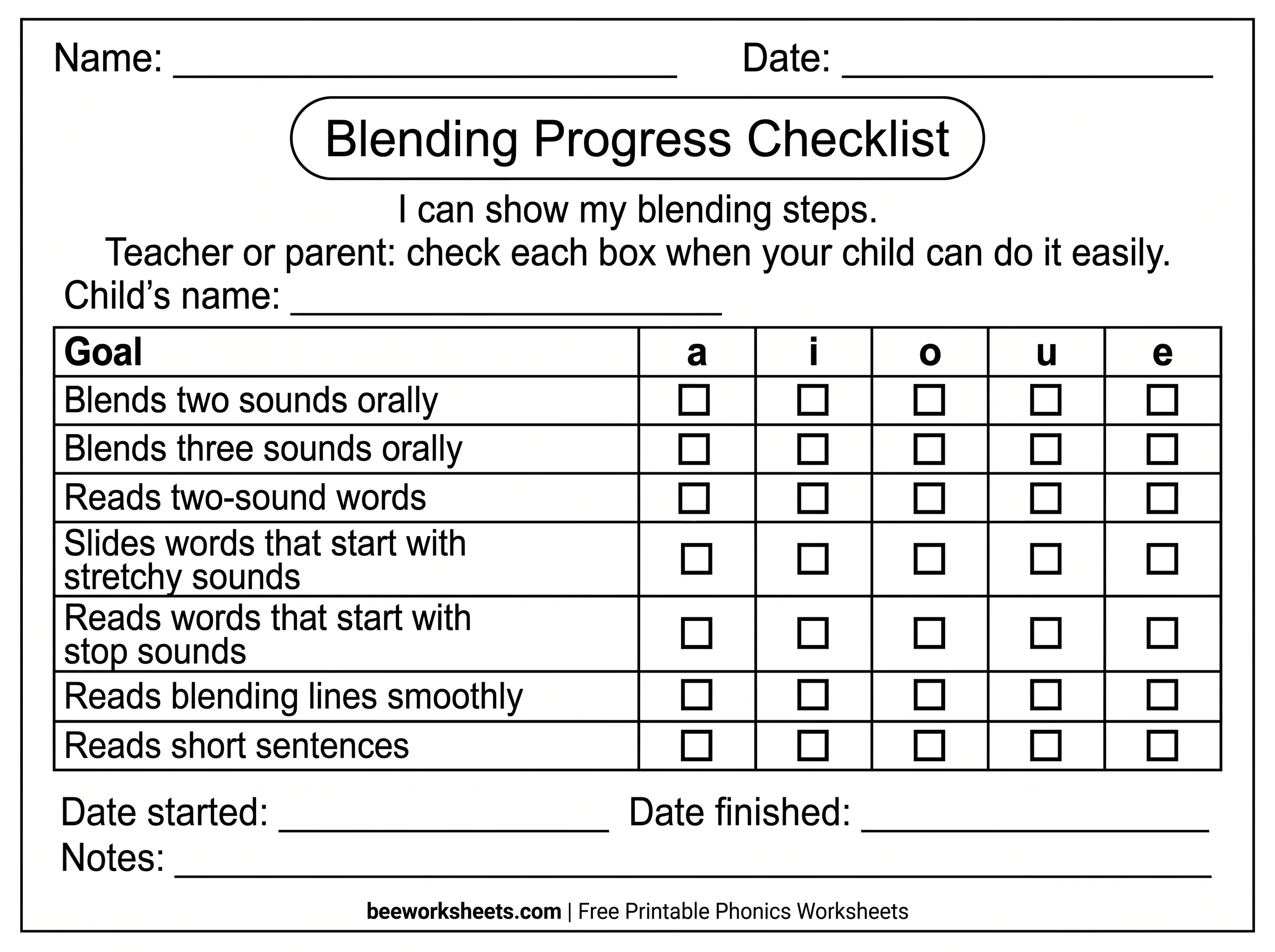
Simple, Science of Reading parent guides, say-it-right sound charts, 5-day home blending plans, and progress checklists for Pre-K, Kindergarten, and 1st Grade families.
Practice these same CVC & Blending words on a Smartboard, Chromebook or tablet — free, no sign-up.
Start by modeling pure letter sounds without adding 'uh' at the end (say /m/, not 'muh'), then stretch continuous sounds together slowly until the child hears the word.
Just 5 to 10 focused minutes per day works far better than long sessions. Short, positive daily practice builds confidence and fluency quickly.
Stretchy (continuous) sounds like /m/, /s/, /f/, /r/, /n/, /l/ can be held smoothly, while stop sounds like /b/, /p/, /t/, /d/, /k/, /g/ are short bursts of air.
Try successive blending: blend only the first two sounds together (ca), pause briefly, and then add the final sound (cat) so their memory doesn't drop the beginning sound.
Our CVC Blending Car Mats, Blending Sounds sheets, and Successive Blending Ladders are already live and free to print for home practice.
BeeWorksheets is independent; "UFLI-aligned" describes general phonics scope compatibility and does not imply affiliation with or endorsement by the University of Florida Literacy Institute.