KindergartenB-a-1

Opening your printable PDF file.
Made by the BeeWorksheets Editorial Team · Editorial standards
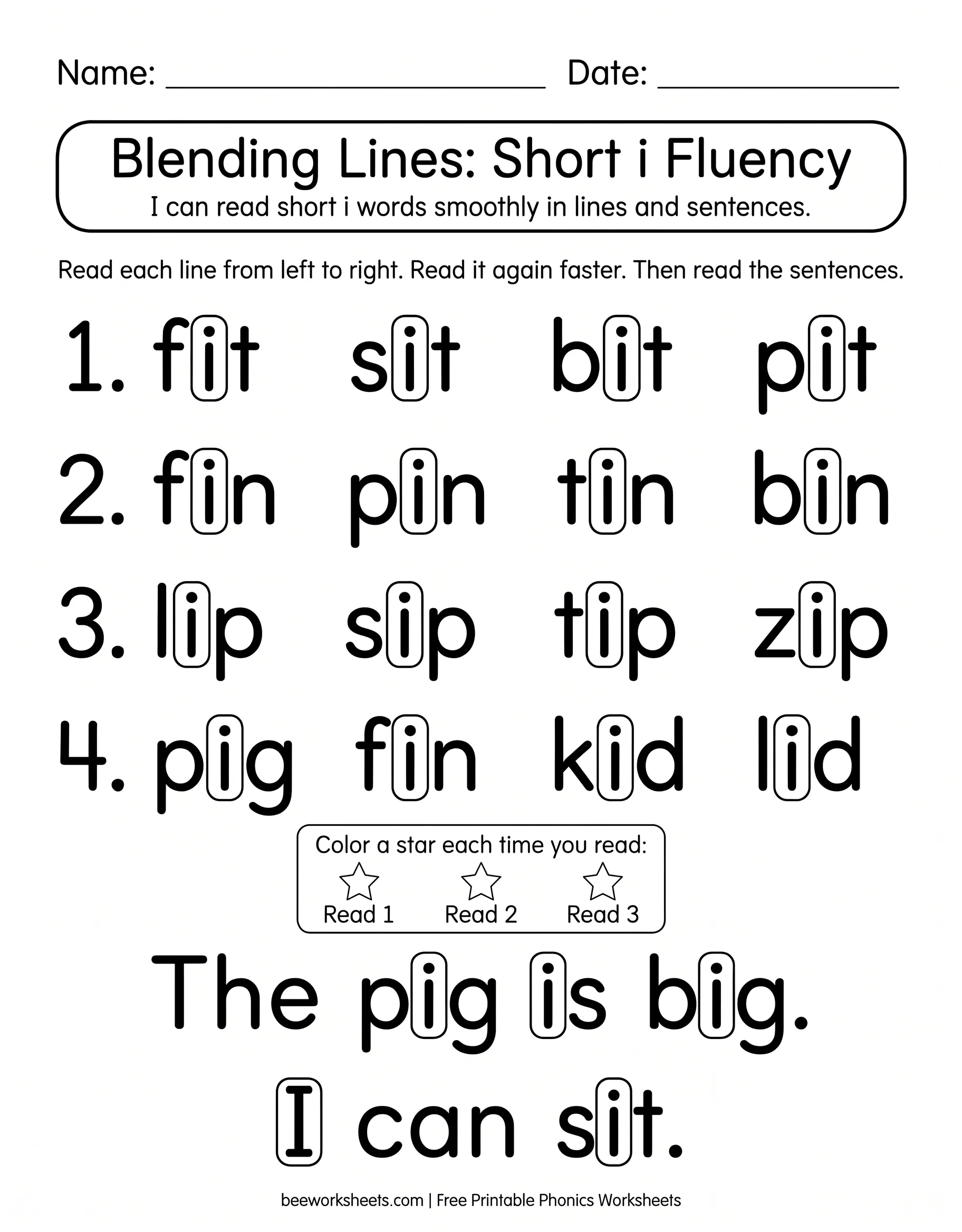
Master all five short vowels with Science of Reading CVC blending worksheets: continuous hold-and-slide words, read-and-match picture checks, stop-sound blending, and decodable fluency lines.
Practice these same CVC & Blending words on a Smartboard, Chromebook or tablet — free, no sign-up.
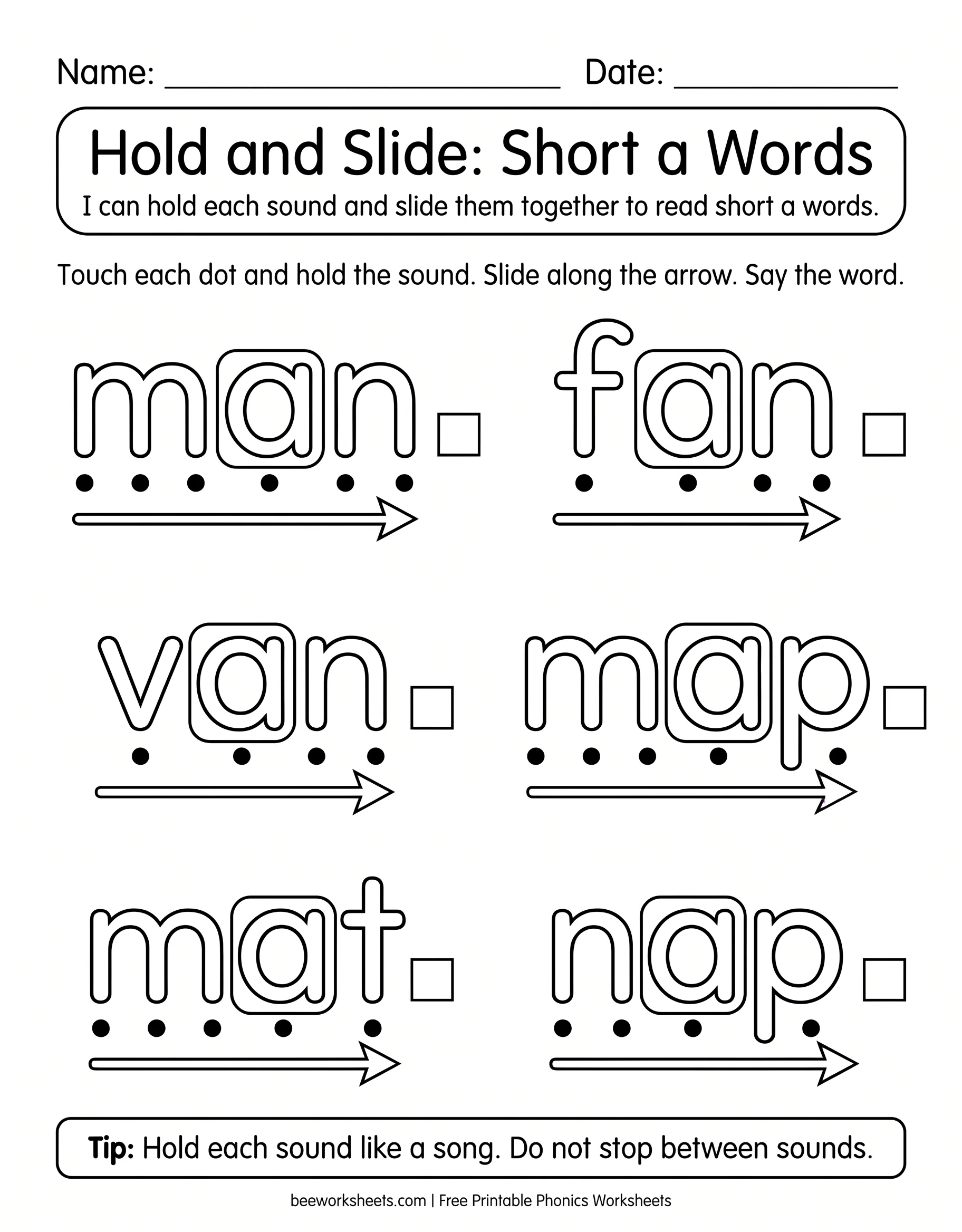
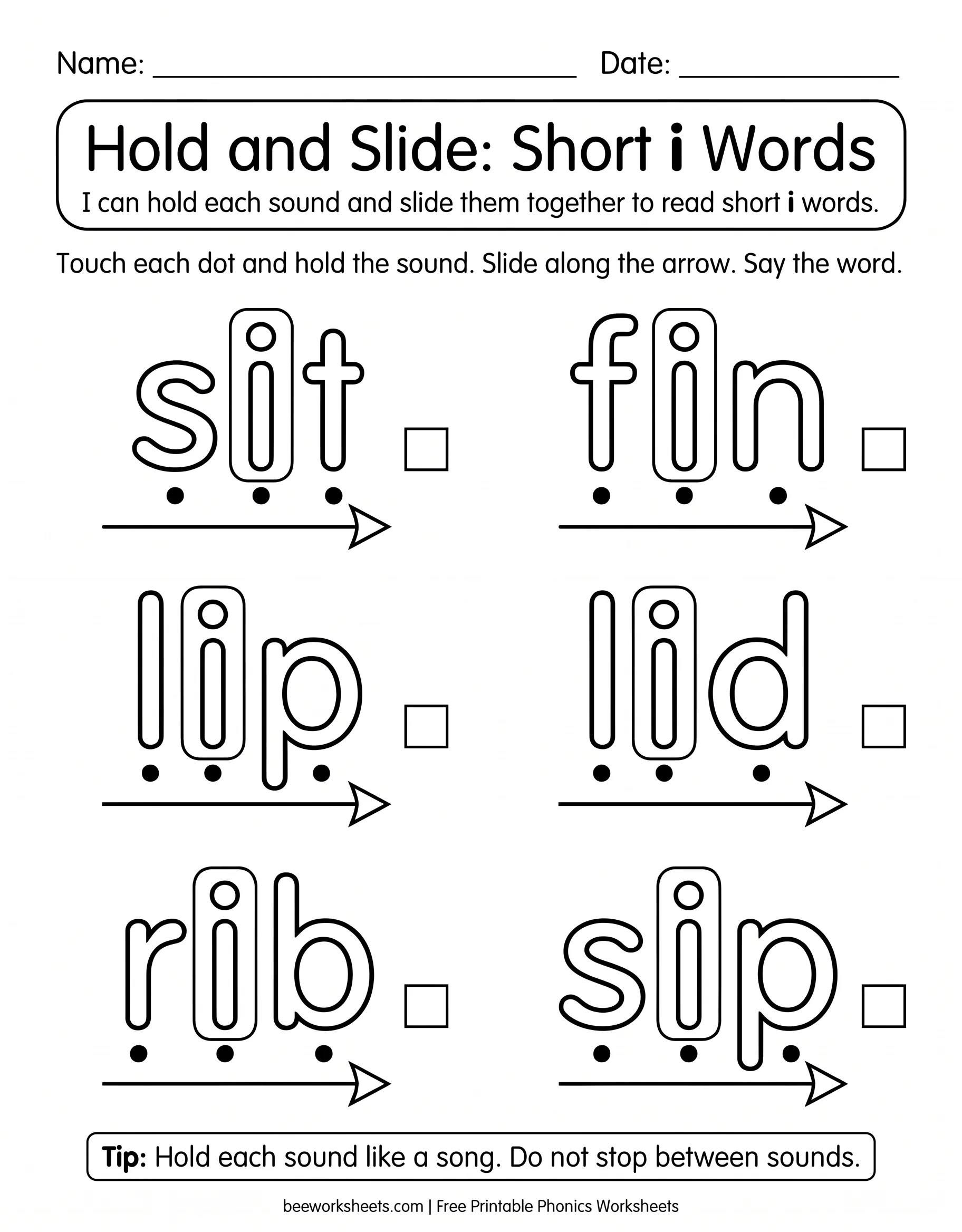
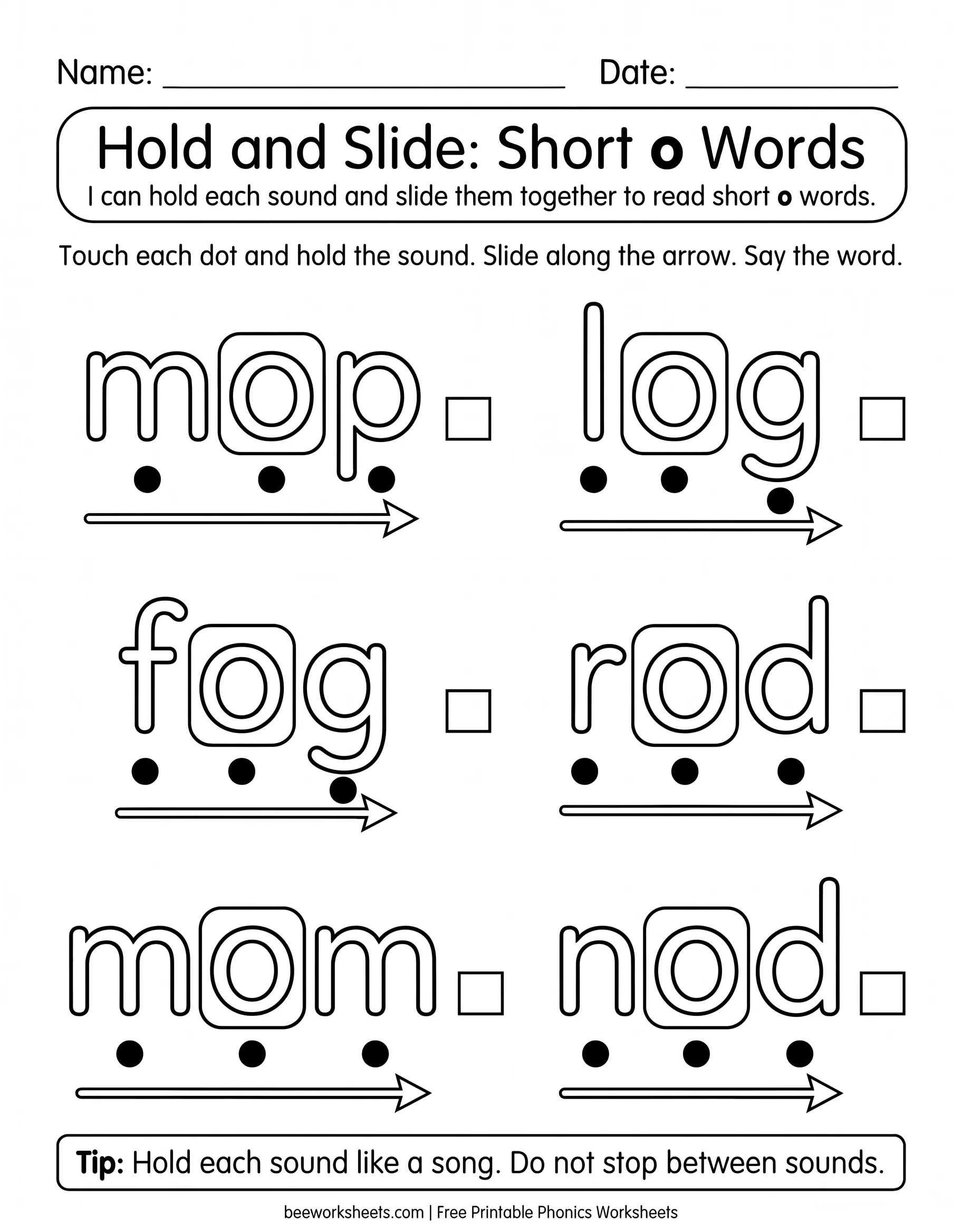
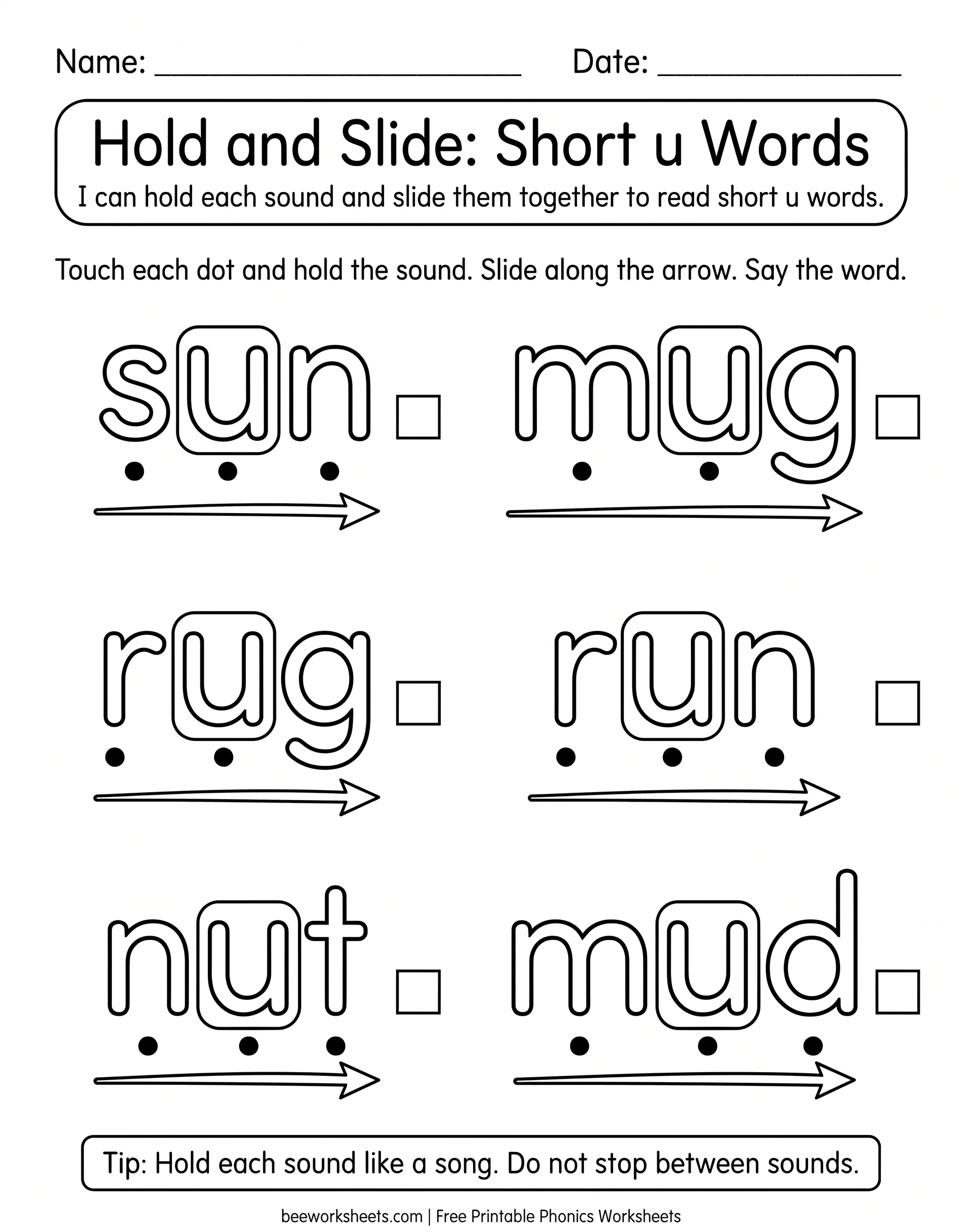
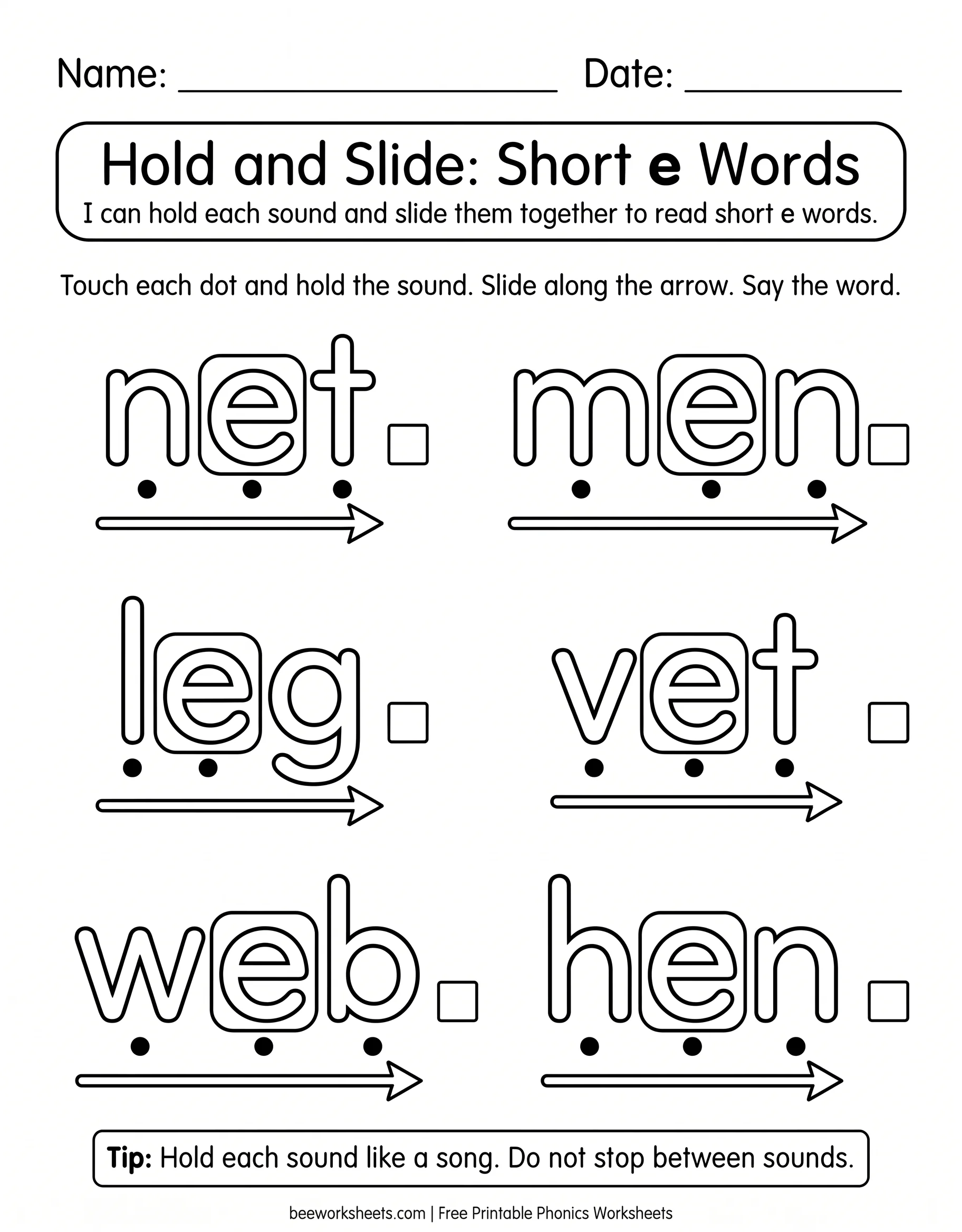
Continuous consonants like m, s, f, r, n, l, v, and z can be held without stopping the airflow (sssuuun -> sun), making it much easier for Kindergarteners to hear the blended word than stop sounds like b or t.
Students touch each dot to say and hold the sound, then slide their finger smoothly along the arrow underneath the word while blending the sounds together.
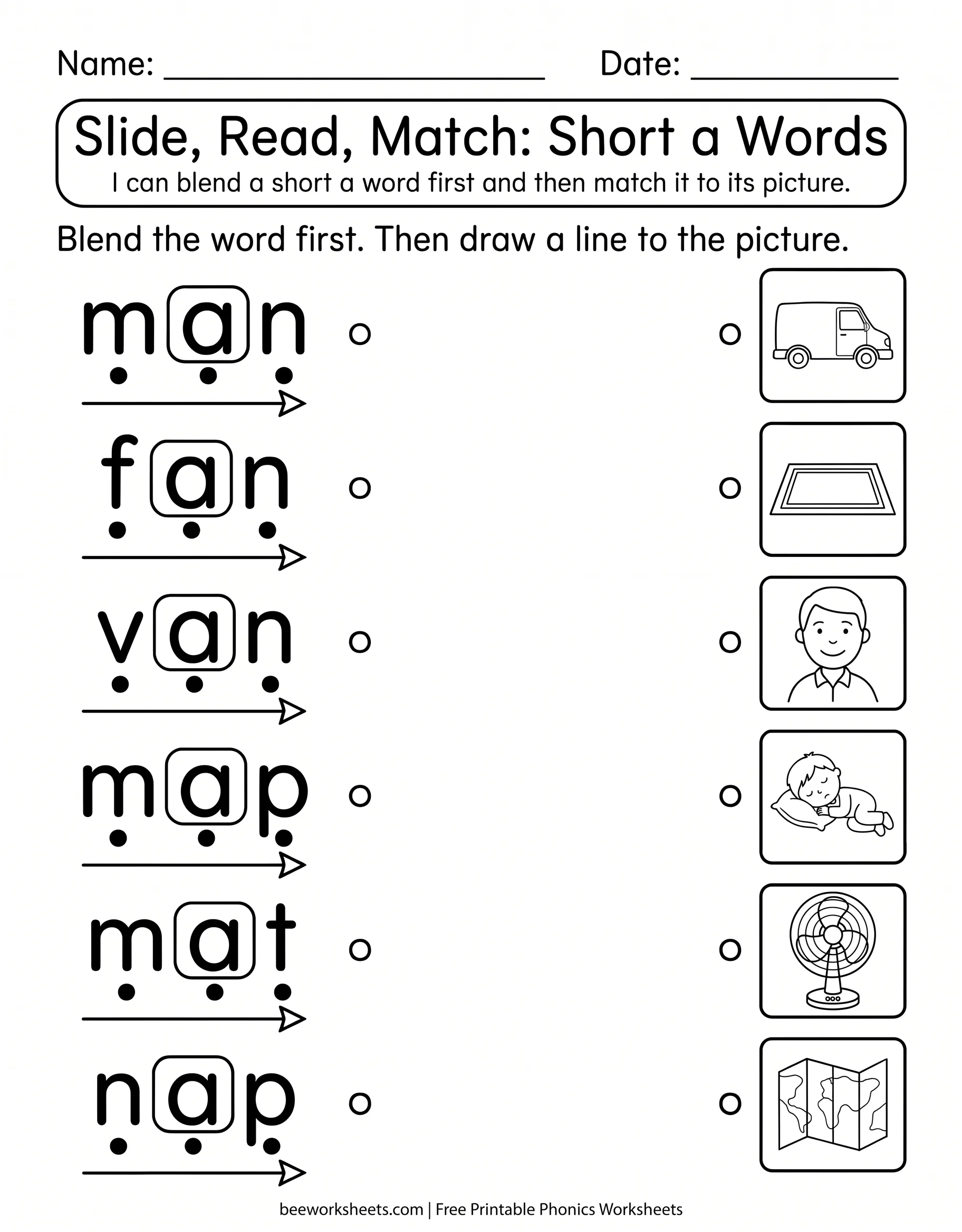
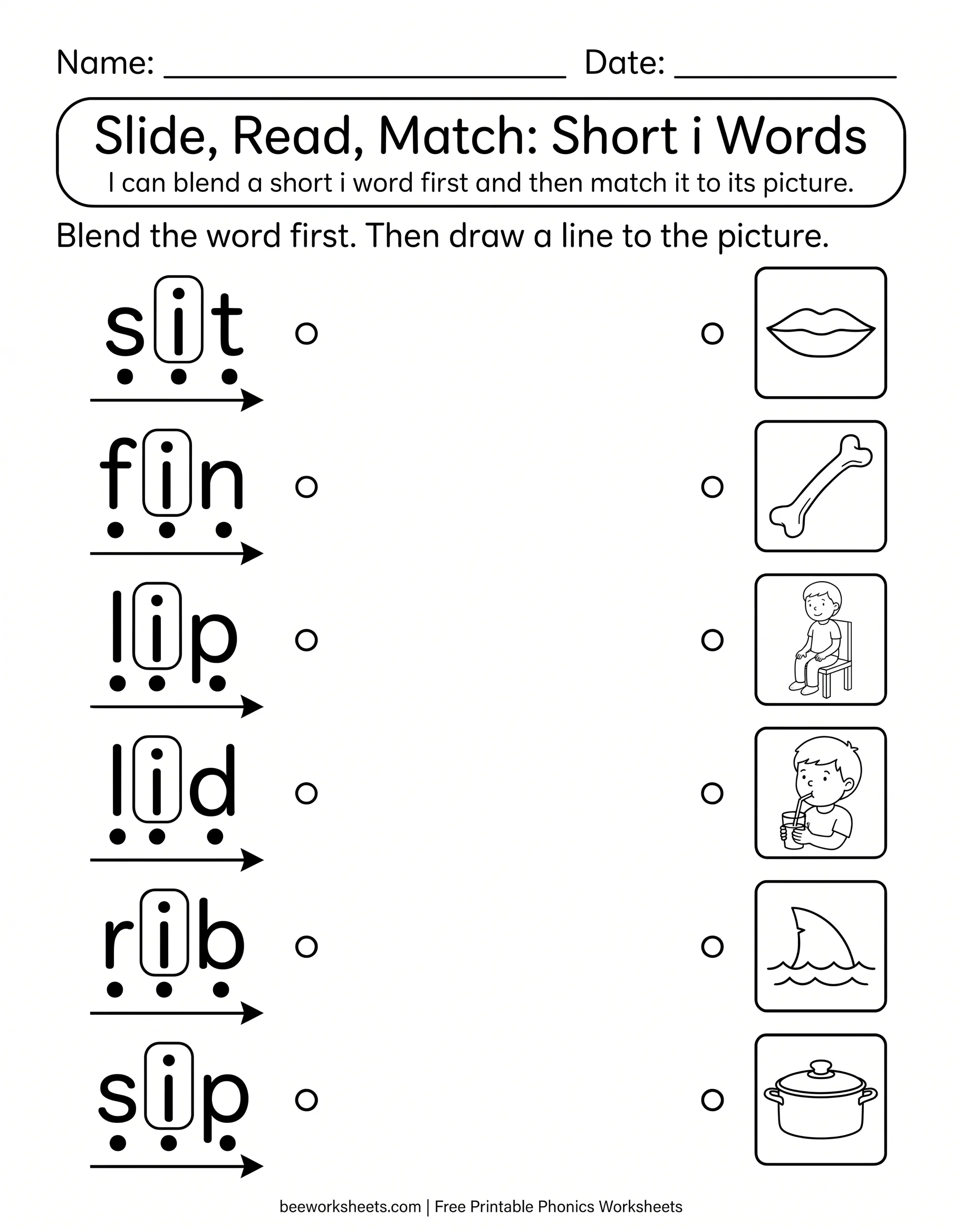
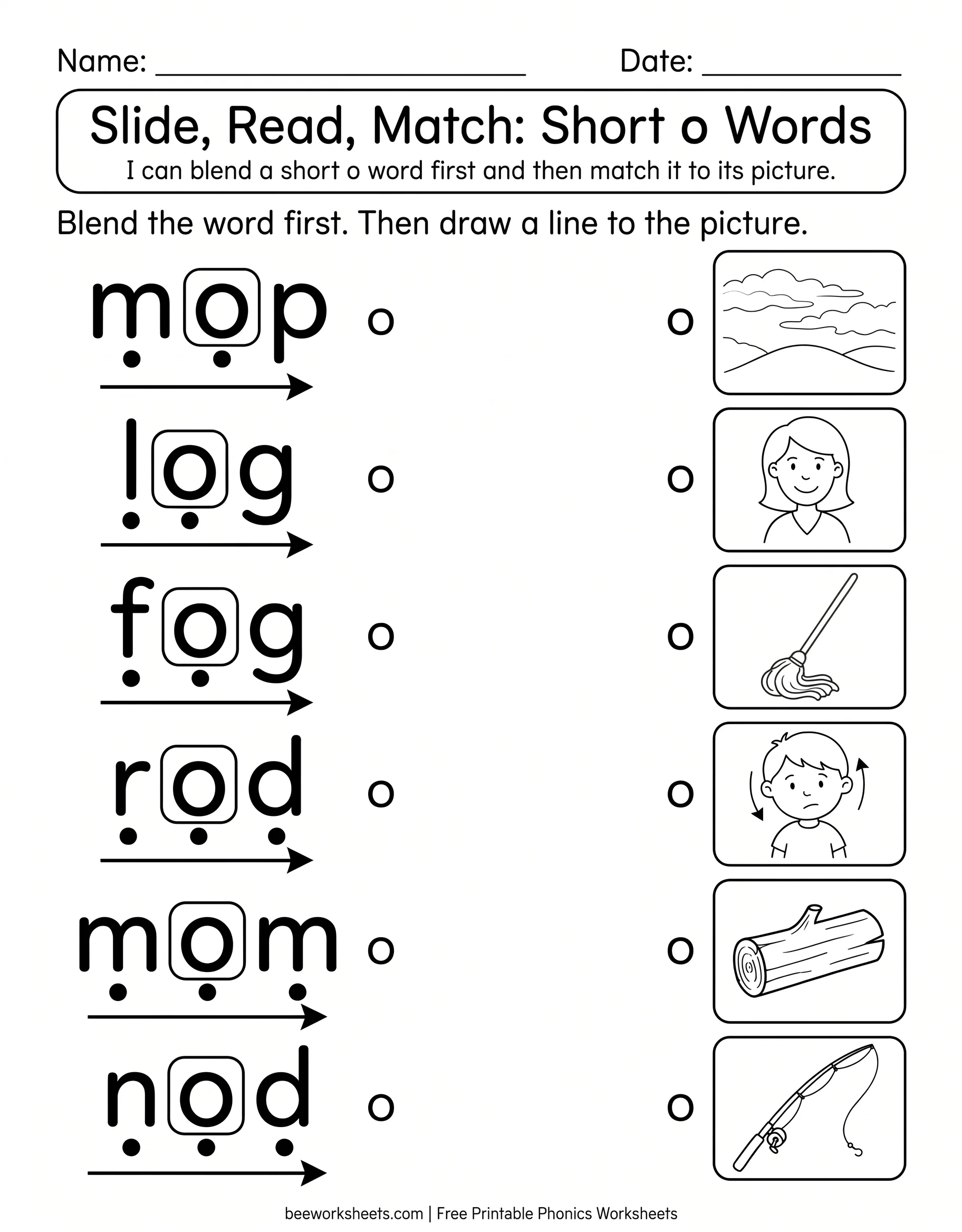
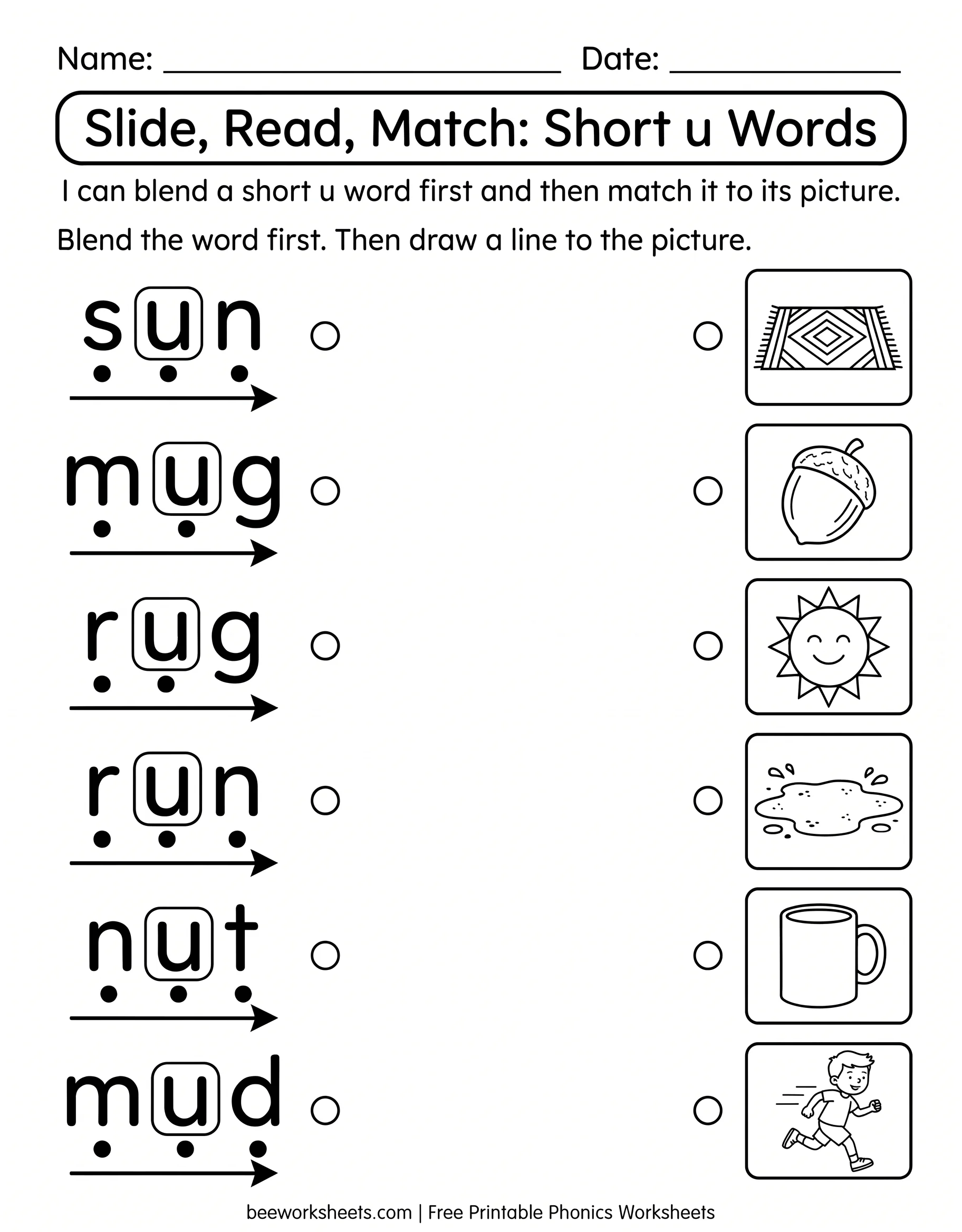
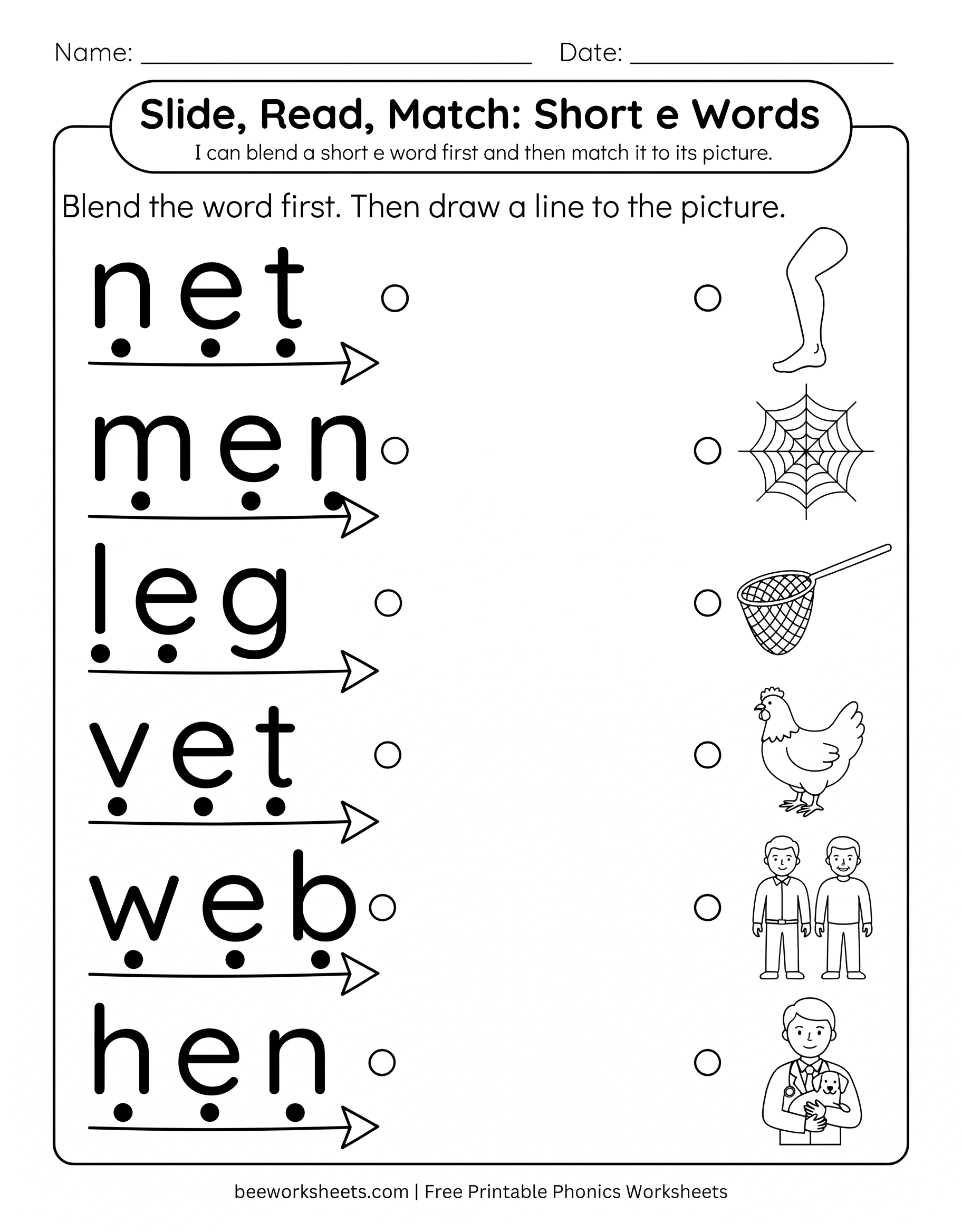
On Slide, Read, Match pages, students blend the printed CVC word first before looking across to find its matching picture, rather than guessing the word from a nearby illustration.
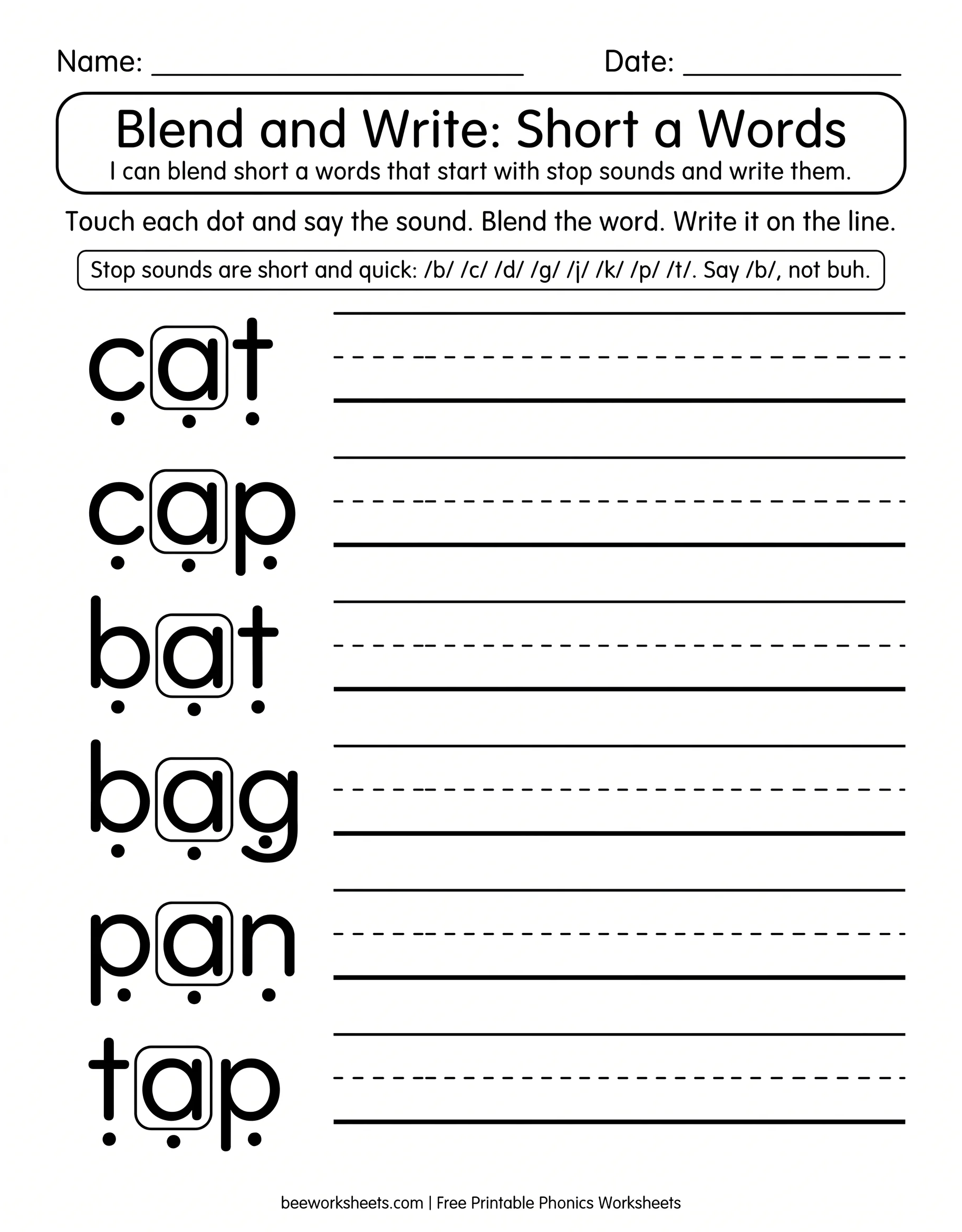
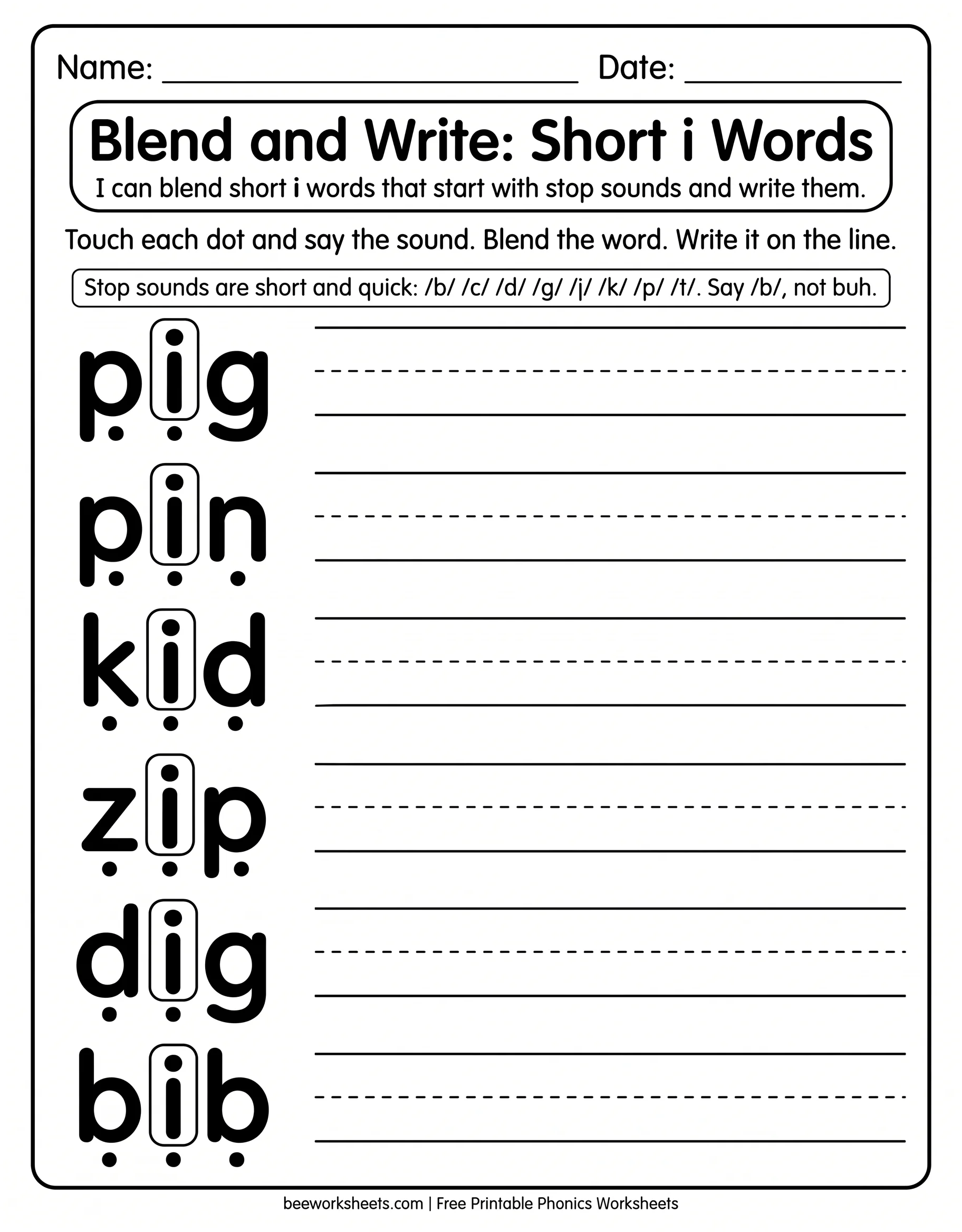
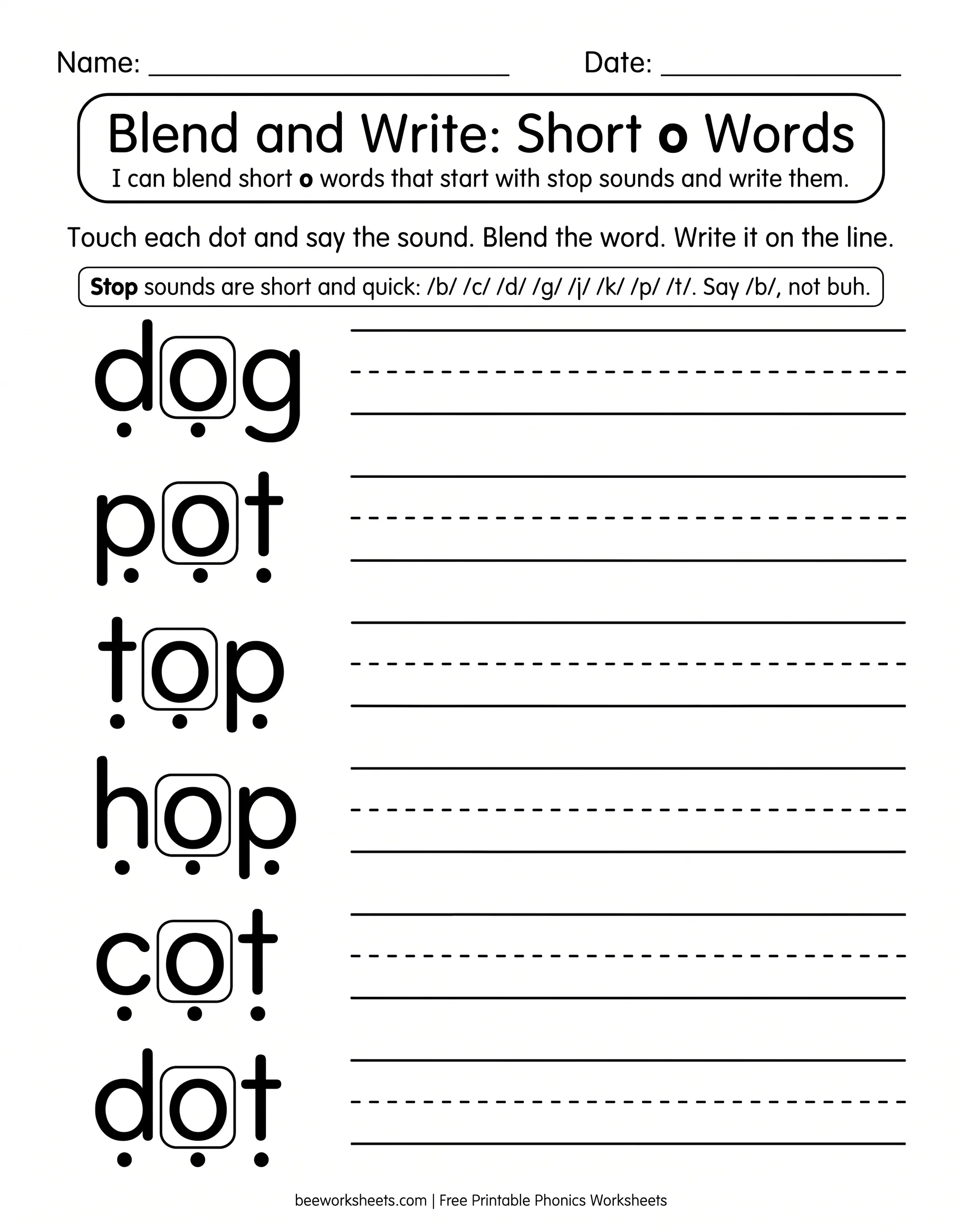
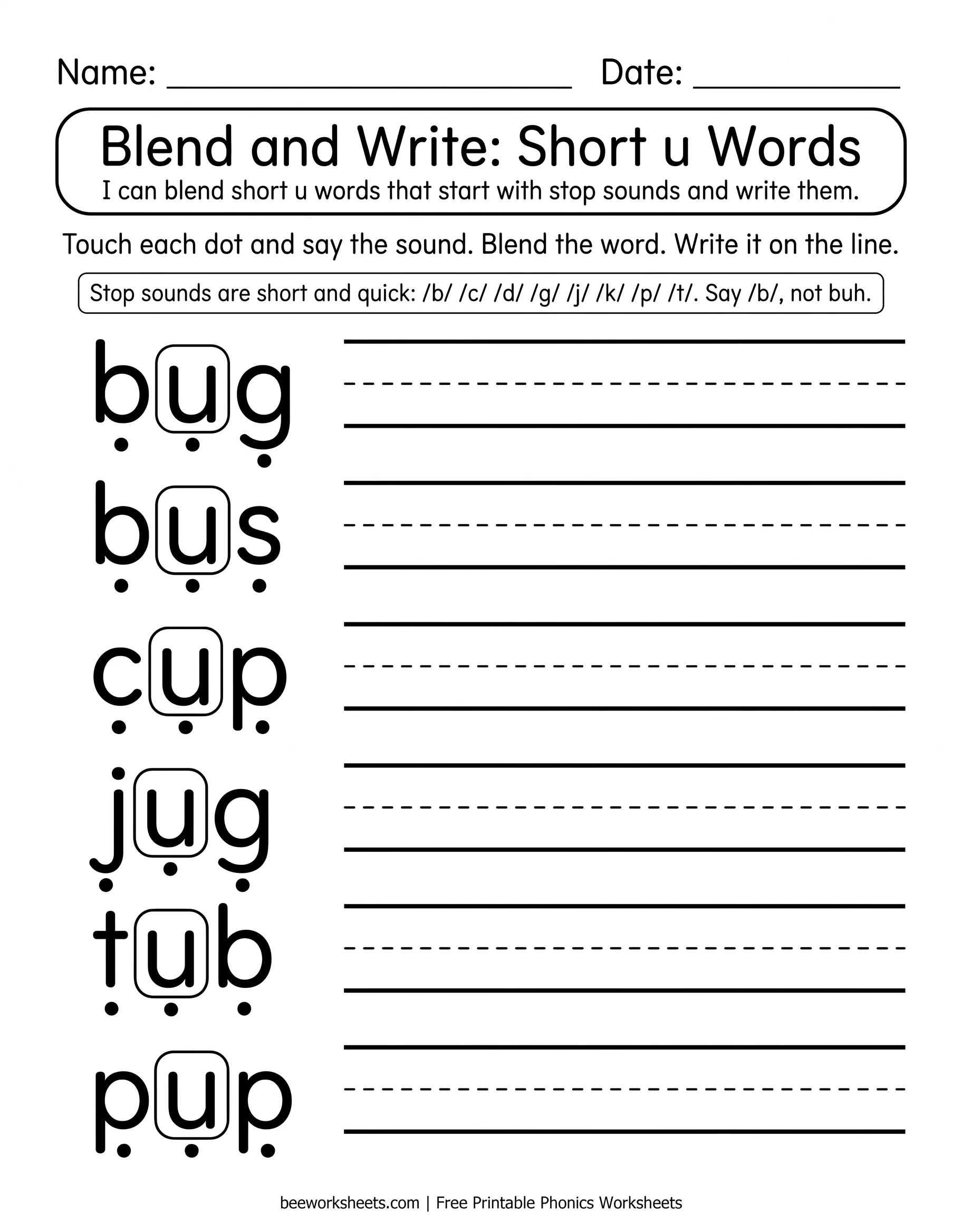
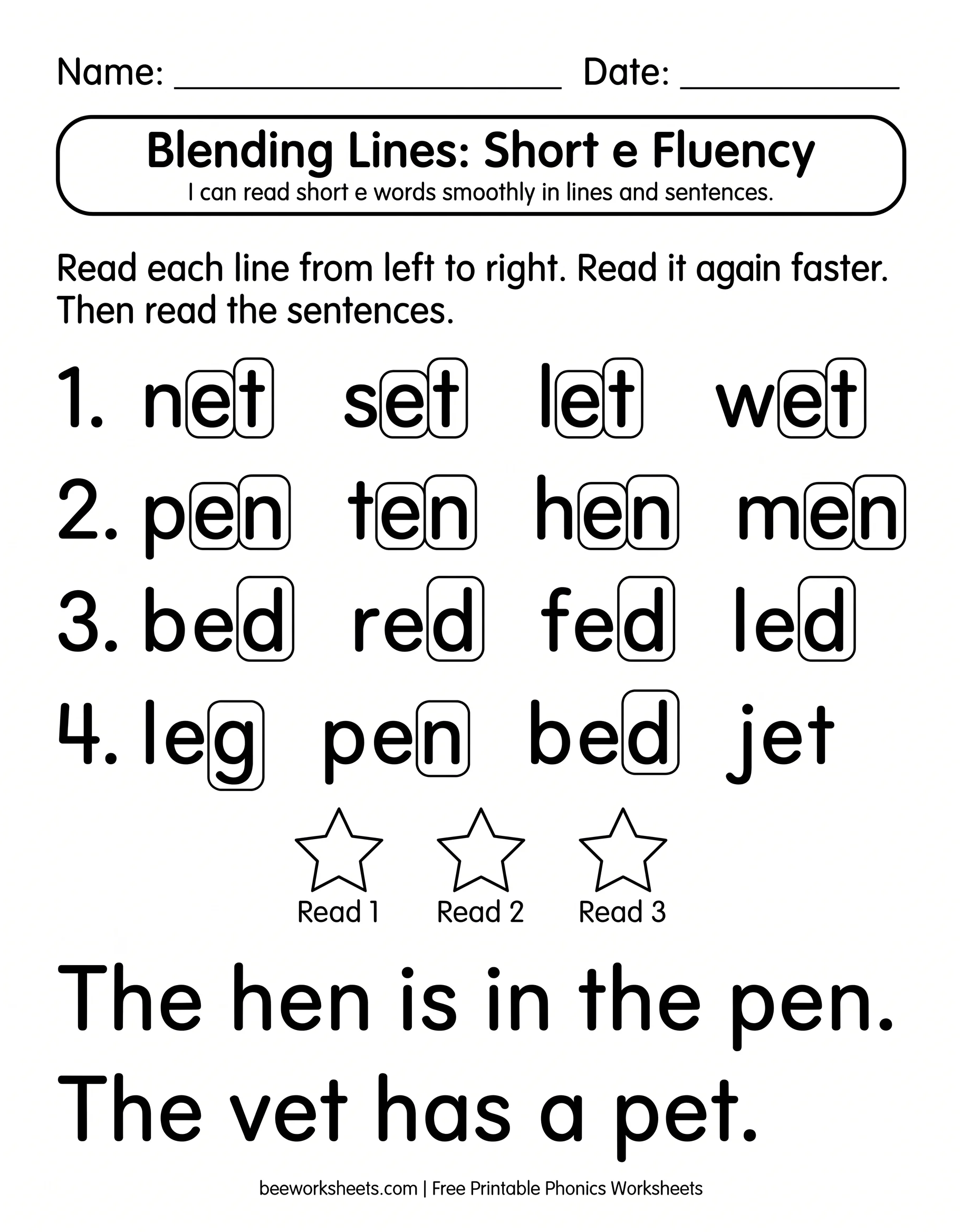
Keep initial stop sounds (/b/, /c/, /d/, /g/, /p/, /t/) quick and clipped without adding an extra 'uh' vowel, then immediately connect into the short vowel.
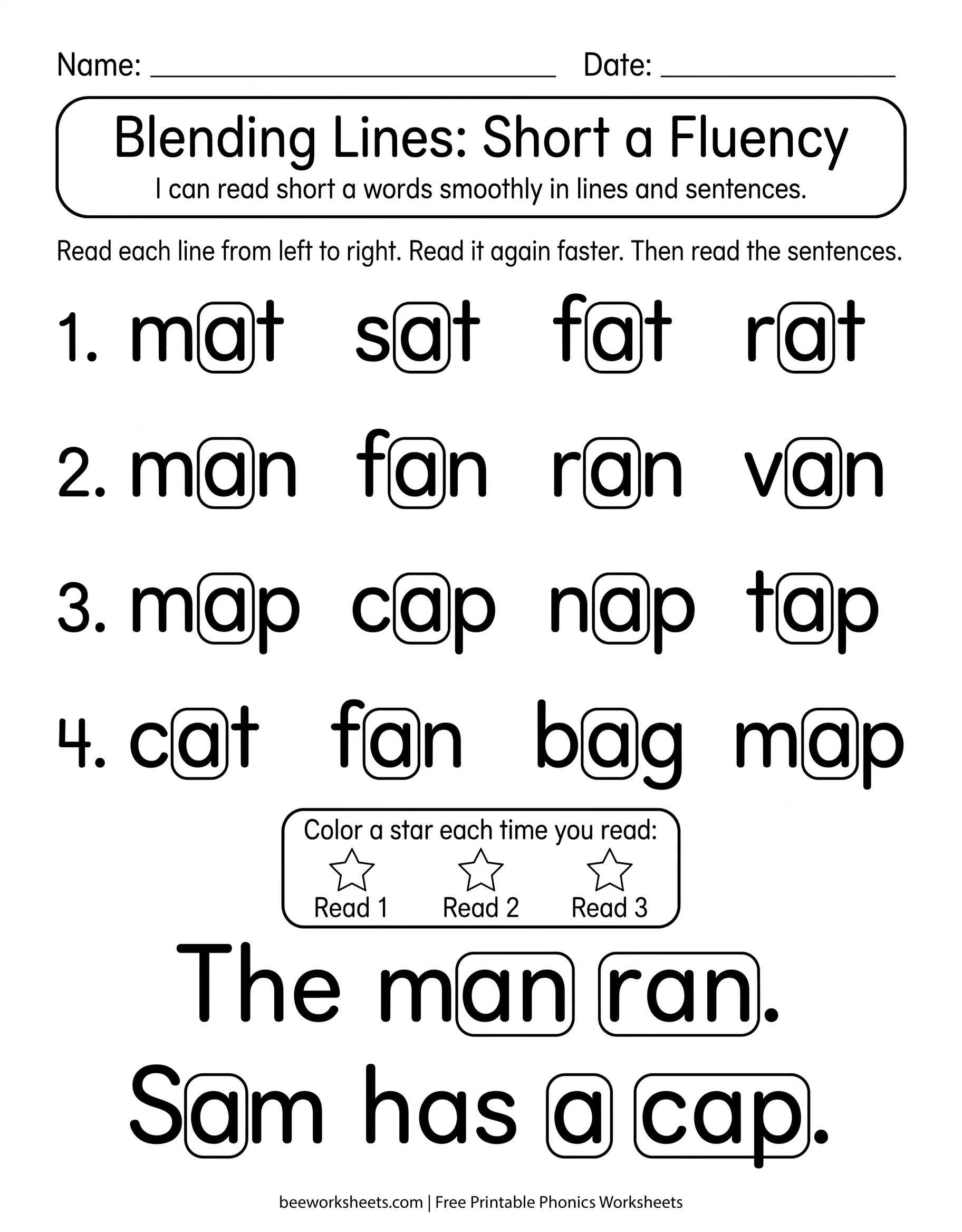
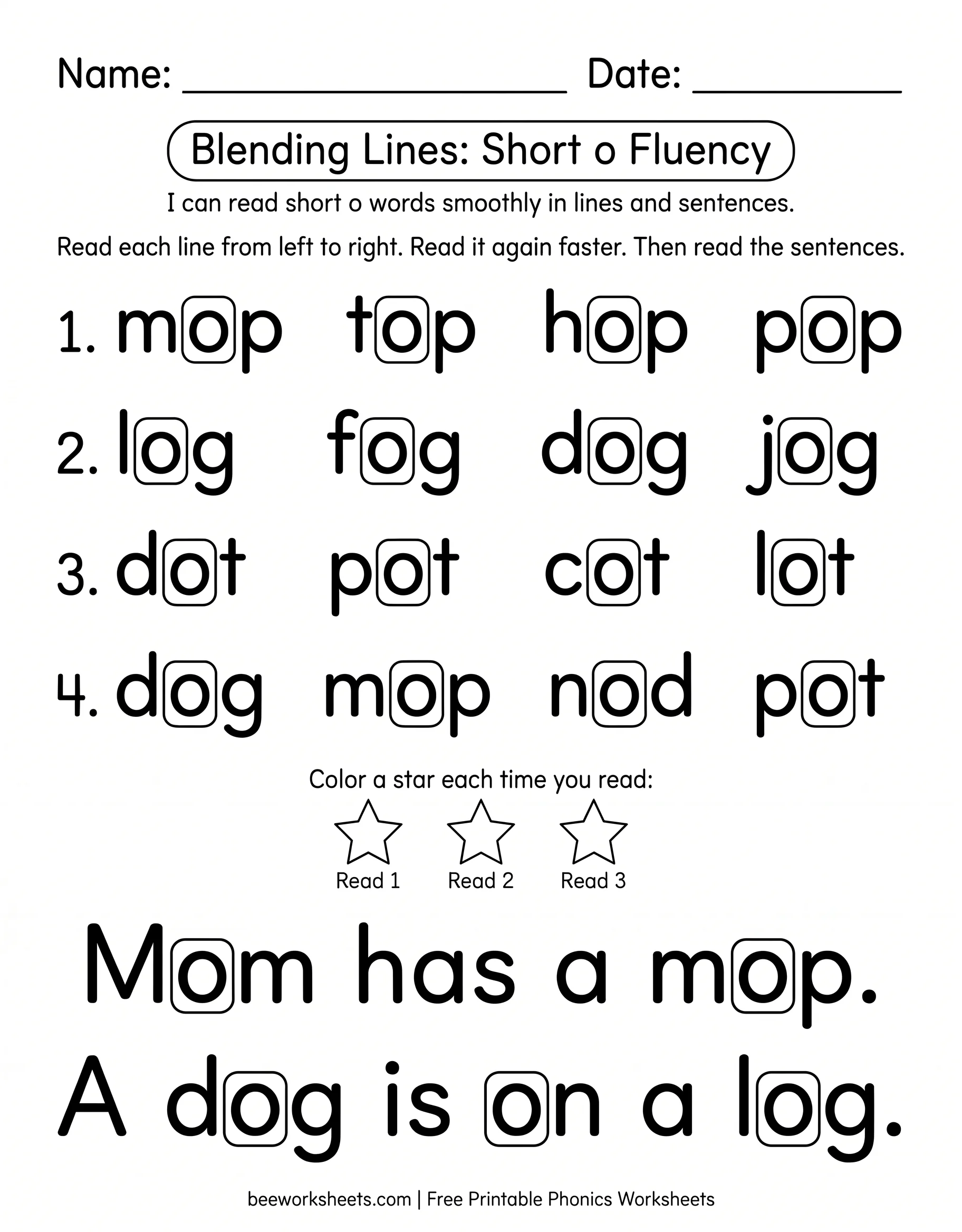
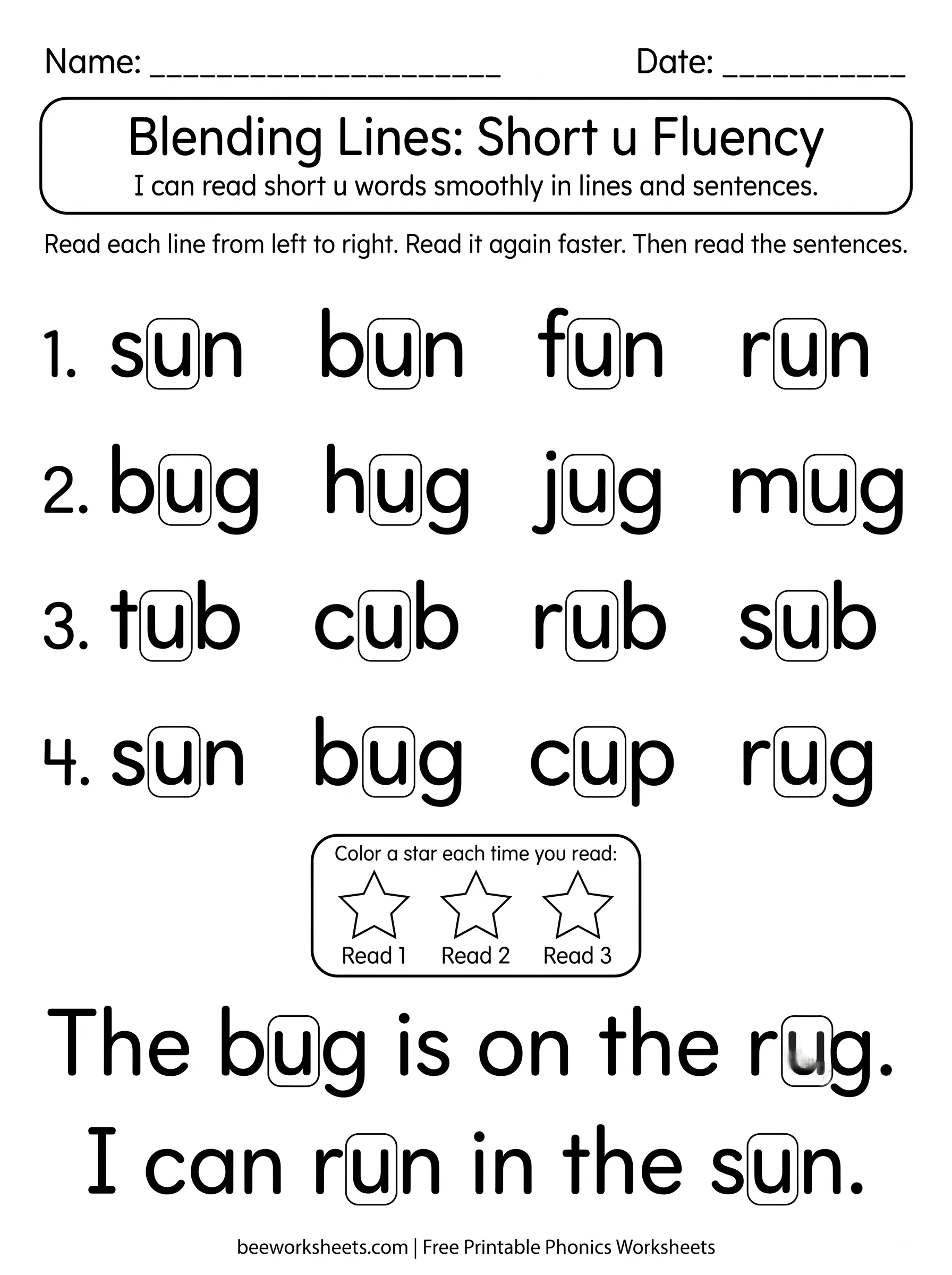
All five short vowels — Short A, Short I, Short O, Short U, and Short E — each with Hold and Slide, Read and Match, Blend and Write, and fluency sentence sheets.
BeeWorksheets is independent; "UFLI-aligned" describes general phonics scope compatibility and does not imply affiliation with or endorsement by the University of Florida Literacy Institute.